


How Solar Panel Manufacturing Companies Are Powering a Sustainable Future
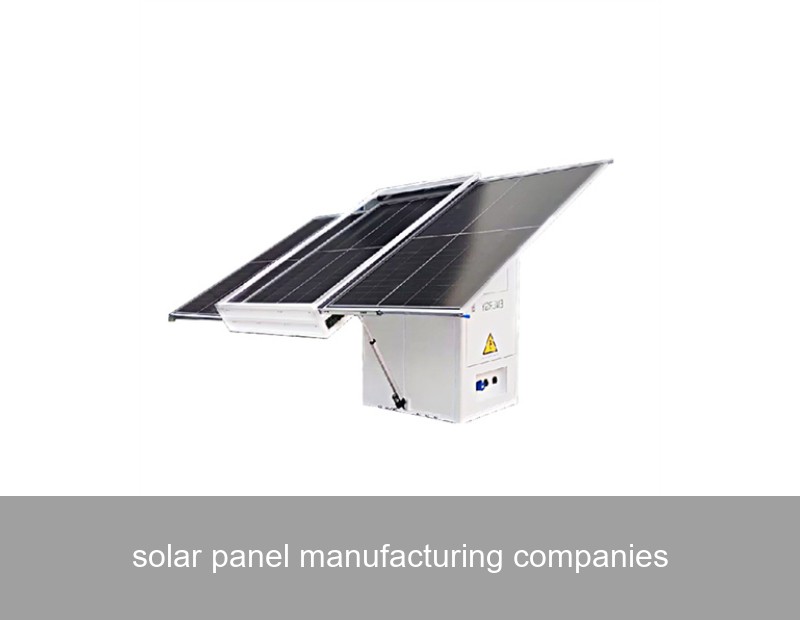
The drive for a cleaner planet is shining a bright light on solar panel manufacturing companies. As demand for renewable energy skyrockets globally, these innovators are at the forefront, constantly pushing the boundaries of efficiency and scale. But here's a question you might not have considered: what happens when the sun goes down? The incredible work of solar manufacturers is only half of the energy independence equation. The true key to unlocking 24/7 clean power lies in the seamless integration of solar with advanced energy storage. Let's explore the evolving landscape of solar manufacturing and the critical role storage plays in maximizing its world-changing potential.
Table of Contents
- The Solar Manufacturing Boom: More Than Just Panels
- The Critical Gap: Why Manufacturing Sunlight Isn't Enough
- Case Study: A German Manufacturer's Leap to Energy Independence
- The Highjoule Advantage: Intelligent Storage for Industrial Solar
- Future Trends: Smart Factories and Self-Powered Plants
- What's Your Energy Resilience Goal?
The Solar Manufacturing Boom: More Than Just Panels
Today's leading solar panel manufacturing companies are engineering marvels. They're not just assembling panels; they're driving down costs through technological leaps in photovoltaic (PV) cell materials, like PERC (Passivated Emitter and Rear Cell) and the promising rise of tandem cells. According to the International Energy Agency (IEA), global manufacturing capacity for solar PV has increasingly diversified, with major investments flowing into new facilities in the United States and Europe alongside established Asian hubs.
This expansion is fueled by powerful policies like the U.S. Inflation Reduction Act and the European Green Deal, creating a robust pipeline for solar deployment. But this growth presents its own challenge. As factories scale to produce more gigawatts of panels annually, their own energy consumption becomes a focal point. The most forward-thinking manufacturers are asking: "How can we make our production as clean as the energy our products generate?"
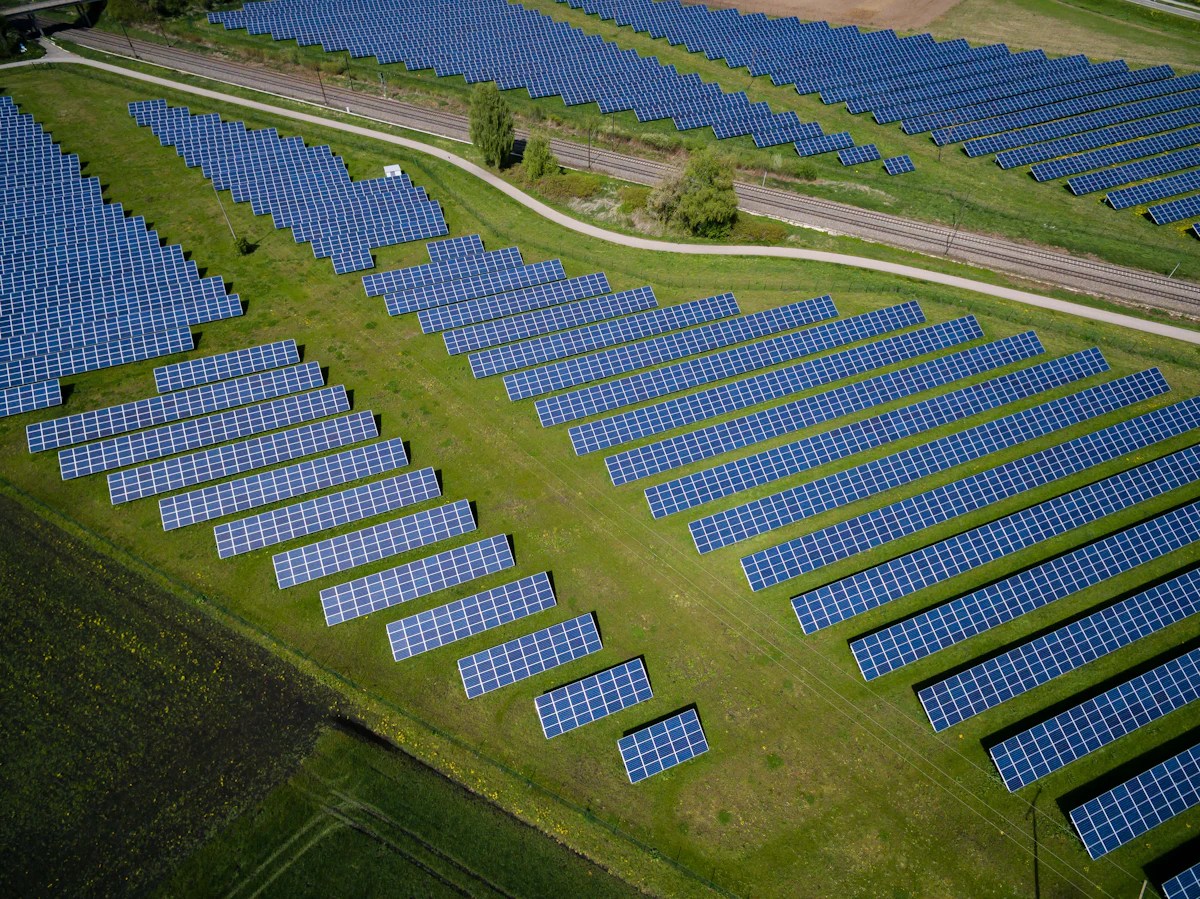
Image: Modern solar manufacturing facilities are energy-intensive, creating a prime opportunity for on-site solar and storage. Credit: Unsplash.
The Critical Gap: Why Manufacturing Sunlight Isn't Enough
Here's the core issue solar manufacturers and their commercial clients face: intermittency. Solar panels produce power predictably during the day, but energy demand for a factory or business is a 24/7 curve. This mismatch creates two major problems:
- Economic Waste: Excess solar energy generated at midday, if not consumed or stored, is often fed back to the grid at low rates.
- Grid Dependency: At night or during peak demand periods, the facility must draw expensive, and often carbon-intensive, power from the grid.
This is where the narrative shifts from simply generating solar power to managing and dispatching it intelligently. The value of a solar installation multiplies when paired with a battery energy storage system (BESS). Think of it this way: solar panels are the source, but the storage system is the brain and the battery, ensuring not a watt of that precious, self-generated energy goes to waste.
The Data Behind the Demand
The numbers speak volumes. A study by the National Renewable Energy Laboratory (NREL) highlights that pairing commercial solar with storage can increase the value of solar by 20-40% depending on the market and utility rate structures. For an energy-intensive business like a manufacturing plant, this isn't just about sustainability—it's a core financial strategy for reducing operational expenditure (OpEx) and hedging against volatile energy prices.
Case Study: A German Manufacturer's Leap to Energy Independence
Let's look at a real-world example. "Stahlwerk GmbH" (a pseudonym for a real mid-sized metal fabricator in North Rhine-Westphalia, Germany) faced soaring energy costs and pressure to meet corporate decarbonization targets. Their 500 kW rooftop solar system covered about 30% of their daytime load, but they were still vulnerable to evening production shifts and grid outages.
Their solution was an integrated solar-plus-storage project:
| Component | Specification | Outcome |
|---|---|---|
| Existing Solar PV | 500 kW Rooftop Array | Provided daytime base load |
| Battery Storage | Highjoule C&I Stack, 250 kWh / 125 kW | Stored excess solar, provided peak shaving |
| Energy Management System (EMS) | Highjoule Neuron AI Platform | Optimized dispatch based on cost and consumption |
The results were transformative within the first year:
- Self-Consumption of solar power increased from 35% to over 80%.
- Grid Peak Demand Charges were reduced by 28% through intelligent "peak shaving."
- Energy Resilience was achieved, with the system providing backup power for critical loads during two grid disturbances, preventing an estimated €15,000 in production downtime.
This case exemplifies how the mission of solar panel manufacturing companies—to provide clean energy—is fully realized not at the factory gate, but at the point of use with smart storage.
The Highjoule Advantage: Intelligent Storage for Industrial Solar
This is where Highjoule's expertise becomes pivotal. As a global leader in advanced energy storage since 2005, we don't just provide batteries; we provide complete, intelligent power solutions that make solar investments work harder for commercial and industrial clients.
For a business integrating a new or existing solar array, our systems address the core challenges:
- Maximizing Solar ROI: Our Highjoule C&I Stack battery systems, governed by the proprietary Neuron AI Platform, automatically decide when to store solar energy, when to use it, and when to draw from the grid. This ensures every possible kilowatt-hour you generate is used to offset the most expensive grid power.
- Ensuring Operational Resilience: Manufacturing processes can't afford interruptions. Highjoule's storage systems provide seamless backup power, bridging short grid outages or allowing for safe, orderly shutdowns during longer events, protecting both equipment and revenue.
- Future-Proofing Energy Assets: With capabilities like participation in demand response programs, our systems can turn your energy assets into revenue streams, all managed automatically without disrupting your operations.

Image: Containerized Battery Energy Storage Systems (BESS), like those from Highjoule, enable large-scale solar optimization. Credit: Unsplash.
Future Trends: Smart Factories and Self-Powered Plants
The trajectory for solar panel manufacturing companies and their clients is toward even deeper integration. We're moving into the era of the "smart factory," where solar PV, on-site storage, electric vehicle (EV) charging fleets, and production machinery are all interconnected through a central nervous system—an advanced Energy Management System (EMS).
Imagine a solar panel plant that uses its own products to power the factory, stores the energy in Highjoule systems to run night shifts, and uses AI to predict production schedules against weather forecasts to optimize energy buying and selling. This closed-loop, self-optimizing ecosystem is the ultimate expression of sustainability and efficiency. It's a goal that aligns the ingenuity of solar manufacturers with the grid-forming intelligence of modern storage solutions.
What's Your Energy Resilience Goal?
The journey toward true energy independence starts with a solar array, but it is completed with a brain and a bank for that energy. Whether you are evaluating a new solar installation or seeking to supercharge the returns of an existing one, the next logical step is to ask: How can I capture and control every bit of power my panels produce?
What is the one energy challenge—be it cost volatility, reliability concerns, or sustainability targets—that keeps you up at night when thinking about your facility's power?
 Inquiry
 Online Chat