


Beyond Batteries: The Synergy of Solar Energy Storage and Hydrogen
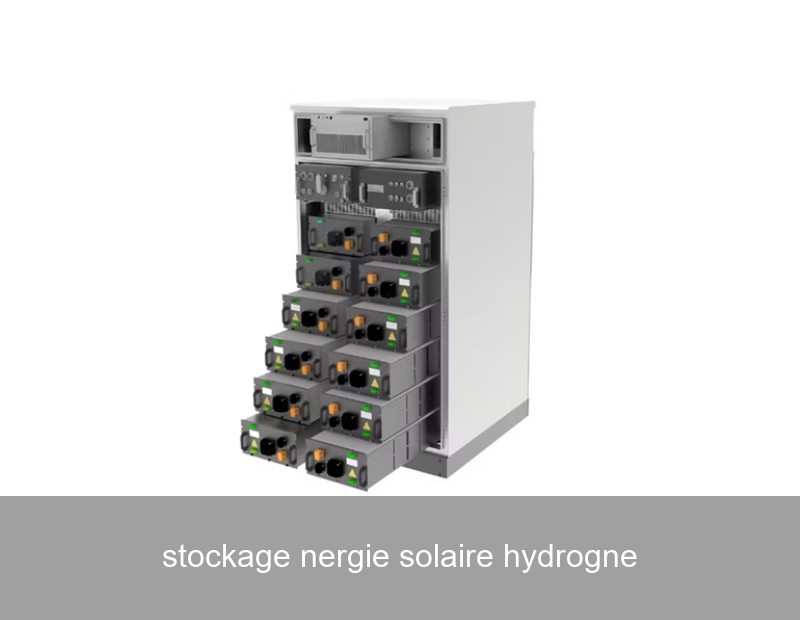
As the world accelerates its transition to renewable energy, a critical question emerges: how do we ensure a stable, 24/7 power supply when the sun doesn't shine and the wind doesn't blow? For years, the answer seemed to lie solely in large-scale battery storage. However, a more powerful and versatile solution is gaining momentum, combining two key technologies: stockage énergie solaire hydrogène, or solar energy storage with hydrogen. This integrated approach is not about choosing one over the other, but about creating a resilient, multi-faceted energy ecosystem. For businesses, communities, and entire grids, this synergy represents the next frontier in achieving true energy independence and sustainability.
Table of Contents
The Intermittency Challenge: More Than Just a Cloudy Day
Let's be honest, renewable energy has a scheduling problem. Solar panels are prolific producers during peak daylight, often generating more energy than the local grid can immediately consume. This can lead to curtailment—essentially wasting clean, free energy. Conversely, on calm winter evenings, demand soars while renewable generation plummets. This mismatch isn't just a daily issue; it's seasonal. Traditional lithium-ion batteries, while excellent for short-duration shifts (a few hours), become prohibitively expensive for storing solar energy from sunny summers for use in dark winters. This is where the concept of stockage énergie solaire hydrogène presents a compelling answer, using hydrogen as a seasonal, long-term storage medium.

Image: Solar farms produce excess energy that requires intelligent storage solutions. Source: Unsplash
The Two Pillars of Long-Duration Storage
Think of a modern energy system like a well-coordinated team. You need quick, agile players for immediate action and steadfast, enduring players for the long game. The integration of solar, batteries, and hydrogen creates precisely this dynamic.
Lithium-Ion Solar Storage: The Agile Responder
Advanced battery energy storage systems (BESS) are the backbone of immediate grid stability. They perform critical functions:
- Peak Shaving: Storing cheap solar energy during the day to power operations during expensive evening peak rates.
- Frequency Regulation: Responding in milliseconds to grid fluctuations, maintaining the delicate 50/60 Hz balance.
- Backup Power: Providing seamless, uninterrupted power during short grid outages.
Companies like Highjoule specialize in these intelligent, commercial and industrial-grade BESS solutions. Our HyperStack™ C&I Series, for instance, is designed for maximum efficiency and cycle life, enabling factories, data centers, and commercial buildings to drastically reduce energy costs and increase their on-site consumption of solar PV. However, for storage beyond 8-12 hours, the economics shift.
Hydrogen Storage: The Strategic Reservoir
This is where hydrogen completes the picture. The process, known as Power-to-Gas (P2G), works in a virtuous cycle:
- Electrolysis: During periods of excess solar generation, spare electricity powers an electrolyzer, which splits water (H₂O) into hydrogen (H₂) and oxygen (O₂).
- Storage: The green hydrogen is then compressed and stored safely in tanks—for days, weeks, or even months—with minimal energy loss.
- Reconversion: When energy is needed, the stored hydrogen can be used in a fuel cell to generate clean electricity and heat, or it can be used directly as a zero-carbon fuel for industry or transportation.
The key advantage? Energy density and duration. Hydrogen can store vast amounts of seasonal renewable energy in a way batteries currently cannot, effectively "banking" summer sun for winter use. According to a 2022 IEA report on hydrogen, scaling up electrolyzers is crucial for integrating high shares of variable renewables like solar and wind.
Synergy in Action: A Real-World Case Study
The theory is powerful, but does it work in practice? Let's look at a pioneering project in mainland Europe that exemplifies stockage énergie solaire hydrogène.
Project: HYBRIT Pilot, Sweden (Industrial Application)
While not solely solar-powered, this groundbreaking initiative by SSAB, LKAB, and Vattenfall demonstrates the principle of using renewable hydrogen for industrial decarbonization and energy buffering.
- Goal: Produce fossil-free steel by replacing coking coal with green hydrogen.
- Process: Hydrogen is produced via electrolysis using renewable electricity (wind and solar). This hydrogen is then stored in a massive underground facility—a repurposed mined rock cavern.
- Data & Impact: The pilot hydrogen storage facility, operational since 2022, can store up to 100 GWh of energy in the form of gas. This provides not only the feedstock for steel production but also a gigantic buffer for the Nordic power grid, balancing intermittent wind and solar generation. The pilot phase has already reduced CO₂ emissions from steelmaking by over 90% in test runs, paving the way for fully commercial fossil-free steel by 2026.
This case shows the dual role of hydrogen: as a clean industrial feedstock and a massive, long-duration energy storage asset. For a solar-dominated site, the same logic applies—excess summer solar could be turned into hydrogen and stored for winter electricity or process heat.

Image: Electrolyzers are key to converting surplus solar power into storable hydrogen. Source: Unsplash
Highjoule's Integrated Systems: Bridging the Gap
At Highjoule, we see the energy landscape holistically. Our expertise isn't confined to one technology; it's in orchestrating the optimal mix for our clients' specific needs. For a large industrial plant or a remote microgrid looking to maximize its solar investment, we provide the intelligence and the hardware.
Our approach involves:
- Advanced Energy Management Systems (EMS): The brain of the operation. Our proprietary EMS, Highjoule Neuron™, intelligently dispatches power. It decides in real-time: should solar power go directly to the load, charge the batteries for tonight's peak, or divert to the electrolyzer to produce hydrogen for next month? It optimizes for cost, carbon, and reliability.
- Modular Battery Storage: Our scalable BESS solutions handle short-term frequency regulation and daily arbitrage, protecting more expensive equipment like electrolyzers from constant cycling and extending their lifespan.
- System Integration & Design: We partner with leading electrolyzer and fuel cell manufacturers to design seamless stockage énergie solaire hydrogène systems. From feasibility studies to commissioning, we ensure the solar PV, battery, and hydrogen components work as one cohesive, resilient energy asset.
For a utility-scale solar farm in Southern Europe or a large agribusiness in California, this integrated design can unlock new revenue streams (grid balancing services, hydrogen sales) and provide unparalleled energy security.
| Technology | Primary Role | Storage Duration | Best For | Considerations |
|---|---|---|---|---|
| Lithium-Ion BESS (e.g., Highjoule HyperStack™) | Short-term storage, grid services, peak shaving | Seconds to 12 hours | Daily energy shifting, frequency regulation, backup power | High power density, fast response, cost-effective for short duration |
| Green Hydrogen (P2G) | Long-term/seasonal storage, industrial feedstock | Days to months | Seasonal energy shifting, decarbonizing hard-to-electrify sectors (industry, heavy transport) | High energy density, long-duration, round-trip efficiency lower than batteries |
The Future of Energy Management
The path to 100% renewable grids runs through innovation in storage. The combination of solar, batteries, and hydrogen offers a robust, multi-layered defense against intermittency and a practical roadmap for deep decarbonization. As battery costs continue to fall and electrolyzer technology scales—a trend supported by policies like the EU's Green Deal and the U.S. Inflation Reduction Act—these integrated systems will move from pilot projects to standard practice for energy-intensive industries, island communities, and forward-thinking utilities. Research from institutions like NREL highlights the critical need for LDES to achieve a fully decarbonized electricity sector.
Is your organization evaluating how to future-proof its energy assets against price volatility and achieve its sustainability goals? What role could a tailored combination of solar storage and hydrogen play in your long-term energy strategy?
 Inquiry
 Online Chat