


Energy Storage Summit USA: Your Gateway to the Future of Grid Resilience
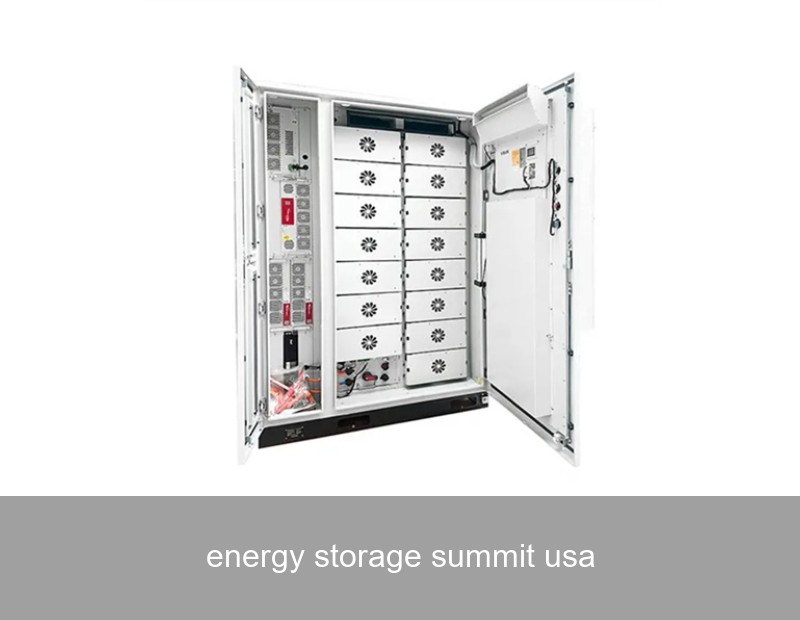
The annual Energy Storage Summit USA is more than just a conference; it's a pulse check on the transformation of the American power grid. As we gather industry leaders, policymakers, and innovators, a central theme emerges: how do we turn ambitious clean energy goals into a reliable, 24/7 reality? The answer, unequivocally, hinges on advanced energy storage. This technology is the critical linchpin, moving beyond a supporting role to become the cornerstone of a resilient, decentralized, and sustainable energy future. For nearly two decades, Highjoule has been at the forefront of this shift, engineering smart battery storage systems that empower businesses, communities, and grid operators to harness renewable power precisely when and where it's needed most.
Table of Contents
- The Urgency: Why Storage is No Longer Optional
- The Data Reality: Growth, Gaps, and Grid Needs
- Case Study: From Summit Talk to Community Resilience
- Beyond the Battery: The Intelligence Behind Modern ESS
- Highjoule's Role: Tailored Solutions for a Complex Market
- The Future Discussed at the Summit: What's Next?
The Urgency: Why Storage is No Longer Optional
Let's be frank. The conversation at the Energy Storage Summit USA has evolved from "if" we need storage to "how much, how fast, and where?" The drivers are unmistakable. First, the meteoric rise of intermittent renewables like solar and wind creates a fundamental mismatch between generation and demand. The sun doesn't always shine when air conditioners are running hardest. Second, climate change is manifesting in more frequent and severe grid-stressing events—from heatwaves to winter storms—exposing the fragility of centralized, aging infrastructure. Finally, electrification of everything from vehicles to heating is poised to significantly increase electricity load. Simply building more power plants, especially fossil-fueled ones, is neither economically nor environmentally sustainable. This convergence of challenges is why every panel and keynote at the summit circles back to storage as the indispensable solution.

Image source: Unsplash - A modern Battery Energy Storage System (BESS) control room, a common sight discussed at industry summits.
The Data Reality: Growth, Gaps, and Grid Needs
The numbers tell a compelling story. According to the U.S. Energy Information Administration (EIA), the country's battery storage capacity is experiencing exponential growth, having nearly doubled in 2023 alone. Yet, despite this boom, the scale remains orders of magnitude below what's required for deep decarbonization. Studies from national labs suggest that to achieve a 100% clean electricity grid, the U.S. may need hundreds of gigawatts of storage capacity. The discussions at the Energy Storage Summit USA often highlight the gap between current deployment trajectories and these long-term needs.
This isn't just about capacity; it's about value streams. Modern battery storage systems, particularly those with advanced grid-forming inverters, provide a suite of critical services:
- Frequency Regulation: Acting in milliseconds to keep grid frequency stable.
- Peak Shaving: Reducing demand charges for commercial & industrial (C&I) customers by discharging during expensive peak hours.
- Renewable Firming: Smoothing the output of solar or wind farms, making them more predictable and valuable.
- Backup Power: Providing seamless, instantaneous power during outages for critical facilities.
The economic case is built by stacking these revenue streams, a complex but essential topic tackled in summit financing workshops.
Case Study: From Summit Talk to Community Resilience in California
The theoretical discussions at the Energy Storage Summit USA come to life in projects across the nation. Consider a real-world challenge faced by a mid-sized municipality in California: rising grid connection costs for a new critical community center, combined with a high risk of Public Safety Power Shutoffs (PSPS) due to wildfire threats.
The Problem: The city needed a resilient power solution that would avoid a $500,000 grid upgrade fee and ensure the center could operate as a cooling shelter during heatwave-induced blackouts.
The Solution: After evaluating options presented at industry events like the summit, the city partnered with Highjoule to deploy a turnkey, behind-the-meter battery storage system. The Highjoule H2 Series commercial storage system was integrated with the building's existing solar PV.
| Metric | Result |
|---|---|
| Upfront Grid Upgrade Cost Avoided | $500,000 |
| Annual Demand Charge Savings | ~$28,000 |
| Backup Power Duration | Up to 8 hours for critical loads |
| Renewable Self-Consumption Increase | From 35% to over 70% |
This project, inspired by solutions showcased at forums like the Energy Storage Summit USA, demonstrates the tangible triple-bottom-line benefit of modern storage: financial savings, enhanced resilience, and greater sustainability.
Beyond the Battery: The Intelligence Behind Modern ESS
If the battery cells are the muscle of an energy storage system (ESS), the software and system integration are the brain and nervous system. This is a key differentiator you'll hear emphasized by leading providers at the summit. A high-quality lithium-ion battery is just the starting point. True performance and safety are dictated by the Battery Management System (BMS), the Energy Management System (EMS), and the power conversion system (PCS).
Highjoule’s approach, for instance, embeds AI-driven predictive analytics into its Helios Energy Management Platform. This platform doesn't just react; it learns a site's energy patterns, weather forecasts, and tariff structures to optimize every charge-discharge cycle for maximum economic return and asset longevity. It’s this layer of intelligence that transforms a passive battery bank into an active, grid-interactive asset. When summit attendees discuss "value stacking," this intelligent software is what makes it operationally possible.

Image source: Unsplash - Visualization of energy data and analytics crucial for managing storage assets.
Highjoule's Role: Tailored Solutions for a Complex Market
With a legacy dating back to 2005, Highjoule has grown alongside the energy storage industry itself. Our presence at events like the Energy Storage Summit USA is rooted in sharing hard-earned expertise and providing solutions that address the nuanced needs of different market segments. We understand that a one-size-fits-all approach doesn't work.
- For Commercial & Industrial (C&I) Clients: Our H2 Series focuses on peak shaving, demand charge management, and backup power, with robust containers or modular indoor cabinets designed for easy siting and scalability.
- For Utilities & Microgrids: Our GridMax Utility-Scale Systems are engineered for grid services like frequency regulation, renewable integration, and substation peak relief. They feature grid-forming inverter technology for enhanced stability.
- For Residential Aggregations & Community Projects: Our integrated solutions enable Virtual Power Plant (VPP) participation, allowing homeowners to contribute to grid stability while earning revenue, a hot topic at the Energy Storage Summit USA.
Our global experience, from European frequency regulation markets to U.S. community resilience projects, informs every system we design, ensuring they are not only intelligent and efficient but also compliant with the latest safety standards like UL 9540 and NFPA 855.
The Future Discussed at the Summit: What's Next?
The cutting-edge conversations at the Energy Storage Summit USA are already pointing to the next horizon. Topics like long-duration storage (LDES) technologies, second-life battery applications, and the integration of green hydrogen with short-duration batteries are moving from R&D panels to pilot project case studies. Supply chain sustainability and the critical mineral question are also front and center, pushing the industry toward more circular economy models.
Highjoule is actively engaged in these frontiers, particularly in developing system architectures that are technology-agnostic, ready to incorporate next-generation chemistries as they become commercially viable. The goal is to build storage assets that are not just for today, but are future-proof investments for our clients.
An Open Question for the Industry
As we reflect on the insights from the Energy Storage Summit USA, a pivotal question remains for every stakeholder—from policymakers to project developers: How do we accelerate the deployment of intelligent storage not just as isolated projects, but as a seamless, interoperable network that forms the backbone of a truly decentralized and democratic grid? The technology is proven. The business cases are stacking up. The challenge now is one of scale, integration, and vision. What role will your organization play in this defining transition?
 Inquiry
 Online Chat