


Stockage Surplus Solaire: Turning Excess Solar Power Into Reliable Energy
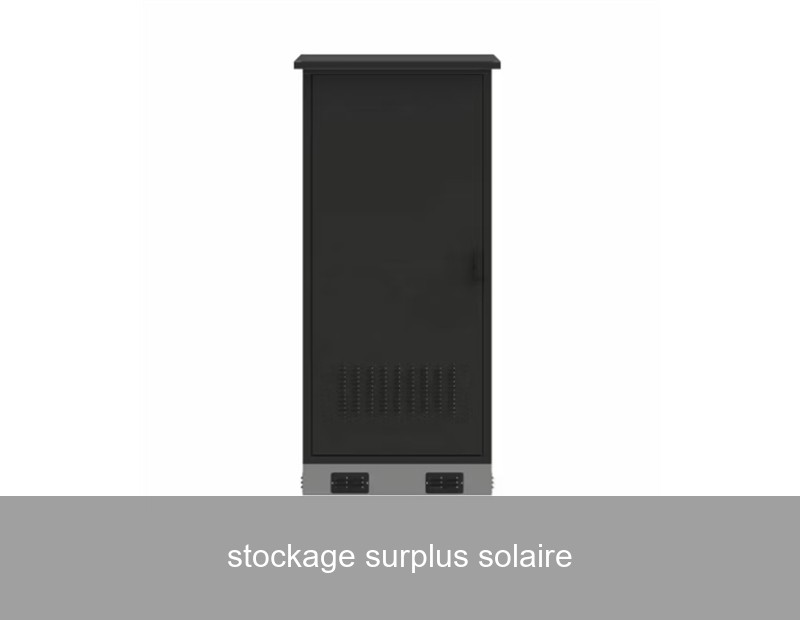
You've made the smart investment in solar panels. On bright, sunny days, they hum along, powering your home or business and slashing your electricity bills. But have you ever wondered what happens to all the stockage surplus solaire—the extra, clean energy your system produces when you don't need it? Traditionally, it's fed back to the grid, often for minimal compensation. But what if you could capture that surplus, store it, and use it on your own terms? That's where modern solar battery storage systems come in, transforming a common phenomenon into a cornerstone of energy independence and efficiency.
Table of Contents
The Phenomenon of Solar Surplus
Solar energy generation is inherently intermittent. Production peaks in the middle of the day, which often doesn't align with peak energy consumption in homes (evenings) or certain businesses. This mismatch creates a surplus. In many European and American regions with high solar adoption, this midday surplus is even causing grid management challenges, sometimes leading to negative energy prices or curtailment requests. For the individual owner, this surplus represents lost potential and a longer return on investment for their solar array. The logical next step? Stockage surplus solaire—capturing that excess for later use.
The Data: Why Wasting Solar Surplus is Costly
The financial argument for storing solar surplus is compelling. Net metering policies, which credit solar owners for grid exports, are becoming less generous across the U.S. and Europe. In California, the shift to NEM 3.0 has reduced export compensation rates by about 75% [CPUC]. Meanwhile, the price difference between buying grid power and selling your surplus is significant. You might sell your excess at 5 cents per kWh but have to buy it back at night for 30 cents or more.
| Scenario | Without Storage | With Storage (Stockage Surplus Solaire) |
|---|---|---|
| Midday Solar Production | 70% exported to grid at low rate | 90% stored in battery system |
| Evening Energy Need | Power purchased from grid at peak rate | Power supplied from battery, avoiding peak rates |
| Self-Consumption Rate | ~30-40% | ~70-80% or higher |
Increasing your self-consumption rate is key to maximizing your solar investment, and that's precisely what stockage surplus solaire enables.

Image Source: Unsplash - A modern home integrating solar panels with a battery storage unit.
The Solution: Advanced Solar Battery Storage Systems
Modern solar battery systems are the physical heart of stockage surplus solaire. But not all batteries are created equal. An effective system involves more than just a battery box; it's an integrated energy management solution.
- High-Capacity, Long-Life Batteries: Lithium iron phosphate (LFP) chemistry has become the industry standard for safety, cycle life, and stability, often lasting 6,000+ cycles.
- Intelligent Energy Management: The brain of the system. Advanced software predicts solar production and consumption patterns, deciding when to store, when to discharge, and when to potentially sell back to the grid for maximum profit.
- Seamless Integration: The system must integrate flawlessly with existing solar inverters or come as a complete AC- or DC-coupled solution, ensuring safety and efficiency.
- Resilience Features: For many in areas prone to outages (like California or regions with extreme weather), the ability to provide backup power during a blackout is a critical feature.
Case Study: A California Winery's Success Story
Let's look at a real-world example. A mid-sized winery in Napa Valley, California, had a 250 kW solar array. They faced two problems: massive midday solar surplus and extremely high demand charges from the grid due to energy-intensive refrigeration and processing equipment.
The Challenge: Their solar system covered only ~40% of their actual energy costs because surplus was sold cheaply, and they still drew expensive grid power during peak hours.
The Solution: They installed a 500 kWh containerized battery energy storage system (BESS) for stockage surplus solaire. The system was programmed to charge exclusively from their midday solar surplus and then discharge during their late afternoon and early evening operational peak (4 PM - 9 PM).
The Results (Data after 12 months):
- Self-Consumption of Solar: Increased from 40% to 92%.
- Demand Charges: Reduced by 85%.
- Overall Energy Bill Savings: Increased from 40% to 78%.
- ROI Period: Projected to be under 5 years, thanks also to a state storage incentive (SGIP).
This case shows that for commercial operations, stockage surplus solaire isn't just about energy savings; it's a powerful tool for managing demand charges, which often make up 30-50% of a commercial electricity bill.
Highjoule's Intelligent Approach to Stockage Surplus Solaire
At Highjoule, with nearly two decades of experience since 2005, we've moved beyond simply providing batteries. We deliver intelligent, integrated storage solutions designed to maximize the value of every kilowatt-hour your solar panels produce. Our systems are engineered for the specific needs of the European and North American markets, complying with all local regulations and grid codes.
Our flagship product for residential and commercial applications, the Highjoule Harmony Series, epitomizes smart stockage surplus solaire. It features:
- Adaptive AI Energy Manager: Our proprietary software learns your consumption patterns and weather forecasts to optimize charge/discharge cycles, prioritizing your economic savings or carbon footprint reduction based on your preferences.
- Scalable LFP Architecture: Start with a 10 kWh unit and expand seamlessly to 30 kWh or more. Our modular design ensures your system grows with your needs.
- Grid Services Ready: For markets that allow it, the Harmony Series can participate in virtual power plants (VPPs), earning you additional revenue by providing grid stability services with your stored surplus.
- Uninterruptible Power Supply (UPS): Provides <10ms switchover to backup power, keeping critical loads running during outages.
For larger industrial and microgrid applications, our Highjoule Matrix BESS offers containerized solutions from 100 kWh to multi-megawatt scales. These systems are pivotal for managing solar surpluses in community solar projects, agricultural cooperatives, and industrial campuses, often achieving levelized cost of storage (LCOS) that makes renewable energy truly dispatchable.

Image Source: Unsplash - A technician inspecting a commercial-scale battery storage system.
Why Technology and Service Both Matter
Choosing a stockage surplus solaire system is a long-term decision. Highjoule backs its technology with comprehensive support: from initial site assessment and financial modeling to professional installation, grid connection assistance, and remote monitoring. Our platform gives you visibility into your energy flows, savings, and environmental impact in real-time, putting you in full control of your power.
The Future of Solar Self-Consumption
The energy landscape is shifting from centralised generation to distributed, consumer-centric models. Stockage surplus solaire is at the core of this transition. With the continued rise of electric vehicles (acting as additional storage), dynamic electricity tariffs, and peer-to-peer energy trading platforms, the ability to store and manage your solar surplus will become even more valuable.
According to the International Energy Agency (IEA), global battery storage capacity is set to multiply exponentially this decade, with solar-plus-storage becoming the default for new solar installations in many markets. This isn't just a trend; it's the new standard for a resilient, efficient, and sustainable energy system.
So, as you look at your solar panels, ask yourself: Is your system working as hard as it could be? What would it mean for your energy bills, your carbon footprint, and your resilience if you could harness 100% of the clean power you produce? The technology to achieve this through effective stockage surplus solaire is here and proven. What's the first step you'll take to explore how it could work for your home or business?
 Inquiry
 Online Chat