


Unlocking the Future: The Critical Role of Storage of Li Ion Batteries in Modern Energy Systems
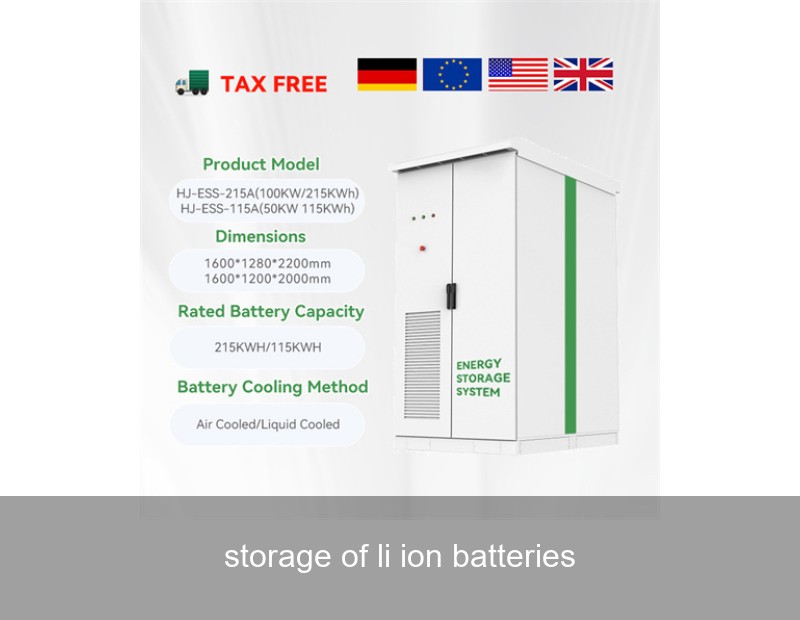
Imagine a world where the sun's energy powers your home long after sunset, where businesses remain operational through grid outages, and where renewable sources reliably meet our growing electricity demands. This vision hinges on one pivotal technology: the storage of li ion batteries. These aren't just the batteries in your phone or laptop; they are sophisticated, scalable systems that are fundamentally reshaping how we generate, store, and consume electricity. For homeowners, businesses, and entire communities, understanding the capabilities and strategic importance of lithium-ion battery storage is the first step toward energy independence and a sustainable future.
Table of Contents
- The Phenomenon: From Intermittency to Reliability
- The Data: Quantifying the Lithium-Ion Advantage
- A Case Study in Resilience: Germany's Industrial Shift
- Expert Insights: Beyond Basic Storage
- The Highjoule Approach: Intelligent Storage Solutions
- Your Energy Future: A Question of Control
The Phenomenon: From Intermittency to Reliability
We're in the midst of a clean energy revolution. Solar panels and wind turbines are becoming commonplace, but they present a fundamental challenge: intermittency. The sun doesn't always shine, and the wind doesn't always blow. This creates a mismatch between when energy is produced and when it's needed most. This is where storage of li ion batteries enters the stage as the indispensable enabler. By capturing excess renewable energy during peak production times, these systems release it during periods of high demand or low generation, effectively "time-shifting" electricity. For the European and American markets, this capability is no longer a luxury; it's a critical component for grid stability, reducing reliance on fossil-fuel peaker plants, and ensuring a continuous power supply for critical infrastructure.
The Data: Quantifying the Lithium-Ion Advantage
Why has lithium-ion technology become the dominant force for stationary energy storage? The numbers speak for themselves. Compared to older battery chemistries, li-ion systems offer a superior blend of energy density, efficiency, and lifecycle.
| Key Metric | Lithium-Ion Advantage | Impact for Users |
|---|---|---|
| Round-Trip Efficiency | 90-95% | More of your stored renewable energy is usable, improving ROI. |
| Energy Density | High (150-250 Wh/kg) | More storage capacity in a smaller, modular footprint. |
| Cycle Life | 5,000 - 10,000+ cycles | Longer system lifespan, often 10+ years with minimal degradation. |
| Depth of Discharge | Up to 90%+ | Ability to use most of the battery's capacity without damage. |
According to the International Energy Agency (IEA), the global grid-scale battery storage capacity is set to multiply exponentially, with lithium-ion being the technology of choice due to its rapidly declining costs and proven performance. This isn't just about storing energy; it's about storing value, resilience, and sustainability.

Image Source: Unsplash - A modern, scalable lithium-ion battery storage installation.
A Case Study in Resilience: Germany's Industrial Shift
Let's bring this to life with a real-world example. A mid-sized automotive parts manufacturer in Bavaria, Germany, faced a dual challenge: volatile energy prices cutting into profit margins and stringent corporate sustainability targets. Their existing rooftop solar array covered about 40% of their daytime load, but excess solar was fed back to the grid at low rates, and they remained vulnerable to evening peak tariffs and grid instability.
The Solution: The company deployed a 500 kWh / 1000 kWh lithium-ion battery storage system integrated with their solar PV and building management system. The Results, one year post-installation:
- Energy Cost Reduction: By storing excess solar and discharging during evening peak hours, they achieved a 32% reduction in electricity costs from the grid.
- Self-Consumption Boost: Solar self-consumption rate jumped from 35% to over 80%, maximizing their on-site renewable investment.
- Backup Power: The system provides critical process backup for up to 4 hours, preventing costly production halts.
- Carbon Footprint: Achieved an additional 25% reduction in scope 2 emissions related to purchased electricity.
This case mirrors a trend across European and U.S. industries. As noted by Wood Mackenzie, the commercial & industrial (C&I) segment is one of the fastest-growing for energy storage, driven by economics and resilience needs.
Expert Insights: Beyond Basic Storage
As a product technology expert at Highjoule, I often clarify that modern storage of li ion batteries is about intelligence, not just chemistry. The true value is unlocked by advanced Battery Management Systems (BMS) and energy management software. Think of the BMS as the brain of the system: it constantly monitors cell voltage, temperature, and state of charge to ensure safety, maximize lifespan, and optimize performance. This is where Highjoule's deep expertise comes into play.
Our systems are engineered with a multi-layered BMS that goes beyond protection to enable predictive analytics. This means the system can learn your energy usage patterns, forecast weather and solar production, and even respond to real-time grid signals (in markets that allow it) to provide grid services. This transforms a passive storage unit into an active, revenue-generating asset. It’s this intelligent layer that turns raw battery capacity into a reliable, strategic energy partner for your home or business.
The Highjoule Approach: Intelligent Storage Solutions
Founded in 2005, Highjoule has been at the forefront of this intelligent storage evolution. We understand that a one-size-fits-all solution doesn't work for energy storage. That's why our product suite is designed to meet specific needs across sectors:
- For Residential Users (HomeJoule Series): Our sleek, safe, and smart home battery systems integrate seamlessly with solar inverters. They empower homeowners to maximize self-consumption of solar energy, provide backup power during outages, and gain unprecedented control over their energy bills through our intuitive app.
- For Commercial & Industrial Clients (GridJoule Pro Series): These scalable, containerized or modular solutions are built for demanding applications. They offer peak shaving, demand charge reduction, and uninterruptible power for facilities like factories, data centers, and retail complexes. The system in our German case study is a prime example of the GridJoule Pro in action.
- For Utilities and Microgrids (UtilityJoule Mega Series): Our large-scale storage systems support grid stabilization, renewable integration, and deferred infrastructure investment. They are key to building resilient community microgrids, especially in areas prone to extreme weather or with limited grid access.
Across all our solutions, we prioritize safety with UL-certified designs, sustainability through high-efficiency components and recyclability programs, and intelligence via our proprietary JouleMind™ AI-driven platform. Our goal is to deliver not just a product, but a comprehensive, future-proof power solution.

Image Source: Unsplash - Advanced energy management and monitoring is key to value.
Your Energy Future: A Question of Control
The conversation around energy is shifting from mere consumption to active management. With the rapid advancement in storage of li ion batteries, the power to control your energy destiny is more accessible than ever. Whether you're a homeowner looking to shield yourself from rising tariffs, a factory manager tasked with cutting costs and carbon, or a community planner designing a resilient local grid, the technology is here and proven.
But the landscape can be complex. Regulations, incentives, and technology options vary widely between regions in Europe and the United States. So, here is our question for you: What is the single biggest energy challenge you face today—is it cost volatility, reliability concerns, sustainability goals, or a combination—and how do you see intelligent energy storage playing a role in solving it? Exploring this question is the first step toward transforming your energy profile from a passive expense into a strategic asset.
 Inquiry
 Online Chat