


Why the Storage of Renewable Energy is the Keystone of Our Clean Energy Future
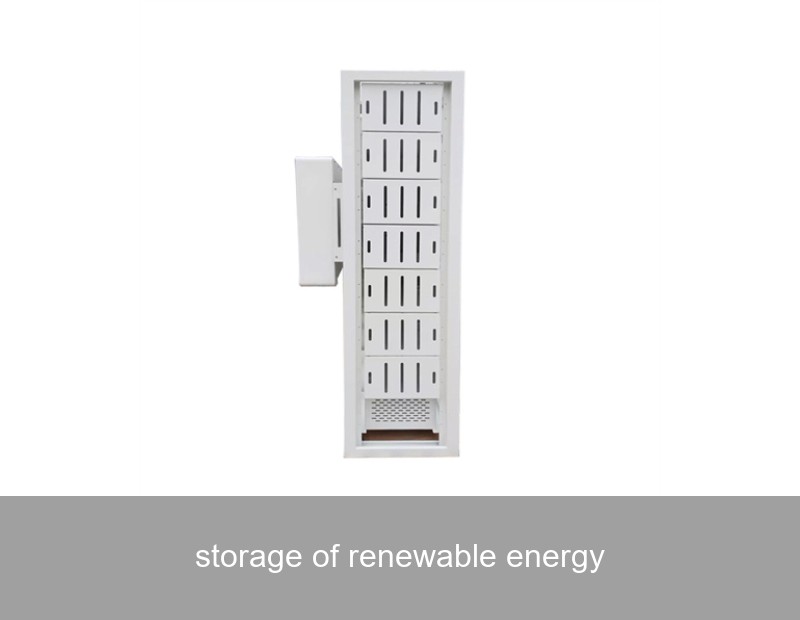
You've likely seen the headlines: solar panels are breaking efficiency records, wind turbines are growing taller, and the cost of renewable energy continues to plummet. It's an exciting time. But there's a fundamental challenge that often goes unnoticed by the public—the sun doesn't always shine, and the wind doesn't always blow. This intermittency is the single biggest hurdle to a grid powered by 100% renewables. The solution, and arguably the most critical piece of the puzzle, is the storage of renewable energy. Without effective storage, excess clean energy is wasted when production is high, and we fall back on fossil fuels when it's low. In this article, we'll explore how modern energy storage systems are transforming this dynamic, turning renewable sources from intermittent suppliers into reliable, on-demand power pillars.
Table of Contents
- The Intermittency Challenge: More Than Just a Cloudy Day
- How Modern Energy Storage Works: Beyond the Basic Battery
- The Data Don't Lie: Storage is Scaling Globally
- Case Study: Taming the Texas Grid with Solar and Storage
- Highjoule's Role: Intelligent Storage for a Sustainable Grid
- Future Horizons: What's Next for Energy Storage?

Large-scale battery storage systems are becoming a common sight alongside solar and wind farms. (Image credit: Unsplash)
The Intermittency Challenge: More Than Just a Cloudy Day
Think about the last time a sudden storm rolled in, or the wind died down on a hot, still afternoon. For grid operators, these aren't just weather events; they are significant logistical and financial crises. The electrical grid operates on a delicate balance of supply and demand, second-by-second. Traditional power plants (like coal or gas) provide "dispatchable" power—you can turn them up or down as needed. Solar and wind, in their natural state, are not dispatchable. This mismatch creates two problems:
- The Curtailment Problem: On extremely sunny or windy days, if renewable generation exceeds what the grid can absorb, utilities are forced to "curtail" or waste that clean, free energy. In California, curtailment rates have soared alongside solar capacity, highlighting the urgent need for storage.
- The Duck Curve: This famous graph shows the net demand on the grid throughout a day. As solar production peaks at midday and then plummets at sunset, a steep ramp-up in other power sources is required—a shape resembling a duck's back. This rapid ramp is inefficient and expensive, often relying on fast-reacting, but polluting, natural gas "peaker" plants.
This is where energy storage acts as the ultimate mediator. It absorbs excess energy when production is high and releases it when needed, effectively shaving the peak off the duck's back and filling in the valleys.
How Modern Energy Storage Works: Beyond the Basic Battery
When we talk about the storage of renewable energy, lithium-ion battery systems often come to mind first, thanks to their rapid response and scalability. But the technological landscape is diverse. Let's break down the main types:
| Technology | Best For | Duration | Example Use Case |
|---|---|---|---|
| Lithium-ion Batteries | Frequency regulation, peak shaving, short-duration backup | 1-4 hours | Storing midday solar for evening use in a home or business. |
| Flow Batteries | Long-duration storage, grid-scale applications | 4-12+ hours | Storing multiple days of wind energy for a community microgrid. |
| Pumped Hydro | Massive grid-scale energy management | Many hours to days | Providing bulk energy storage for a national grid. |
The true innovation, however, lies not just in the chemistry but in the intelligence governing these systems. A modern Battery Energy Storage System (BESS) is a sophisticated piece of tech. It includes the battery racks, a power conversion system (PCS) that manages AC/DC current, and a critical component: the Battery Management System (BMS) and Energy Management System (EMS). These "brains" optimize every charge and discharge cycle for efficiency, longevity, and safety, while also allowing the system to participate in grid services like frequency response.
Highjoule's Intelligent Approach to Storage
At Highjoule, we've spent nearly two decades refining this intelligence. Our HiveMind EMS platform is what sets our storage solutions apart. For a commercial business with solar panels, a Highjoule system doesn't just store excess energy blindly. HiveMind analyzes real-time electricity prices, weather forecasts, the building's consumption patterns, and even grid stress signals. It then autonomously decides the most economical and sustainable moment to store or release energy. This could mean charging batteries with cheap, midday solar to avoid buying expensive grid power during the evening peak, or providing grid services to earn additional revenue. Our solutions, from the compact HomeHub series for residences to the modular, containerized GridMax utility-scale systems, are built with this integrated intelligence from the ground up, ensuring our clients don't just store energy—they optimize it.
The Data Don't Lie: Storage is Scaling Globally
The growth trajectory for energy storage is nothing short of explosive. According to the International Energy Agency (IEA), the world added a record 42 GW of grid-scale battery storage capacity in 2023 alone—a figure that dwarfs additions from just five years prior. The United States and Europe are leading this charge, driven by supportive policies like the Inflation Reduction Act (IRA) and the EU's Green Deal, as well as the sheer economic sense it now makes.
- Costs are plummeting: The levelized cost of storage (LCOS) for lithium-ion batteries has fallen by over 70% in the last decade.
- Policy is accelerating deployment: Targets like California's mandate for 52 GW of renewable energy storage by 2045 create a clear market signal.
- Grid resilience is a priority: After extreme weather events, the value of having localized, resilient power has become crystal clear to communities and businesses alike.

Control rooms for advanced storage systems, like those managed by Highjoule's HiveMind platform, allow for real-time optimization and monitoring. (Image credit: Unsplash)
Case Study: Taming the Texas Grid with Solar and Storage
Let's look at a real-world example that underscores the transformative power of storage. The ERCOT grid in Texas is known for its independence and, recently, its vulnerability to extreme weather. During the summer of 2023, a major industrial plant outside of Houston faced a dual challenge: skyrocketing demand charges from the grid and concerns over potential rolling blackouts during heatwaves.
The solution was a co-located solar canopy and a Highjoule GridMax 2.0 MWh battery storage system. Here's what happened:
- Installation: A 1.5 MW solar array was paired with a 2 MWh GridMax battery system.
- Strategy: The HiveMind EMS was programmed for peak shaving and demand charge management.
- Results in the First Year:
- Demand Charge Reduction: The system reduced the plant's peak grid draw by 40%, slashing monthly demand charges by an average of $18,000.
- Energy Arbitrage: By storing cheap solar and night-time power for use during high-price afternoon hours, the plant saved an additional $45,000 on energy costs.
- Reliability: During two grid conservation alerts in August, the plant seamlessly islanded itself, maintaining full operations for 3 hours without drawing from the stressed ERCOT grid.
This case is a microcosm of the broader value proposition: storage is no longer just a backup; it's a strategic financial asset and a grid resilience tool.
Future Horizons: What's Next for Energy Storage?
The innovation in storage of renewable energy is accelerating. We're moving beyond lithium-ion into new chemistries like sodium-ion and solid-state batteries that promise greater safety and lower costs. The concept of "virtual power plants" (VPPs)—where thousands of distributed home and business storage systems are aggregated to act as a single, dispatchable power plant—is becoming a reality. Highjoule is actively involved in several VPP pilot programs across Europe, allowing our residential HomeHub customers to contribute to grid stability while earning incentives.
Furthermore, the integration of artificial intelligence and machine learning into platforms like HiveMind will enable predictive energy management at a scale we're only beginning to imagine, forecasting grid needs and optimizing millions of storage assets in real-time.

The combination of wind power and battery storage is a powerful duo for providing clean, dispatchable energy. (Image credit: Unsplash)
The journey to a decarbonized grid is complex, but one thing is certain: the storage of renewable energy is the enabling technology that makes the destination not just possible, but practical and profitable. It turns the variable nature of sun and wind from a liability into our greatest asset.
Is your business or community evaluating how to integrate renewable energy storage to manage costs, increase resilience, and meet sustainability goals? What specific energy challenge would you need a smart storage system to solve first?
 Inquiry
 Online Chat