


Mastering the Deye 1MW Hybrid Energy Storage Cabinet Setup: A Guide for Large-Scale Power Management
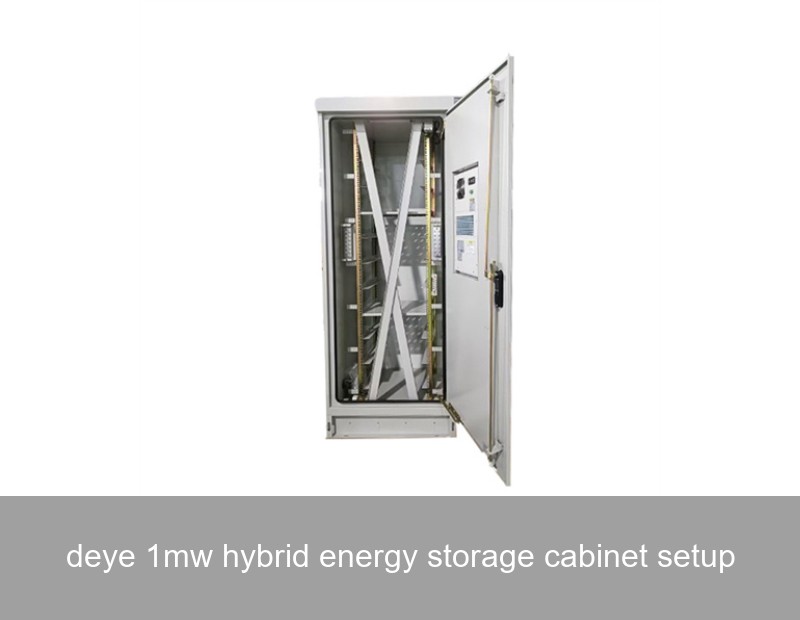
If you're managing a commercial facility, industrial plant, or a community microgrid, you've likely felt the dual pressures of rising energy costs and the urgent need for greater sustainability. The solution for many forward-thinking operations is no longer just about generating renewable energy—it's about storing it intelligently and deploying it with precision. This is where the concept of a Deye 1MW hybrid energy storage cabinet setup comes into sharp focus. This powerful system represents a paradigm shift, moving from simple backup to sophisticated energy asset management. But what does it truly take to plan, install, and optimize such a significant piece of infrastructure? As a global leader in advanced energy storage solutions since 2005, Highjoule has deployed hundreds of megawatt-scale systems. We're here to demystify the process and share the critical insights that ensure your investment delivers maximum return and resilience.
Table of Contents
- The Phenomenon: Why 1MW Hybrid Storage is Becoming the New Standard
- The Data: Quantifying the Impact of a Megawatt-Scale System
- The Setup: Key Components of a Deye 1MW Hybrid Cabinet System
- The Case Study: A Real-World Application in European Manufacturing
- The Expert Insight: Best Practices for Deployment from Highjoule
- The Future: What's Next for Large-Scale Energy Storage?
The Phenomenon: Why 1MW Hybrid Storage is Becoming the New Standard
Across Europe and the United States, a quiet revolution is underway in factory parks, data center campuses, and agricultural hubs. The traditional model of drawing power from the grid and hoping for the best is being replaced by a proactive, self-sufficient approach. The driving forces are clear: volatile energy prices, increasing grid instability, stringent carbon reduction targets, and the compelling economics of solar PV. A hybrid energy storage cabinet setup sits at the heart of this transition. Unlike a simple battery bank, a "hybrid" system seamlessly integrates multiple energy sources—like solar arrays, wind turbines, and the grid—with a large-scale battery bank, all managed by a central brain (the inverter/controller). The 1MW (1000kW) scale is particularly significant. It's the sweet spot for large commercial and industrial (C&I) applications, capable of shaving peak demand charges, providing hours of backup power, and storing massive amounts of midday solar for use in the evening. For organizations like Highjoule's clients, this isn't just an equipment purchase; it's a strategic energy infrastructure upgrade.
The Data: Quantifying the Impact of a Megawatt-Scale System
Let's talk numbers, because the business case is powerful. A properly configured 1MW/2MWh system (delivering 1 megawatt of power for 2 hours) can have a transformative financial and operational impact. Consider a manufacturing plant in Germany with a peak demand of 2.5MW. Grid demand charges can constitute up to 30-50% of a commercial electricity bill. By using the storage system to discharge power during the facility's short periods of highest consumption—a process called peak shaving—the plant can reduce its peak draw from the grid by 40%, leading to direct and substantial savings. Furthermore, with solar integration, self-consumption of renewable energy can jump from a typical 30-40% to over 70%, dramatically cutting energy costs and carbon footprint. The system also provides ride-through capability during grid sags and full backup for critical loads during outages, preventing costly downtime. Highjoule's HPS Series Commercial Energy Storage Systems, which can be configured in multi-megawatt arrays, are engineered specifically for this calculus of ROI, resilience, and sustainability.

Image Source: Unsplash - Representative image of industrial energy storage planning
The Setup: Key Components of a Deye 1MW Hybrid Cabinet System
Understanding the anatomy of this system is crucial. A Deye 1MW hybrid energy storage cabinet setup is a sophisticated ecosystem, not a single appliance. Here’s a breakdown of its core components:
- Power Conversion System (PCS) Cabinets: These house the Deye hybrid inverters, the "brains" and "muscle" of the operation. They convert DC from solar and batteries to AC for your building, and vice-versa for charging. A 1MW system typically involves multiple inverter units operating in parallel.
- Battery Energy Storage System (BESS) Cabinets: These contain the lithium-ion battery modules (typically LFP chemistry for safety and longevity), battery management systems (BMS), and safety equipment. They are the energy reservoir.
- Power Distribution Unit (PDU): This is the critical switchboard that connects the system to your facility's main electrical panel, the grid connection, and often the solar PV inverter output.
- Energy Management System (EMS): The strategic commander. This software-based system monitors energy prices, consumption patterns, and weather forecasts to autonomously decide when to charge, discharge, or hold, optimizing for cost or carbon goals.
- Thermal Management & Safety Systems: Dedicated cooling (often air-conditioned) and comprehensive fire suppression are non-negotiable for safety, performance, and battery life in a system of this scale.
Highjoule’s role extends beyond supplying components. Our end-to-end service encompasses initial feasibility studies, custom system design, professional installation, grid compliance assistance (a major hurdle in many regions), and ongoing performance monitoring via our proprietary platform. We ensure the Deye cabinets are not just installed, but integrated into a holistic energy solution.
The Case Study: A Real-World Application in European Manufacturing
Let's ground this in reality. A prominent automotive parts supplier in Northern Italy faced crippling peak demand charges and sought to stabilize operations against frequent local grid fluctuations. Their goal was to lock in energy costs and enhance green credentials. Highjoule designed and deployed a turnkey solution centered around a Deye 1.2MW/2.4MWh hybrid energy storage cabinet setup, integrated with their existing 800kW rooftop solar array.
| Metric | Before Installation | After Installation |
|---|---|---|
| Peak Grid Demand | 1.8 MW | 1.1 MW (39% reduction) |
| Solar Self-Consumption | ~35% | ~85% |
| Estimated Annual Energy Cost Savings | Baseline | €145,000 |
| Backup Power for Critical Loads | None | Up to 4 hours |
The system was configured for peak shaving and solar time-shift. The EMS charges the batteries with excess solar midday, then discharges them during the evening production peak when grid prices are highest. The result? A rapid payback period, a significant reduction in scope 2 emissions, and peace of mind. This case mirrors findings from the National Renewable Energy Laboratory (NREL), which highlights the multi-value stream potential of C&I storage.

Image Source: Unsplash - Representative image of installed battery cabinets
The Expert Insight: Best Practices for Deployment from Highjoule
Based on our nearly two decades of experience, here are the pivotal factors often overlooked in a 1MW hybrid energy storage cabinet setup project:
- Site Assessment is King: The physical and electrical environment is everything. We conduct rigorous analyses of available space, floor loading capacity, ambient temperature, and grid connection point capacity. The placement of cabinets for airflow and service access is critical for long-term operability.
- Grid Interconnection: Start Early: The utility approval process can be the longest lead-time item. Engaging with the local Distribution Network Operator (DNO) or utility company at the design phase is essential. Highjoule's team has extensive experience navigating the grid codes in markets like the UK, Germany, and the U.S., ensuring compliance with standards like G99/100 or IEEE 1547.
- Clarity on Operational Modes: Define the primary objective: Is it demand charge reduction, energy arbitrage, renewable firming, or backup? The control strategy and system sizing will differ. Often, we design for multiple value stacks, but the priority must be clear.
- Plan for the Entire Lifecycle: Consider future expansion. Will you add more solar? Is the site's electrical load expected to grow? A modular design, like that of Highjoule's cabinet systems, allows for cost-effective capacity additions later. Also, factor in end-of-life battery recycling plans from day one.
The Future: What's Next for Large-Scale Energy Storage?
The technology behind systems like the Deye cabinet is not static. We are moving towards even smarter, more integrated energy ecosystems. The next frontier is the participation in grid services markets—where your storage system can provide frequency regulation or voltage support to the regional grid, creating a new revenue stream. Furthermore, advancements in battery chemistry and system design are continuously driving down costs and improving cycle life. The integration of AI for predictive energy management is also on the rise, using machine learning to forecast consumption and generation with ever-greater accuracy. As noted by the International Energy Agency (IEA), energy storage is a cornerstone of secure, clean energy transitions worldwide.
The journey to deploying a megawatt-scale hybrid storage system is complex, but the destination—energy independence, cost control, and sustainability—is undeniable. With the right technology partner that understands both the hardware and the intricate landscape of C&I energy management, it becomes a manageable and highly rewarding project. Is your organization ready to model the specific savings and resilience a 1MW system could bring to your operations?
 Inquiry
 Online Chat