


Storage Savant: How Much Energy Storage Do You Really Need for Your Home or Business?
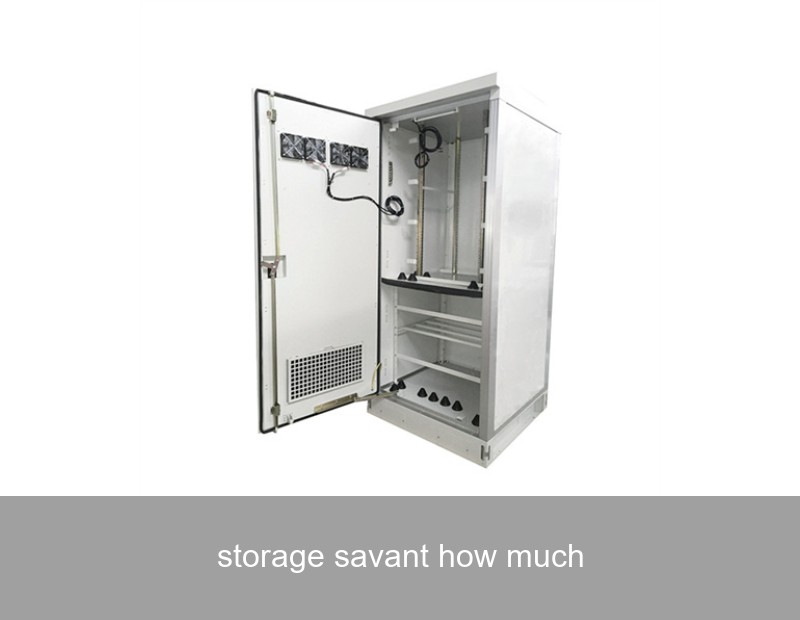
You've heard the buzz: solar panels are a great start, but pairing them with a battery is the real game-changer. It's the key to energy independence, backup security, and maximizing your renewable investment. But the million-dollar question (or perhaps the five-thousand-dollar one) is this: Storage savant, how much? How do you move from a vague idea to a perfectly sized system that meets your unique needs without overspending or underperforming? Let's demystify energy storage sizing together.
Table of Contents
The Phenomenon: From "Nice-to-Have" to Essential Infrastructure
Across Europe and the United States, a quiet revolution is happening in basements, garages, and commercial facilities. Energy storage is no longer just for the eco-enthusiast. It's becoming a strategic asset. Why? The reasons are stacking up like well-charged battery cells:
- Grid Volatility: Increasingly unpredictable weather leads to more frequent and severe grid outages.
- Time-of-Use (TOU) Rates: Utilities are aggressively shifting to pricing models where electricity costs 2-3 times more during peak evening hours.
- The "Duck Curve": In regions with high solar penetration, the grid sees a massive surge of solar power midday and a steep ramp-up demand at sunset. This strains the grid and devalues simple solar exports.
The result? Homeowners and business operators are asking smarter questions. It's not just "should I get a battery?" but "storage savant, how much capacity do I need to navigate this new energy landscape effectively?"
The Data: What Numbers Really Matter for Sizing?
Forget the technical jargon for a moment. Sizing a battery system boils down to three core questions, each tied to a key metric. Think of it as the energy storage trinity:
| Your Primary Goal | Key Metric to Size For | What It Means |
|---|---|---|
| Backup Power (Outage Protection) | Usable Energy Capacity (kWh) | This is your "gas tank." How many kilowatt-hours of energy can you use? It determines how long you can power essential loads during an outage (e.g., 10 kWh might run basics for 8-24 hours). |
| Load Shifting (Beat TOU Rates) | Daily Energy Throughput (kWh/day) | This is about daily cycling. How much of your evening/night energy use do you want to cover with stored solar? Size your battery to cover your typical consumption from grid peak periods. |
| Powering Heavy Loads (Startup Surges) | Continuous & Peak Power (kW) | This is your system's "horsepower." Can it deliver the instant surge needed to start a well pump, air conditioner, or industrial motor? This often dictates the inverter size. |
For example, a typical American home might use 30 kWh per day. Backing up the entire home for a 24-hour outage would require a massive, costly system. A savant approach? Analyze your circuit panel. You might find that backing up just critical loads (fridge, lights, modem, furnace) only requires 15-20 kWh of daily use. Suddenly, the sizing becomes more practical and affordable.

Image Source: Unsplash (Representative image of a residential battery installation)
The Case Study: A California Winery's Storage Success
Let's ground this in reality. A mid-sized winery in Sonoma County, California, faced a perfect storm of challenges: Public Safety Power Shutoffs (PSPS) threatened fermentation tanks, steep TOU rates cut into profits, and they wanted to green their operations.
The Problem: A 4-hour outage could ruin a vintage, costing hundreds of thousands. Their peak energy demand (crush season, cooling) hit 250 kW, but their critical baseline during an outage was 50 kW.
The Savant Sizing Solution: They partnered with Highjoule for a detailed audit. The system wasn't sized for their peak load, but for their critical load duration. The goal was 8+ hours of backup for fermentation control, critical cooling, and tasting room basics.
The Highjoule Implementation: A customized Highjoule C&I Stack system was installed with 180 kWh of usable capacity and a 100 kW inverter. This modular, containerized solution provided:
- 8-10 hours of backup for critical operations, ensuring zero product loss.
- Daily load shifting of 150 kWh, slashing their peak-time grid purchases by over 80%.
- Seamless integration with their existing solar array.
The Result: In the first year, they avoided 3 outage events seamlessly, saved $18,000 in demand charges and TOU arbitrage, and increased their on-site renewable consumption to 92%. Their payback period is projected at under 5 years. This is the power of precise, goal-oriented sizing.
The Savant's Solution: Highjoule's Intelligent Approach
At Highjoule, we believe the question "storage savant, how much" cannot be answered with a simple online calculator. It requires an intelligent, three-phase process that we apply for every commercial, industrial, and residential client:
1. Deep Energy Analytics
We start by analyzing 12-24 months of your utility data. We model your load profile against local weather patterns, solar production (existing or planned), and utility rate structures. This isn't guesswork; it's data-driven forecasting.
2. Goal-Based Modular Design
Our product lines are built for this precision. For residential clients, the Highjoule Home Hub offers scalable capacity from 10 kWh to 30 kWh per unit, allowing you to start with what you need and expand later. For commercial applications, our C&I Stack series provides containerized solutions that can be configured from 100 kWh to multi-MWh scales.

Image Source: Unsplash (Representative image of energy system monitoring)
3. AI-Driven Energy Management (The True Savant)
The hardware is just the beginning. Our proprietary Adaptive Pulse OS is the brain of the system. It doesn't just react; it learns and predicts. It knows:
- When a storm is forecasted and will ensure the batteries are 100% charged ahead of time.
- The exact minute your utility's peak rate starts and stops, optimizing every cent of savings.
- How to prioritize between backup, savings, and grid-support services dynamically.
This transforms a static battery into a true financial and resiliency asset. For microgrid projects, this intelligence is paramount, allowing seamless islanding and reconnection.
Your Next Step: From Question to Clarity
So, how do you become a storage savant for your own property? The journey begins by shifting the conversation from technical specs to personal and business objectives.
Instead of asking "how many kilowatt-hours?", start by answering these questions:
- "What are the 5-10 circuits I cannot live without during a two-day outage?"
- "Looking at my utility bill, how many kWh do I typically use between 4 PM and 9 PM?"
- "What is the single biggest driver for me: resilience, financial return, or sustainability leadership?"
These answers provide the blueprint. Companies like Highjoule exist to translate that blueprint into a perfectly engineered system. With nearly two decades of experience from Norway to Nevada, we've seen that the perfectly sized system isn't the biggest—it's the smartest.
Ready to move beyond the generic question? What's the one energy challenge you face today that a smarter, rightly-sized storage system could solve?
 Inquiry
 Online Chat