


Navigating Energy Independence: Insights from CEPALCO Energy Services Corporation and Modern Solutions
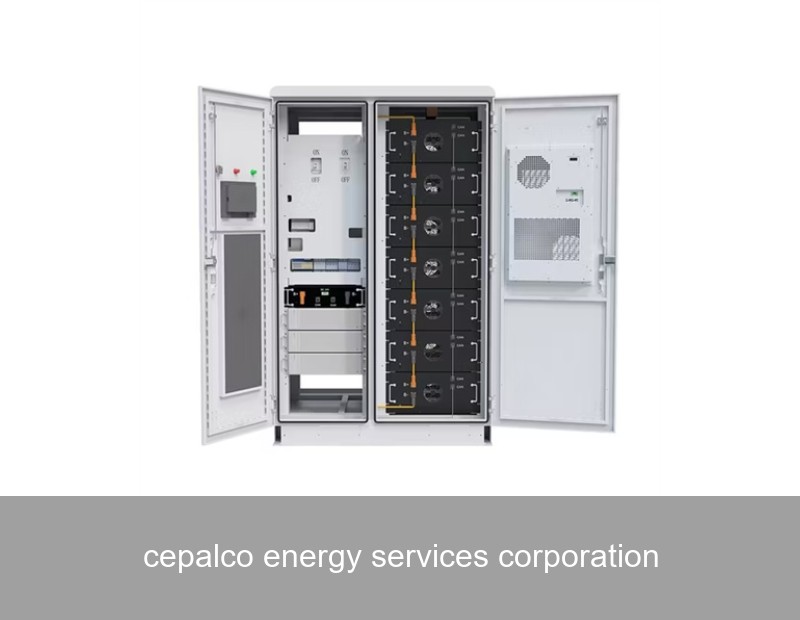
If you're managing a business, a community's power, or even a large home, you've likely felt the pinch of rising electricity costs and the anxiety of unpredictable grid stability. It's a global phenomenon, but the solutions are being pioneered by forward-thinking entities. One such example from the Philippines, the CEPALCO Energy Services Corporation (CESC), offers a compelling blueprint. While their context is specific, the challenges they address—cost efficiency, reliability, and sustainability—resonate deeply with commercial and industrial players in Europe and the US. This article explores the principles behind successful energy service models and how today's advanced technology, like the intelligent storage systems from Highjoule, is making energy independence more accessible and intelligent than ever before.
Understanding the Modern Energy Challenge
Gone are the days when electricity was a simple, predictable utility. Today, energy managers face a triple challenge: volatile prices that impact bottom lines, an aging grid infrastructure prone to outages, and increasing pressure to meet corporate sustainability goals. This isn't just an inconvenience; it's a direct risk to operational continuity and profitability. The question is no longer *if* one should explore alternative energy solutions, but *how* to implement them effectively.
What is CEPALCO Energy Services Corporation?
To understand the "how," let's look at a practical example. CEPALCO Energy Services Corporation is a subsidiary of the Cagayan Electric Power and Light Company in the Philippines. Established to provide competitive and reliable energy services, CESC operates as a Retail Electricity Supplier, offering tailored power supply solutions to contestable customers—those who can choose their supplier—primarily in the commercial and industrial sectors. Their model focuses on providing cost-effective, reliable power, often incorporating innovative approaches to meet specific client needs. While their solutions are tied to their local market structure, their core mission aligns with a worldwide trend: taking proactive control of energy sourcing and management.
The Data Behind the Energy Shift
The move towards self-managed energy is driven by hard data. According to the U.S. Energy Information Administration, the average duration of a power interruption for U.S. customers in 2020 was approximately 8 hours. For a medium-sized factory, this can mean six-figure losses. Meanwhile, the levelized cost of energy from solar photovoltaics has plummeted by over 85% in the last decade. The synergy is clear: pairing renewable generation with advanced storage creates a buffer against price spikes and outages. It transforms energy from a passive expense into an active, manageable asset.
| Challenge | Typical Impact | Mitigation Strategy |
|---|---|---|
| Grid Outage (8 hrs) | Production halt, data loss, spoiled inventory | Uninterruptible Power Supply (UPS) & Battery Storage |
| Time-of-Use Price Spikes | Inflated operational costs, reduced competitiveness | Solar + Storage for peak shaving |
| Carbon Footprint Goals | Failing to meet ESG commitments, potential penalties | On-site renewable generation and smart energy management |
A Case Study in Resilience and Savings
Consider a modern beverage bottling plant in Southern Germany. Facing steep "peak demand" charges from the grid and committed to 100% renewable operation, they partnered with Highjoule to design a turnkey solution. The system integrated a 2 MW rooftop solar array with a 4 MWh Highjoule H-Series Industrial Battery Energy Storage System (BESS) and our proprietary Energy Management System (EMS).

The results were quantifiable within the first year:
- Peak Demand Reduction: The system automatically discharged stored solar energy during high-cost grid periods, slashing peak demand charges by 40%.
- Increased Self-Consumption: The plant's direct use of its solar power jumped from 35% to over 80%, dramatically reducing purchased electricity.
- Uninterrupted Operations: During two planned grid maintenance outages, the BESS provided seamless backup power for critical cooling and packaging lines, preventing €250,000 in potential lost production.
This mirrors the value proposition that energy service companies aim for: direct financial savings coupled with operational resilience.
The Intelligent Solution: Beyond Backup
The German case highlights a critical evolution. Modern storage isn't just a backup battery in a closet; it's an intelligent, grid-interactive asset. Highjoule's systems, for instance, use AI-driven software to perform multiple revenue-generating or cost-saving functions simultaneously: peak shaving, energy arbitrage (buying cheap power to use or sell later), and providing frequency regulation services to the grid where market structures allow. This multi-stacking of value streams is what makes the investment so compelling. It's the technological leap that makes the principles of an CEPALCO Energy Services Corporation-style model—optimization and reliability—achievable at scale for businesses worldwide.
Highjoule's Role in Empowering Energy Independence
Since 2005, Highjoule has been at the forefront of this intelligence revolution in storage. We provide more than just hardware; we deliver comprehensive, smart power solutions. For a commercial business, this might mean our CommStore series, a modular BESS designed for easy integration into existing electrical systems. For a large industrial facility or a microgrid, our H-Series offers utility-scale power and capacity. For residential communities seeking collective resilience, our HomeHub systems can be aggregated into a virtual power plant. Across all applications, our integrated EMS is the brain, constantly analyzing weather, usage patterns, and grid signals to make optimal, automated decisions that protect your operations and your budget.
Key Components of a Modern Energy System
Building a resilient and efficient energy setup involves several key pieces working in harmony:
- Generation (e.g., Solar PV): Your on-site power plant, reducing dependence on the grid.
- Intelligent Battery Storage (BESS): The heart of the system. It stores excess generation, provides instant backup power, and manages grid interaction.
- Energy Management System (EMS): The strategic brain. This software platform controls when to charge, discharge, or hold, based on economics and reliability needs.
- System Integration & Services: Expert design, installation, and ongoing support to ensure the system performs optimally for its entire 15-20 year lifespan.

Future-Proofing Your Energy Strategy
The landscape is clear. Regulatory pressures, like carbon pricing mechanisms in the EU, are increasing. Consumer and investor preference is tilting heavily towards sustainable enterprises. Technologies like electric vehicle fleets will add new demand layers. An intelligent energy system with storage at its core is the foundational infrastructure to navigate this future. It provides the flexibility to adapt to new tariffs, incorporate additional renewables, and even participate in demand response programs for additional income.
So, as you evaluate your energy strategy, ask yourself this: Is your current power setup a predictable cost center, or is it a dynamically managed asset that contributes to your resilience, sustainability, and profitability? The path pioneered by adaptive energy providers and enabled by companies like Highjoule is now open for businesses on both sides of the Atlantic. What is the first step your organization will take to gain control over its energy future?
 Inquiry
 Online Chat