


PV Speicher mit Integriertem Wechselrichter: The Complete Guide to All-in-One Solar Energy Storage
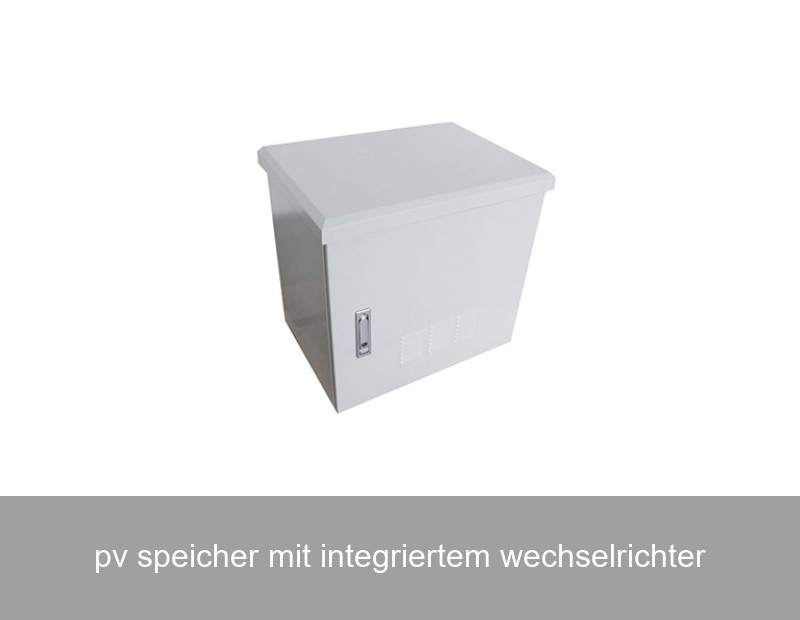
You're considering a solar battery system. You've seen the panels, the inverter, the battery unit, the cables, and the mounting hardware. It can feel complex, right? What if there was a cleaner, smarter, and more efficient way to harness the sun's power for your home or business? Enter the PV Speicher mit Integriertem Wechselrichter – the integrated solar battery inverter system. This all-in-one solution is revolutionizing how we store and use solar energy, moving from a collection of components to a single, intelligent energy hub. Let's explore why this technology is becoming the preferred choice for energy-conscious homeowners and businesses across Europe and the US.
Table of Contents
- What is an Integrated PV Battery Inverter System?
- The Problem: Clunky Systems and Lost Energy
- The Data: Why Integration Wins on Efficiency and ROI
- Case Study: A German Household's Journey to Energy Autonomy
- The Highjoule Solution: Intelligence Built-In
- Key Features to Look For in an Integrated System
- Is Your Energy System Future-Ready?
What is an Integrated PV Battery Inverter System?
Traditionally, a solar-plus-storage setup involves separate components: solar panels, a solar inverter (to convert DC from panels to AC for your home), a battery inverter/charger (to manage DC from the battery), and the battery pack itself. A PV Speicher mit Integriertem Wechselrichter consolidates the core power electronics into one sleek unit. It combines the functions of a solar inverter, a battery inverter, and a charge controller, often with advanced energy management software at its heart. Think of it not as a box of parts, but as the brain and heart of your personal power station.

Image Source: Unsplash - A modern, integrated energy storage unit.
The Problem: Clunky Systems and Lost Energy
Let's paint a picture. The sun is shining, your panels are producing more power than your home needs. With a basic system, excess energy is fed back to the grid, often for a modest feed-in tariff. Later, when the sun sets, you buy energy back from the grid at a much higher rate. This seesaw game means lost savings. Furthermore, separate inverters can lead to conversion losses at each stage (DC to AC, then back to DC for storage, then back to AC for use). It's inefficient. The physical setup requires more space, more wiring, and more complex installation. What you need is a system that prioritizes your consumption, minimizes waste, and simplifies everything.
The Data: Why Integration Wins on Efficiency and ROI
The numbers speak for themselves. According to analysis by the Fraunhofer Institute for Solar Energy Systems (ISE), system-level efficiency is paramount for maximizing self-consumption. An integrated system can reduce overall conversion losses by up to 3-5% compared to decoupled setups. Over a system's 20-year lifespan, that's a significant amount of energy recaptured.
| Feature | Integrated PV Battery Inverter | Traditional Component System |
|---|---|---|
| Overall System Efficiency | Higher (up to 97%) | Lower (often 92-94%) |
| Installation Complexity | Lower (one main unit) | Higher (multiple units, more wiring) |
| Footprint & Space | Compact | Larger |
| Energy Management | Unified, intelligent software | Often fragmented |
| Scalability | Typically easier, modular | Can be complex |
This efficiency directly translates to a better return on investment (ROI). You use more of the energy you produce, buy less from the grid, and protect yourself against rising energy prices faster.
Case Study: A German Household's Journey to Energy Autonomy
Consider the Müller family in Bavaria, Germany. In 2021, they installed a standard 10 kWp PV system. Their self-consumption rate was only 35%. Frustrated with low feed-in tariffs and high night-time rates, they retrofitted a PV Speicher mit Integriertem Wechselrichter in 2023. They chose a system designed for retrofit, like Highjoule's ResiLink Fusion series, known for its seamless integration with existing PV arrays.
- Before Integration: Annual electricity bill: €1,850. Self-consumption: 35%.
- After Integration: Annual electricity bill: €320. Self-consumption: 85%.
- System: 10 kWp existing PV + 13.8 kWh Highjoule ResiLink Fusion battery with integrated inverter.
- Result: The family now covers over 90% of their annual energy needs, reducing grid dependence dramatically. Their calculated payback period for the storage addition is under 7 years, a strong figure given the German climate and energy market.
This real-world example, mirrored by thousands of installations, shows the transformative power of an intelligent, all-in-one unit.
The Highjoule Solution: Intelligence Built-In
At Highjoule, we've been pioneering advanced energy storage since 2005. We understand that a true PV Speicher mit Integriertem Wechselrichter is more than just hardware in one box; it's about seamless intelligence. Our ResiLink Fusion (for residential) and GridSynk Modular (for commercial/industrial) platforms embody this philosophy.
What sets Highjoule systems apart is the Adaptive Energy Operating System (AEOS). This proprietary software doesn't just react; it learns and predicts. It analyzes your consumption patterns, weather forecasts, and even dynamic electricity tariffs (where available) to make millisecond-by-millisecond decisions: Should we charge the battery? Power the load? Or provide grid services? This maximizes your financial and energy autonomy. For businesses, this intelligence can mean significant demand charge reduction and backup power assurance.

Image Source: Unsplash - A modern home powered by integrated solar and storage.
Key Features to Look For in an Integrated System
Not all integrated systems are created equal. When evaluating a PV Speicher mit Integriertem Wechselrichter, ensure it offers:
- High Round-Trip Efficiency: Look for figures above 95% for AC-coupled systems. This measures how much energy you get out versus what you put in.
- Scalable Battery Capacity: Can you easily add more battery modules later as your needs grow (e.g., with an EV)? Highjoule systems offer modular plug-and-play expansion.
- Advanced Energy Management Software: A user-friendly app is a must. It should provide real-time data, system health monitoring, and customizable operating modes (e.g., self-consumption, backup, time-of-use optimization).
- Seamless Backup Power: In a grid outage, the system should automatically and instantly (<50ms) form an island grid to power your critical loads. Highjoule systems include this as a standard feature.
- Safety & Warranty: Ensure the battery uses safe, proven cell chemistry (like LiFePO4) and comes with a robust, long-term warranty (often 10+ years).
Is Your Energy System Future-Ready?
The energy landscape is shifting from a one-way grid to a dynamic, interactive network. With electric vehicles, heat pumps, and dynamic pricing, your home's energy system needs to be a smart participant. A standalone inverter and a basic battery might not cut it in 5 years. An integrated system like those from Highjoule is designed for this future. It can communicate with EVs (V2H ready), respond to grid signals for virtual power plant (VPP) participation, and adapt to new tariffs.
The choice for a modern energy system is clear. It's not just about buying components; it's about investing in an intelligent energy platform. The PV Speicher mit Integriertem Wechselrichter is the cornerstone of that platform. So, we leave you with this: When you look at your next energy bill, ask yourself – is your current system working for you, or are you working around its limitations?
 Inquiry
 Online Chat