


Sun Power Solar How Much? Unpacking the True Cost and Value of Your Energy Future
If you've found yourself typing "sun power solar how much?" into a search engine, you're asking the right question, but perhaps not the complete one. The initial price of a solar panel system is just the entry ticket. The real inquiry should be: "How much value, independence, and resilience can solar power deliver for my home or business?" In today's energy landscape, especially in markets like Europe and the U.S. with fluctuating tariffs and a push for sustainability, understanding the full picture is crucial. It's not merely about panels on a roof; it's about building a smart, efficient, and self-reliant energy ecosystem.
Breaking Down the Solar Investment: A Modern Phenomenon
The surge in residential and commercial solar adoption is a direct response to a clear phenomenon: rising electricity costs and growing climate consciousness. Homeowners and business managers see their utility bills climbing, often unpredictably. Simultaneously, technology has made solar panels more efficient and aesthetically pleasing. However, this creates a new challenge. Solar panels typically produce the most energy in the middle of the day when you might not be home to use it. Without a way to capture that surplus, it's fed back to the grid, often for a minimal feed-in tariff that's decreasing in many regions. This mismatch between production and consumption is the central flaw in considering solar as a standalone purchase.

Image Source: Unsplash - Photo of solar panels on a home
The Data Behind the Solar Price Tag
Let's talk numbers. In the U.S., the average cost for a residential solar system ranges from $15,000 to $25,000 before incentives, according to the U.S. Department of Energy. The 30% federal tax credit can significantly reduce that net cost. In Europe, prices vary by country but follow a similar downward trend. A key metric is the Levelized Cost of Energy (LCOE), which measures the average net present cost of electricity generation over a system's lifetime. Solar's LCOE has plummeted, making it competitive with, and often cheaper than, conventional power in many areas.
But here's the critical data point often missed: self-consumption rate. This is the percentage of the solar energy you produce that you actually use directly. Without storage, this rate might only be 30-50%. With a battery storage system, you can boost that to 70% or higher. This directly translates to how much you save on your bill and how quickly you see a return on your "sun power solar" investment.
| System Component | Typical Cost Range (USD, before incentives) | Primary Value Driver |
|---|---|---|
| Solar Panels (6kW system) | $12,000 - $18,000 | Reduces daytime grid consumption, lowers bills. |
| Basic Inverter | $1,000 - $2,500 | Converts DC solar power to usable AC power. |
| Battery Energy Storage System (BESS) | $7,000 - $14,000+ | Maximizes self-use, provides backup power, enables energy arbitrage. |
| Smart Energy Manager | $500 - $1,500 | Optimizes energy flow between solar, battery, home, and grid. |
The Missing Piece: Why Storage Defines True Value
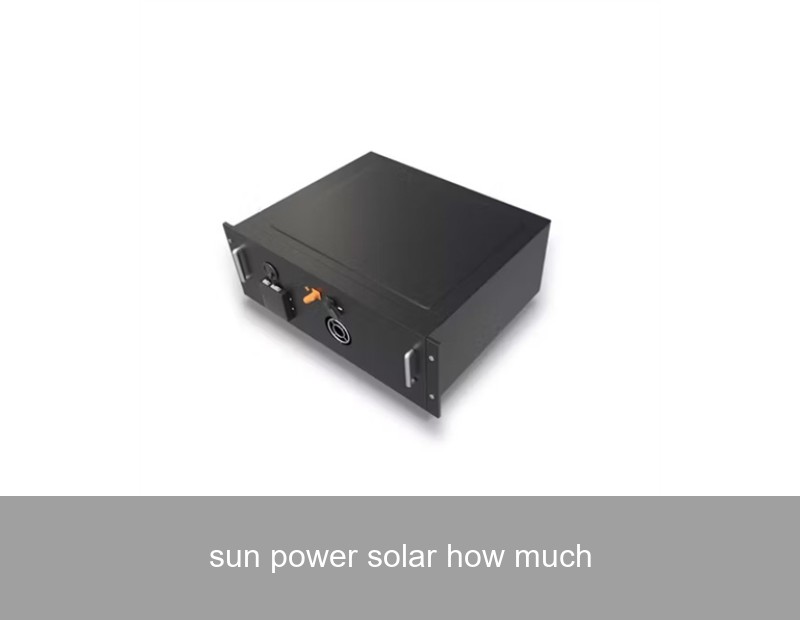
So, you're asking "sun power solar how much?" and you get a quote for panels and an inverter. Think of that as buying a car without a fuel tank. It only works when the sun is directly fueling it. A Battery Energy Storage System (BESS) is that essential fuel tank. It stores your excess "sun power" for use when you need it most: during the evening peak when grid rates are highest, during a power outage, or on cloudy days.
This is where the equation shifts from cost to value. The right storage solution transforms your solar array from a bill-reducer into a true energy asset. It provides:
- Energy Independence: Dramatically reduce reliance on the volatile grid.
- Resilience: Keep critical loads running during outages—a concern growing in importance in both California and across Europe.
- Financial Optimization: In regions with time-of-use rates, you can avoid buying expensive peak power and even participate in grid services programs.
A Real-World Case Study: From Bills to Grid Support
Let's look at a concrete example from Germany, a leader in renewable adoption. A medium-sized commercial bakery in Bavaria installed a 100 kW solar rooftop system. Initially, they were sending over 60% of their midday production back to the grid at a low feed-in tariff, while still buying expensive power in the early morning and evening for baking cycles. Their "sun power solar" investment wasn't fully paying off.
They integrated a Highjoule C&I StackPro battery system with 240 kWh of storage capacity and intelligent energy management software. The results within the first year were transformative:
- Self-consumption rate increased from 35% to over 85%.
- Grid electricity purchases during peak hours were reduced by 95%.
- By participating in the German primary control reserve market (a grid stabilization service), the system generated additional annual revenue of approximately €8,200.
- The projected payback period for the combined solar + storage system was cut by nearly 4 years.
This case, documented in a Fraunhofer ISE study on energy costs, illustrates that the question isn't just "how much does solar cost?" but "how much value can an integrated smart system create?"

Image Source: Unsplash - Photo of an industrial battery storage system
Highjoule: Intelligent Storage for Maximizing Your Sun Power
At Highjoule, we've been answering the deeper question behind "sun power solar how much?" since 2005. We understand that the true cost is measured against long-term performance, safety, and intelligence. Our solutions are designed to ensure every kilowatt-hour your panels produce is used optimally.
For homeowners, our Highjoule HomePower series offers scalable, wall-mounted lithium-ion systems with integrated hybrid inverters. They are not just batteries; they are energy hubs that seamlessly connect solar, grid, and home loads. Our AI-driven software learns your consumption patterns, weather forecasts, and utility rate schedules to automatically decide when to store, use, or export energy, putting maximum savings on autopilot.
For commercial and industrial clients, like the bakery in our case study, our C&I StackPro modular systems provide utility-grade storage. They offer unparalleled flexibility and scalability, allowing businesses to start with a foundational capacity and expand as needed. With advanced features like black start capability and grid-forming technology, these systems don't just save money—they ensure business continuity and can become a new revenue stream through grid services.
Our approach is holistic. We provide more than hardware; we offer a partnership in energy transformation, from initial consultation and system design to long-term monitoring and support.
Beyond the Battery: Key Considerations for Your Project
- System Sizing: A quality provider won't just sell you a standard package. They will analyze your past energy bills, your roof's potential, and your future needs (like an EV charger) to size the solar and storage system correctly.
- Technology & Safety: Look for systems with robust thermal management, UL 9540 certification (in the U.S.), and a proven track record. Highjoule cells undergo rigorous testing for cycle life and safety.
- Software Intelligence: The "brain" of the system is what unlocks value. Ensure it can receive software updates and adapt to changing market rules and your lifestyle.
Your Energy Future: Questions to Power Your Decision
The journey to answering "sun power solar how much" is the first step toward taking control of your energy. To move forward, we invite you to ask yourself and potential providers these deeper questions:
- What is my true goal: minimal upfront cost or maximum long-term energy independence and savings?
- How does this proposal specifically address my peak evening energy usage and provide backup during an outage?
- Can the storage system integrate with future technologies, like electric vehicle charging or heat pumps?
- What does the total cost of ownership look like over 10 or 15 years, including maintenance and guaranteed performance?
Are you ready to transform the question from "how much does it cost?" to "how much value can I create?" with a solar and storage system designed for the demands of tomorrow?
 Inquiry
 Online Chat