


Unlocking Peak Performance: Why Your Sun Solar Inverter is the Key to Energy Independence
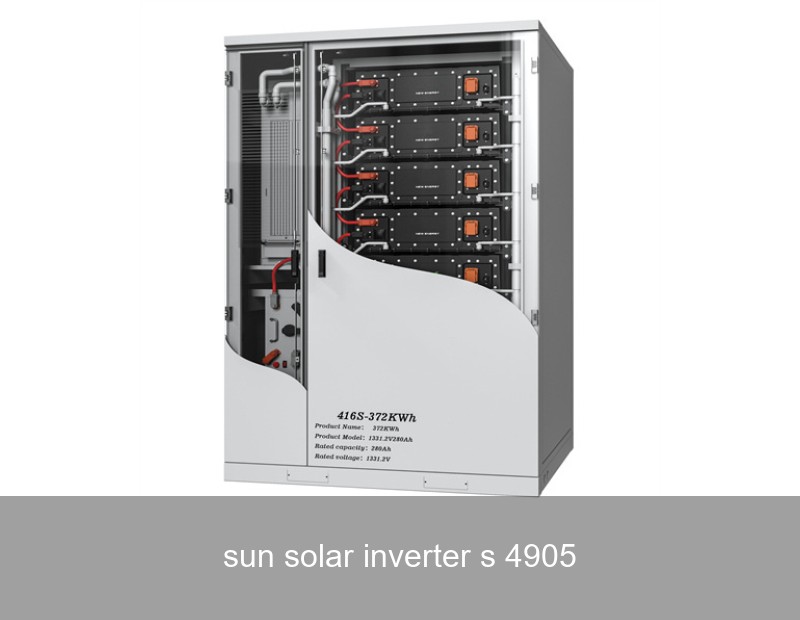
You've made the smart decision. The panels are on your roof, soaking up the sun's generous energy. You're watching the generation meter tick upwards, feeling good about your lower bills and reduced carbon footprint. But here's a question: do you know the most critical component determining how much of that precious sunlight actually becomes usable, reliable power for your home or business? It's not the panels themselves. It's the sun solar inverter – the silent, often overlooked heart of your entire photovoltaic (PV) system.
Think of it this way: your solar panels are like a field of wheat. They capture the raw potential. The inverter is the mill and the bakery combined. It's the sophisticated piece of technology that takes the raw, variable "crop" of direct current (DC) electricity and consistently transforms it into the stable, grid-compatible alternating current (AC) that powers everything from your lights to your laptop. Its efficiency, durability, and intelligence directly impact your system's lifespan, safety, and ultimately, your return on investment. This article dives deep into the world of solar inverters, moving beyond the basics to explore how choosing the right technology, like the advanced systems from Highjoule, can transform your solar installation from a simple energy source into a resilient, intelligent power asset.
Solar Inverter Essentials: What Makes It "Tick"?
At its core, a solar inverter's primary job is DC-to-AC conversion. But not all conversion is created equal. The journey from DC to AC involves rapid electronic switching, creating a sine wave—the smooth, oscillating wave form of standard grid electricity. The quality of this wave is paramount.
- Efficiency: This is the golden number. A top-tier inverter operates at 98% efficiency or higher. That means for every 1000 watts of DC power sent from your panels, 980 watts or more become usable AC power. The few percentage points lost are primarily heat. Over 25 years, even a 1.5% difference in efficiency can equate to a significant amount of lost energy and revenue.
- Maximum Power Point Tracking (MPPT): This is the inverter's brain for panel optimization. Sunlight intensity and temperature change constantly. A sophisticated MPPT algorithm continuously hunts for the exact voltage and current combination (the "maximum power point") where your solar array produces the most power. Think of it as a master tuner, constantly adjusting to get the perfect note from your panels throughout the day.
- Durability & Thermal Management: Inverters work hard, often in harsh environments (like hot attics or outdoor walls). Components degrade under heat stress. Superior inverters use robust designs—like transformerless topologies and advanced cooling systems—to minimize losses and maximize operational life.
The technology landscape has evolved from simple string inverters to more optimized systems. While a traditional string inverter connects a series of panels, its performance can be dragged down by shading or dirt on just one panel. Power Optimizers (added to each panel) and Microinverters (a small inverter on every panel) solve this by managing each panel independently, ensuring one underperforming panel doesn't affect the rest. The choice depends on your roof's complexity, shading, and budget.
Choosing the Right Inverter: A Critical Decision for Your ROI
Selecting an inverter isn't just about picking a brand from a list. It's a strategic decision that influences your system's performance for decades. Here are key factors beyond the spec sheet:
| Consideration | Why It Matters | Question to Ask Your Installer |
|---|---|---|
| Grid Services & Software | Modern inverters can provide voltage support, frequency regulation, and communicate with the grid. This is crucial for grid stability, especially with high renewable penetration. | "Does this inverter have advanced grid-support functions and a user-friendly monitoring platform?" |
| Battery-Ready Design | Considering future battery storage? A hybrid or storage-ready inverter is essential. Retrofitting later can be costly and complex. | "Is this inverter compatible with leading battery technologies for easy future expansion?" |
| Warranty & Long-Term Support | A 10+ year warranty is standard, but look for companies with a proven track record of honoring warranties and providing long-term firmware updates. | "What is the full warranty term, and what is the manufacturer's history of supporting older products?" |
This is where the expertise of a system provider becomes invaluable. At Highjoule, we don't just supply components; we engineer integrated solutions. Our approach starts with understanding the specific energy profile, physical constraints, and future aspirations of each client—whether a family home or a large industrial facility. We then match the project with the optimal inverter technology, ensuring it acts as the perfect conductor for the solar symphony.
Case Study: A Sunny Farm's Struggle and Solution
Let's make this real with data. Consider a mid-sized dairy farm in Bavaria, Germany. In 2020, they installed a 100 kWp solar array on their barn roofs. They chose a mid-tier string inverter to save on upfront cost. The system performed well initially, but the farmer noticed two issues: a 10-15% dip in afternoon production on the south-facing roof (due to partial shading from a silo) and no way to use solar power during evening milking sessions when energy prices were high.
By 2023, they partnered with Highjoule for an audit and upgrade. Our analysis revealed the shading loss was even higher than estimated, costing them over €1,200 annually in missed production. Furthermore, their inverter was not compatible with batteries without a complete overhaul.
The Highjoule Solution: We replaced the old inverter with a modular, Highjoule HI-Power Hybrid System. This system integrates advanced string inverters with dedicated power optimizers on the shaded roof section and is natively designed for battery storage.
- Result 1 (Immediate): The power optimizers mitigated the shading loss, boosting annual yield by 11%. That's an extra ~11,000 kWh per year, increasing their self-consumption and feed-in revenue.
- Result 2 (Strategic): We integrated a 40 kWh Highjoule battery stack. The farmer now stores excess afternoon solar energy and uses it during the high-price evening peak. This shifted 30% of their evening load off the grid, cutting their overall electricity bill by an additional 22%.
- Result 3 (Resilience): The system now provides backup power for critical farm operations, a feature the old setup could never offer.
This case illustrates that the inverter choice wasn't just about conversion; it was about enabling future flexibility, maximizing site-specific production, and turning a CAPEX investment into a smarter, more resilient energy asset. You can explore more on the importance of system-level optimization in studies by the National Renewable Energy Laboratory (NREL).

Image Source: Unsplash (Representative image of advanced inverter technology)
The Highjoule Approach: Intelligence Beyond Conversion
For nearly two decades, Highjoule has been at the forefront of not just storing energy, but intelligently managing it. Our perspective on the sun solar inverter is that it must be more than a converter; it must be the central nervous system of a property's energy flow. Our product suites, like the HI-Power Hybrid for residential/commercial use and the GridSynch series for microgrids, are built on this principle.
These systems feature:
- Native Multi-Mode Operation: Seamlessly switch between grid-tied, backup, and off-grid modes based on grid conditions and user preferences.
- Advanced Energy Management System (EMS): Our proprietary software learns consumption patterns, considers weather forecasts, and can be programmed to prioritize self-consumption, peak shaving, or cost savings based on real-time utility rates.
- Scalability and Service: We design with the future in mind. Adding more solar panels or battery capacity is straightforward. Our global service network and 24/7 monitoring platform, Highjoule Insight, ensure your system performs optimally for its entire lifespan, providing peace of mind that the initial investment is protected.
This integrated philosophy is what sets a true energy solution apart from a simple collection of parts. It aligns with the broader industry shift towards smart, dispatchable resources, as noted by energy authorities like the International Energy Agency (IEA).
The Future of Solar Energy Management
The role of the inverter is expanding rapidly. We're moving towards virtual power plants (VPPs), where thousands of distributed systems, each with a smart inverter at its core, can aggregate to provide grid stability services. Your home or business solar system could soon be a revenue-generating grid citizen, automatically responding to signals to support the broader community's energy needs during stress events.

Image Source: Unsplash (Representative image of a modern sustainable home with solar and EV)
This future hinges on the intelligence embedded in the inverter gateway. It requires robust cybersecurity, flawless communication protocols, and an unwavering focus on reliability.
So, what does this mean for you?
When you evaluate your solar project, look past the price-per-watt of the panels. Ask your provider: "How does the inverter you've selected prepare my property for the next 20 years of energy evolution? How does it integrate storage, manage consumption, and potentially connect to future grid markets?" The answer will tell you if you're buying a commodity or investing in a platform for energy independence.
Is your current solar system operating at its full potential, or is the heart of your system—your inverter—holding back the true value of your sun's harvest?
 Inquiry
 Online Chat