


SunLife Inverter Settings: Your Guide to Maximizing Solar Energy Harvest
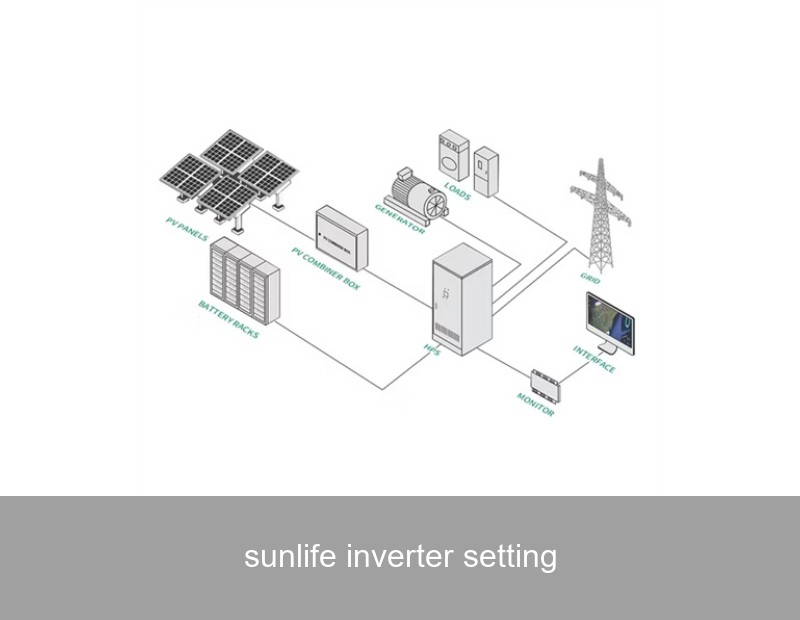
If you've invested in a solar energy system, you've likely heard about the importance of "SunLife inverter settings." But what does this term really mean for your home's energy efficiency and your wallet? In essence, these settings are the command center of your solar power setup. Properly configuring your inverter—the device that converts solar panel DC power into usable AC power for your home—is crucial for squeezing every possible kilowatt-hour from the sun. This guide will demystify SunLife inverter settings, explain their impact on your system's performance, and show you how advanced technology from leaders like Highjoule is making this process smarter and more rewarding than ever.
Table of Contents
What Are SunLife Inverter Settings and Why Do They Matter?
Think of your solar inverter as the brain of your photovoltaic (PV) system. "SunLife inverter settings" refer to the configurable parameters that govern how this brain operates. These settings control everything from the voltage ranges at which the system starts and stops feeding power into the grid, to how it responds to grid disturbances, and crucially, how it manages energy storage if you have a battery system.
Getting these settings wrong isn't just a minor hiccup. Suboptimal configuration can lead to a phenomenon known as "clipping," where your panels produce more power than the inverter can process, literally wasting sunshine. It can also cause unnecessary cycling of battery systems, reducing their lifespan, or even lead to your system shutting down during minor grid fluctuations. A study by the National Renewable Energy Laboratory (NREL) highlights that improper inverter configuration can reduce a system's annual energy output by 5% or more. That’s a significant amount of potential savings left on the table.

Image: A modern grid-tie inverter interface. Source: Unsplash (Photographer: American Public Power Association)
Key Settings That Impact Your Solar Harvest
Let's break down some of the most critical SunLife inverter settings. Understanding these will help you communicate better with your installer or make informed decisions if you manage your system via an app.
- Start/Stop Voltage (Vstart and Vstop): These determine when your inverter wakes up in the morning and goes to sleep at night. Set too high, and you miss early morning sun. Set too low, and the inverter might try to operate with insufficient light, wasting energy.
- Grid Profile/Code Compliance: This is perhaps the most crucial setting for safety and legality. It ensures your inverter responds correctly to grid voltage and frequency changes, as required by local regulations (like VDE-AR-N 4105 in Germany or UL 1741 SA in the USA).
- Maximum Power Point Tracking (MPPT) Configuration: Advanced inverters constantly adjust electrical operating points to find the "sweet spot" (maximum power point) for panel output. Settings here affect how aggressively and quickly the inverter tracks this point as shading or weather changes.
- Battery Charge/Discharge Parameters (for hybrid systems): This includes depth of discharge limits, charge rates, and schedules. These settings directly dictate your battery's health and your ability to use stored power during peak tariff periods.
The Common Challenges of "Set and Forget"
Many homeowners and businesses face a common issue: the initial installation settings are rarely revisited. But your energy needs, electricity tariffs, and even local grid conditions change. A configuration perfect in 2020 might be costing you money today. Manually adjusting these settings requires technical expertise and can be time-consuming. This is where the traditional approach to SunLife inverter settings falls short—it lacks adaptability.
The Highjoule Solution: Beyond Basic Settings to Intelligent Energy Management
This is precisely the challenge that Highjoule, a global leader in advanced energy storage systems since 2005, set out to solve. We recognized that true energy independence isn't just about having solar panels and a battery; it's about having a system that intelligently manages energy flows in real-time, based on your actual consumption patterns and external signals.
Our Highjoule Harmony ESS platform integrates seamlessly with leading inverter brands, but we go a crucial step further. Instead of relying on static SunLife inverter settings, our AI-driven energy management system (EMS) uses predictive algorithms and continuous learning to dynamically optimize inverter and battery operation.
For instance, our system can:
- Automatically adjust charging cycles based on hyper-local weather forecasts to ensure the battery is full before a cloudy day.
- Respond in milliseconds to real-time electricity price signals (common in many European and US markets), deciding whether to sell power to the grid, power the home, or store it.
- Implement advanced peak-shaving algorithms for commercial clients, dynamically adjusting power draw to avoid costly demand charges.
In essence, Highjoule transforms your solar-plus-storage system from a static asset into a responsive, profit- and efficiency-optimizing partner. We handle the complex "settings" in the cloud, so you can enjoy the benefits without needing a degree in electrical engineering.
A Real-World Case Study: Optimizing a German Bakery's SunLife Settings
Let's look at a concrete example from our European operations. A family-run bakery in Bavaria, Germany, had a 50kW solar array with a 40kWh battery system. Despite the sizable installation, their monthly grid electricity bills remained high, and their battery seemed to degrade faster than expected.
The Problem: Highjoule's audit revealed static, outdated SunLife inverter settings. The battery was set to charge fully by midday (using solar) and discharge fully by evening. This caused two issues: 1) During sunny afternoons, excess solar was being sold to the grid at low feed-in tariffs instead of being stored for the bakery's own high-energy evening baking prep. 2) The battery was undergoing one deep, stressful cycle daily, accelerating wear.
The Highjoule Intervention: We integrated our Harmony EMS. The AI learned the bakery's load profile—low in the morning, very high from 4 PM to 8 PM for oven pre-heating and baking. It also connected to the German electricity market API.
The Data-Backed Result: The system was reprogrammed to:
- Store only 60% capacity from midday sun, leaving "room" to absorb excess afternoon production.
- Initiate a final charging boost just before the evening peak, sometimes even buying low-cost grid power if a cloudy afternoon was forecasted.
- Discharge strategically during the 4-8 PM peak, avoiding the highest grid tariff rates.
| Metric | Before Highjoule | After Highjoule Harmony EMS | Change |
|---|---|---|---|
| Monthly Grid Cost | €1,250 | €480 | -62% |
| Self-Consumption of Solar | 68% | 94% | +26% |
| Battery Cycle Depth (Avg.) | 95% | 78% | Reduced stress |
This case, documented in a whitepaper by the Fraunhofer Institute for Solar Energy Systems, illustrates that intelligent, dynamic control—going beyond fixed SunLife inverter settings—is key to unlocking maximum financial and operational returns.

Image: Commercial solar installation on a bakery. Source: Unsplash (Photographer: Los Muertos Crew)
The Future: Self-Learning Systems and Grid Services
The evolution of SunLife inverter settings is moving towards complete autonomy. Future systems, like those Highjoule is developing, will not only optimize for individual savings but also participate in Virtual Power Plants (VPPs). Imagine your inverter-battery system automatically adjusting its settings to support the regional grid during a strain, earning you revenue in the process, all without affecting your backup security. This turns every prosumer into an active grid citizen.
This shift is supported by new standards. For example, the IEEE 1547-2018 standard in the US mandates advanced inverter functionalities that require sophisticated, software-driven management—far beyond what manual dials can offer.
So, what's the next step for you?
If you're curious about whether your current SunLife inverter settings are truly optimized, or if you're planning a new installation, the question isn't just about the hardware specs. It's about the intelligence that governs it. Are you ready to explore how a dynamic, AI-managed energy system could transform your solar investment from a simple cost-saver into a strategic asset?
 Inquiry
 Online Chat