


Sunny Boy Storage 3.7/10: The Smart Heart of Your Modern Home Energy System
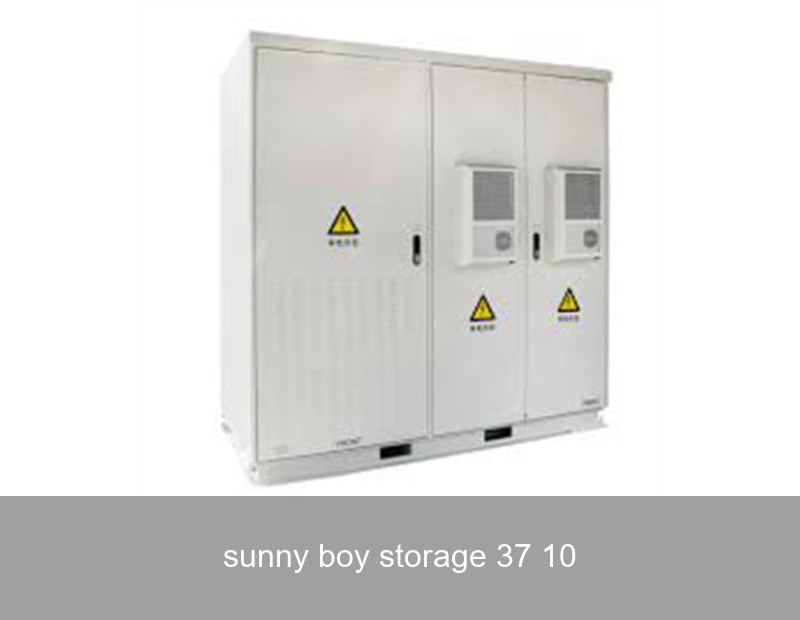
Have you ever watched your electricity meter spin backwards on a sunny afternoon, only to buy that same power back at a premium in the evening? This daily phenomenon is the central challenge of the solar revolution. While solar panels are fantastic at generating energy, the real magic of energy independence happens when you can store and use that power on your own terms. Enter the Sunny Boy Storage 3.7 and 10 battery inverters—intelligent devices designed to transform your solar array into a resilient, self-sufficient power station. In this article, we'll explore how this technology works, why it's a game-changer, and how pairing it with the right components, like Highjoule's expertly integrated systems, creates the ultimate home energy solution.
Table of Contents
What is the Sunny Boy Storage 3.7/10?
At its core, the Sunny Boy Storage 3.7 and 10 are hybrid battery inverters from SMA Solar Technology. They are not batteries themselves, but the essential "brain" and manager of a home storage system. Their key function is to convert the direct current (DC) electricity from both your solar panels and your battery storage into usable alternating current (AC) for your home appliances. The numbers 3.7 and 10 refer to their power output ratings in kilowatts (kW)—3.7 kW for typical smaller systems and 10 kW for larger homes with higher energy demands or plans for future expansion.

Image Source: SMA Solar Technology AG - Sunny Boy Storage inverters
The Problem: Solar Energy's Timing Mismatch
Let's look at the data. According to the U.S. Department of Energy, solar power generation naturally peaks in the middle of the day. However, residential energy demand typically spikes in the early morning and evening. This creates a valley of surplus solar power during the day and a cliff of demand after sunset, often met by the grid.
This mismatch has two direct consequences for homeowners:
- Reduced Self-Consumption: Without storage, you might only use 30-50% of the solar energy you produce directly.
- Grid Dependency: You remain heavily reliant on the utility grid, exposing you to volatile and often rising electricity prices, especially during peak evening hours.
The Solution: Intelligent Storage & Management
This is where the Sunny Boy Storage inverters shine. They solve the timing problem with sophisticated energy management. Think of it as having a highly efficient, automated energy butler for your home.
| System Function | How Sunny Boy Storage Handles It | Benefit to Homeowner |
|---|---|---|
| Daytime Solar Production | Prioritizes powering home loads first, then charging the battery with any excess. | Maximizes direct use of free solar energy. |
| Evening/Night Demand | Seamlessly discharges the battery to power the home, avoiding grid draw. | Lowers electricity bills and reduces peak-time charges. |
| Grid Outages (with secure power supply function) | Can keep a dedicated emergency circuit powered from the battery and solar. | Provides basic backup power for lights, fridge, or communications. |
But here's a crucial insight from our experience at Highjoule: an inverter alone does not make a storage system. The inverter's performance is deeply intertwined with the battery it manages. This is where system design and component compatibility become paramount.
A Real-World Case Study: The Schmidt Family Home
Let's make this concrete with an example from Freiburg, Germany. The Schmidt family installed a 8.2 kWp solar array in 2020. While their daytime bills dropped, they were still purchasing 65% of their electricity from the grid. In 2023, they decided to upgrade to a full storage system.
- Components: Their existing panels were paired with a Sunny Boy Storage 10 inverter and a 12.8 kWh Highjoule H2 Series lithium iron phosphate (LFP) battery.
- Highjoule's Role: Our team provided the system design, ensuring perfect communication compatibility between the inverter and battery, along with our proprietary energy management software for advanced monitoring and control.
- Result: Within one year, their grid electricity consumption plummeted by 87%. Their annual electricity costs fell from over €1,850 to approximately €280. The system's intelligent logic, facilitated by the Sunny Boy Storage, allows it to even pre-charge the battery slightly on cloudy days if a sunny forecast is expected, optimizing every possible kilowatt-hour.

Image Source: Unsplash - A modern energy-independent home
Beyond the Inverter: The Importance of a Holistic System
As a global leader in advanced storage systems, Highjoule understands that long-term reliability and safety are just as important as day-one performance. The Sunny Boy Storage is an excellent inverter platform, but its true potential is unlocked when integrated into a cohesive system. Here’s what we add to the equation:
- Battery Expertise: We offer high-cycle life, UL-certified LFP batteries that are the perfect physical counterpart to the inverter's intelligence. LFP chemistry is renowned for its safety and longevity, a critical factor for a 15-20 year investment.
- System Integration: We don't just sell components; we engineer solutions. Our technical team ensures all parts—inverter, battery, management systems—communicate flawlessly, preventing performance gaps and ensuring you get the efficiency promised on the spec sheet.
- Grid Services & Future-Proofing: For our commercial and microgrid clients, we design systems that can participate in grid-balancing services. Even for homeowners, we consider future additions like electric vehicle charging, as outlined by research from the National Renewable Energy Laboratory (NREL).
Making the Right Choice for Your Home
So, is the Sunny Boy Storage 3.7 or 10 the right choice for you? The answer depends on your energy profile, your home's physical setup, and your goals for resilience. A smaller home with moderate consumption might be perfectly served by the 3.7 kW model paired with a 8-10 kWh Highjoule battery. A larger home with an electric vehicle, heat pump, or plans for a workshop will likely need the power and capacity of the 10 kW model with a 15-20 kWh battery bank.
The key takeaway? View your storage system as a single, integrated appliance, not a collection of parts. The inverter is the brain, the battery is the heart, and the integration is the central nervous system.
What specific energy goal is driving your interest in solar storage—is it total energy independence, backup power resilience, or purely maximizing financial return on investment?
 Inquiry
 Online Chat