


Sunworld Energietechnik GmbH and the Evolution of Smart Solar Power
You've likely seen the solar panels glinting on rooftops across Europe and North America. It's a beautiful sight, symbolizing a cleaner, more independent energy future. But for businesses and homeowners alike, a critical question often emerges after installation: "I'm generating clean energy, but am I using it smartly?" This is where the expertise of specialized engineering firms like Germany's Sunworld Energietechnik GmbH becomes pivotal. They don't just install panels; they design intelligent solar systems. And at the heart of a truly intelligent system lies a component that transforms solar from a daytime novelty into a 24/7 power solution: the advanced battery energy storage system (BESS).
Table of Contents
The Challenge: Solar Energy's Intermittency
Solar power has a simple, predictable pattern. The sun shines, you produce electricity. Clouds roll in or night falls, production plummets. For a residential user, this means drawing expensive power from the grid in the evening. For a commercial operation like a bakery, dairy, or manufacturing plant, this mismatch can be costly. Your highest energy demand might not align with the sunniest part of the day. Sunworld Energietechnik GmbH and similar expert integrators understand this fundamental flaw in raw solar. Their job is to engineer around it, creating a system that smooths out these peaks and valleys.

Image Source: Unsplash (Representative image of solar installation)
The Data Reality: Why Generation Isn't Enough
Let's talk numbers. According to data from the International Renewable Energy Agency (IRENA), the global average capacity factor for solar PV is around 10-25%. This means a 100 kW system produces its full output only for that fraction of the day. In Germany, a leader in solar, a typical household with PV might achieve 30-40% self-consumption without storage. That leaves 60-70% of its energy needs still reliant on the grid, or worse, excess energy fed back at low feed-in tariffs.
The economic equation is clear. With rising grid electricity prices (consistently over €0.30/kWh for households in many parts of Europe in 2023) and declining solar feed-in compensation, maximizing every self-generated kilowatt-hour (kWh) is the key to ROI. This is the precise problem integrators are hired to solve.
Case Study: A German Mittelstand Factory's Journey
Consider a real-world scenario from a client of a system integrator like Sunworld Energietechnik GmbH. A mid-sized automotive parts manufacturer in Baden-Württemberg operated with the following profile:
- Energy Demand: 24/5 operation, with a steady base load and peaks during machining hours.
- Existing Solar: A 500 kWp rooftop array installed in 2015.
- Pain Point: Only 35% direct self-consumption of solar power. High demand charges from the grid during morning and evening peaks when solar output was low.
The integrator's solution was to design and install a 600 kWh / 300 kW battery storage system to work in tandem with the existing solar. The results after one year were telling:
| Metric | Before Storage | After Storage | Change |
|---|---|---|---|
| Solar Self-Consumption | 35% | 85% | +50% |
| Grid Energy Draw (Peak Hours) | ~2,000 kWh/day | ~400 kWh/day | -80% |
| Annual Energy Cost Savings | Baseline | €72,000 | -- |
| Grid Demand Charge Reduction | 100% | 40% | -60% |
This case isn't magic; it's smart engineering. The battery system was programmed to charge from excess solar midday and discharge strategically during the factory's high-price, low-solar periods. This turned a partially utilized solar asset into a comprehensive energy management tool.
The Core Solution: Intelligent Battery Storage
As the case shows, the battery is the linchpin. But not all battery storage systems are created equal. An integrator's choice of BESS partner determines the system's safety, longevity, and intelligence. Key considerations include:
- Cell Chemistry & Safety: Lithium Iron Phosphate (LFP) has become the preferred chemistry for stationary storage due to its superior thermal stability, long cycle life, and absence of critical raw materials like cobalt.
- System Integration: A seamless, pre-engineered solution is far superior to a cobbled-together assembly of disparate components.
- Energy Management System (EMS): This is the "brain." A sophisticated EMS can perform peak shaving, time-of-use optimization, and even participate in grid services.
This is where the partnership between expert installers and leading technology providers creates exceptional outcomes.
How Highjoule Partners with Integrators Like Sunworld
At Highjoule, we understand that our success is built on empowering engineering partners. For a specialist like Sunworld Energietechnik GmbH, choosing a storage provider is about reliability, technical support, and product performance that matches their design promises.
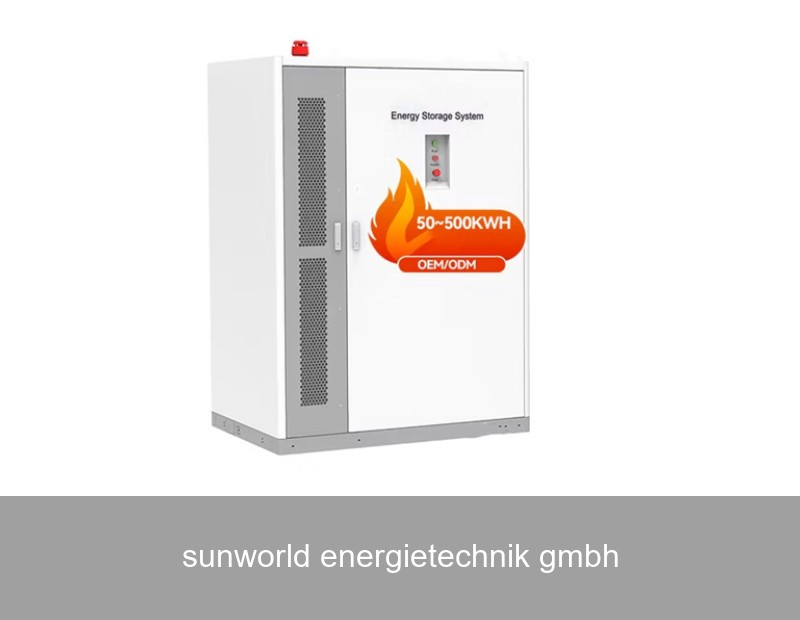
Our H-Series commercial and industrial storage systems are engineered for this partnership. They are containerized or skid-mounted, pre-tested solutions featuring:
- Ultra-Safe LFP Battery Cells: With a built-in Battery Management System (BMS) that monitors every cell for maximum safety and lifespan.
- Adaptive Power Conversion: High-efficiency, bi-directional inverters that handle complex charge/discharge cycles with minimal loss.
- Highjoule Neuron™ EMS Platform: An AI-driven software platform that allows integrators and end-clients to monitor, control, and optimize energy flows. It can be configured for simple self-consumption maximization or complex, revenue-generating grid interaction programs.

Image Source: Unsplash (Representative image of a commercial BESS)
For residential projects, our E-Series home storage solutions offer the same core intelligence in a compact, silent, and easy-to-install format. This allows our partners to deliver a complete, Highjoule-powered ecosystem—from the solar panels to the inverter to the battery—all managed through a single, intuitive interface.
Beyond Self-Consumption: The Future Grid and Your Role
The story is evolving from mere energy independence to becoming an active participant in grid stability. In markets like Germany, the UK, and parts of the US, grid modernization efforts are creating opportunities for distributed storage assets to provide services like frequency regulation. Imagine a virtual power plant (VPP) comprised of thousands of Highjoule systems, all coordinated to support the grid during times of stress.
This future requires a storage system that is not just a passive battery, but a grid-interactive asset. It requires the design foresight of integrators and the technological capability of providers committed to open standards and advanced grid-support functions.
An Open Question for Your Energy Strategy
As you consider your own energy transition, or if you're an integrator designing for a client, ask this: Is your solar system a standalone generator, or is it the foundation of a resilient, intelligent, and potentially revenue-generating energy asset? The difference lies in the partnership between precise engineering and the right storage technology.
What specific energy cost or sustainability goal is driving your next project, and how could a smarter storage strategy help you achieve it faster?
 Inquiry
 Online Chat