


Finding the Right Supplier of Battery HV Systems: A Guide for the Energy Transition
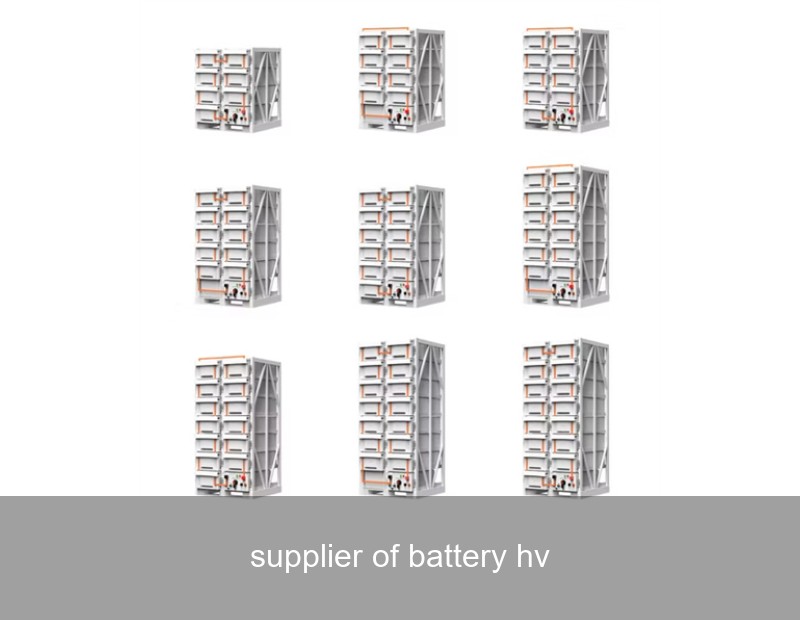
As the world accelerates its shift towards renewable energy, a critical challenge emerges: how do we store the power from the sun and wind for when we need it most? The answer increasingly lies in high-voltage (HV) battery energy storage systems (BESS). These aren't your everyday batteries; they are sophisticated, grid-scale powerhouses. For project developers, utilities, and large energy consumers, choosing a reliable and innovative supplier of battery HV technology is one of the most consequential decisions for ensuring project success, safety, and long-term profitability. This article will guide you through the key considerations, backed by data and real-world examples, to help you navigate this vital partnership.
Table of Contents
- The High-Voltage Imperative: Why HV is Dominating Grid-Scale Storage
- Beyond the Cell: What to Demand from Your Battery HV Supplier
- Data in Action: A European Case Study on Grid Stability
- The Highjoule Difference: Intelligent Storage for a Demanding Market
- Future-Proofing Your Investment: Questions to Ask
The High-Voltage Imperative: Why HV is Dominating Grid-Scale Storage
Let's start with a simple analogy. Transmitting electricity at higher voltages is like using a wider pipeline to move water: you can move more power with less energy loss over long distances. This principle is fundamental to our AC grids and is now being applied directly within battery storage systems. A supplier of battery HV systems typically designs solutions where the battery stack itself operates at voltages of 1000V, 1500V, or even higher. The benefits are substantial and backed by hard engineering data:
- Higher Efficiency & Lower Costs: Higher voltage directly reduces current for the same power output (Power = Voltage x Current). Lower current means significantly reduced resistive losses (heat) in cables and components, boosting overall system efficiency by 1-3%. This also allows for smaller, less expensive cabling and balance-of-system (BOS) components.
- Increased Energy Density: By packing more cells in series to achieve a higher voltage, the physical footprint of the power conversion equipment can be reduced. This leads to a higher energy density per container or installation site, a crucial factor where space is at a premium.
- Scalability for Utility Projects: HV architecture is inherently more scalable for large-scale applications. It simplifies the integration of multiple megawatt-hour (MWh) containers into a single, streamlined system, making it the preferred choice for utility-scale projects and large commercial & industrial (C&I) applications.

Image Source: Unsplash (Representative image of a large-scale battery installation)
Beyond the Cell: What to Demand from Your Battery HV Supplier
Choosing a supplier of battery HV systems is about much more than just buying battery racks. You are selecting a long-term technology partner for a critical infrastructure asset with a lifespan of 15-20 years. Here are the non-negotiable pillars to evaluate:
| Evaluation Pillar | Key Questions to Ask | Why It Matters |
|---|---|---|
| System Intelligence & Software | Does the BMS offer cell-level monitoring? How advanced is the energy management system (EMS)? Can it integrate with grid signals and renewable assets? | The software is the "brain." It determines safety, performance, and revenue optimization through applications like frequency regulation or arbitrage. |
| Safety & Certification | Are the systems UL 9540/9540A certified? What passive and active fire suppression is integrated? What is the DC fault management strategy? | HV systems carry inherent risks. Comprehensive, certified safety designs are paramount for insurance, permitting, and community acceptance. |
| Thermal Management | Is cooling liquid or air-based? How uniform is the cell temperature? What is the system's derating in extreme climates? | Temperature consistency is the single biggest factor in battery longevity and performance. Poor thermal design leads to rapid degradation. |
| Service & Warranty | What is the guaranteed throughput or cycle life? How is remote monitoring and support handled? What is the response time for technical issues? | A robust warranty backed by a global service network protects your ROI. Look for performance-based warranties, not just time-based. |
Data in Action: A European Case Study on Grid Stability
The theory comes alive with real projects. Consider the challenge faced in Ireland, which has one of the world's highest penetrations of wind energy. The grid operator, EirGrid, needed fast-reacting resources to maintain frequency stability as wind generation fluctuates.
Project: A 100 MW / 200 MWh grid-scale battery storage portfolio deployed across multiple sites.
Supplier Role: The chosen supplier of battery HV provided 1500V DC battery systems integrated with advanced grid-forming inverter technology.
Outcome & Data: According to EirGrid's reports, these battery systems can go from zero to full output in under 150 milliseconds. In 2022, they successfully arrested a major frequency dip caused by the unexpected tripping of a conventional generator, preventing potential load shedding. The project demonstrated a round-trip efficiency of over 94% at the system level, a figure made possible by the efficient HV architecture and sophisticated power conversion. EirGrid Group continues to expand its battery fleet, highlighting the technology's critical role.
This case underscores that the right HV supplier delivers not just storage, but a grid asset capable of providing essential stability services that enable more renewables.
The Highjoule Difference: Intelligent Storage for a Demanding Market
At Highjoule, with nearly two decades of experience since 2005, we understand these complexities intimately. We have evolved from a component provider to a leading supplier of battery HV turnkey solutions, because we know our clients need a seamless, reliable partnership.
Our flagship product, the HiveStack™ 1500V BESS, is engineered for the demands of the European and North American markets. It's more than a containerized battery; it's a fully integrated grid asset. The HiveStack features:
- Proprietary Adaptive BMS: With neural network-based algorithms, it predicts cell-level behavior and optimizes charge/discharge cycles to extend lifespan beyond standard warranties.
- Liquid-Cooled Thermal Precision: Our direct-contact liquid cooling maintains cell temperature variance within ±2°C, ensuring maximum performance in the desert heat of Arizona or the cold snaps of Scandinavia.
- Grid-Forming Ready Inverters: The system is designed not just to follow the grid but to support it, providing essential inertia and black-start capabilities—a feature becoming a requirement in many grid codes.
- Highjoule Horizon EMS Platform: This cloud-based platform allows owners to seamlessly stack revenue streams, from frequency response markets to solar time-shifting, all through an intuitive interface.
For a commercial warehouse in Germany or a microgrid supporting a critical industrial facility in Texas, Highjoule acts as a single point of responsibility—from design and grid compliance to installation, commissioning, and 24/7 monitoring through our Global Operations Center.

Image Source: Unsplash (Representative image of an energy management control screen)
Future-Proofing Your Investment: Questions to Ask
The energy landscape is shifting faster than ever. As you evaluate your options for a supplier of battery HV systems, the final questions should focus on the future:
- How is your system architecture adapting to accommodate future battery chemistries (like sodium-ion or solid-state) without a complete overhaul?
- What is your roadmap for integrating with virtual power plant (VPP) aggregators and participating in emerging distributed energy markets?
- Can you provide a detailed, transparent degradation model and show me the data from your fielded systems that supports it?
The partnership you choose today will define the flexibility and profitability of your asset for the next two decades. It's not just about buying hardware; it's about securing a platform for energy resilience and revenue.
What specific grid service or revenue stream is the primary driver for your next storage project, and how are you evaluating potential partners on their ability to deliver it reliably?
 Inquiry
 Online Chat