


Navigating Your Energy Future: Choosing the Right Supplier of Facility ESS
your facility's electricity bill arrives, and the demand charges—those fees for your highest power draw—are soaring. Or perhaps grid instability is causing costly micro-interruptions in your manufacturing process. For facility managers, energy is no longer just a utility; it's a complex, dynamic cost center and a critical operational risk. This is where a dedicated supplier of facility ESS (Energy Storage System) becomes an indispensable partner. Unlike generic battery providers, a specialized facility ESS supplier delivers integrated solutions designed to tackle the unique energy challenges of commercial, industrial, and large residential buildings. Let's explore how the right partnership can transform your energy profile from a passive expense into an active asset.
The Growing Need for Facility ESS: More Than Just Backup
The modern facility is under pressure. Energy price volatility, ambitious sustainability goals, and aging grid infrastructure are converging. A simple backup generator is no longer sufficient. Today's facility energy storage systems are sophisticated, software-driven assets that perform multiple revenue-generating and cost-saving functions simultaneously.
- Demand Charge Management: This is often the primary driver. Utilities charge not only for the total energy consumed (kWh) but also for the peak power (kW) drawn. An ESS acts like a shock absorber, discharging during peak usage times to "shave" the facility's draw from the grid, potentially reducing these charges by 20-40%.
- Energy Arbitrage: The system stores electricity when rates are low (e.g., overnight) and uses it when rates are high, optimizing time-of-use tariffs.
- Grid Services & Resilience: Advanced systems can provide frequency regulation to support the grid. More critically, they offer seamless backup power during outages, protecting sensitive operations and data.
- Renewable Integration: For facilities with solar PV, an ESS captures excess solar generation that would otherwise be exported at low rates, maximizing self-consumption and independence.
The data underscores this shift. According to the U.S. Department of Energy, the global stationary energy storage market is projected to grow exponentially, driven largely by commercial and industrial applications. Facilities are recognizing that energy storage is a cornerstone of both financial and operational resilience.
Choosing the Right Supplier of Facility ESS: Key Considerations
Not all storage solutions are created equal. Selecting a supplier of facility ESS is a strategic decision. Here’s what to evaluate beyond the basic price-per-kWh quote:
| Consideration | Why It Matters | Key Question to Ask |
|---|---|---|
| System Intelligence & Software | The hardware stores energy, but the software creates value. It must optimize for multiple, often competing, objectives (savings, backup, solar usage). | Can your platform perform real-time, AI-driven optimization based on weather, tariffs, and load forecasts? |
| Technology & Safety | Battery chemistry (e.g., LFP - Lithium Iron Phosphate) dictates lifespan, safety, and performance. LFP is now the preferred standard for facility-scale storage due to its thermal stability and long cycle life. | What battery chemistry do you use, and what certified safety protocols (UL, IEC) are integrated? |
| Integration Expertise | The ESS must communicate flawlessly with existing solar inverters, building management systems, and the grid. | Do you have proven experience integrating with major solar and facilities management brands? |
| Service & Warranty | A 10+ year asset requires long-term partnership. Look for comprehensive performance guarantees and responsive service. | What does your performance warranty cover, and what is your average on-site response time? |
The Highjoule Approach: Intelligent Energy Storage for Demanding Facilities
This is where Highjoule's nearly two decades of experience comes into sharp focus. Since 2005, we have evolved from a battery technology innovator to a global supplier of facility ESS that delivers complete, turnkey energy resilience. Our solutions are built on three pillars:
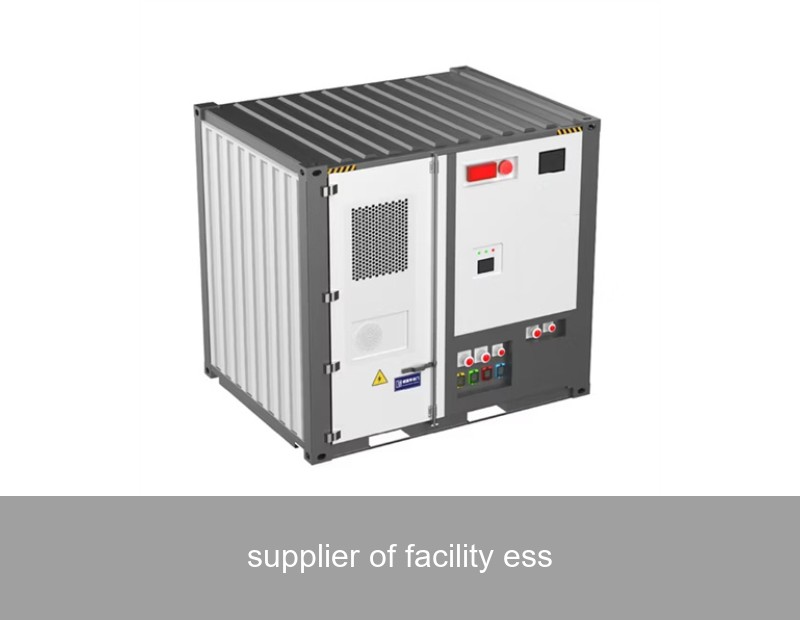
- The H-Series Modular Storage Platform: Our flagship product line features containerized or skid-mounted LFP battery systems, scalable from 100 kWh to multi-MWh. They are engineered for high-cycle, high-power applications typical of facility demand management. The modular design allows for easy expansion as your needs grow.
- JouleBrain™ Energy Management System (EMS): This is the intelligent core. Our proprietary AI-driven EMS doesn't just react; it predicts. By analyzing historical consumption, weather patterns, and utility rate structures, it autonomously schedules charge/discharge cycles to maximize economic return. It’s like having a 24/7 energy trader embedded in your facility.
- GridSync™ Inverter Technology: Ensuring seamless, millisecond-fast switching between grid-tied and backup modes, protecting critical loads without interruption. It also enables participation in grid service programs where available, creating an additional revenue stream.
For a facility manager, this translates to a single-source solution: Highjoule handles the feasibility study, system design, commissioning, and ongoing performance monitoring, ensuring you realize the promised savings and reliability from day one.

Image: A modern industrial facility integrating solar and energy storage. Credit: Unsplash
Real-World Impact: A European Logistics Center Case Study
Let's move from theory to practice. A major logistics distribution center in Germany faced two challenges: unpredictable spikes in energy demand from their sorting machinery leading to six-figure annual demand charges, and a need for higher power quality to protect automated systems.
Highjoule, as their chosen supplier of facility ESS, deployed a 750 kWh / 1.5 MW H-Series system integrated with their existing infrastructure. The JouleBrain™ EMS was programmed specifically to target their 15-minute demand intervals set by the local utility.
The Results (18-Month Period):
- Demand Charge Reduction: Peak grid draw was reduced by 28%, resulting in annual savings of over €85,000 on demand charges alone.
- Energy Cost Optimization: Through strategic arbitrage, the system saved an additional €15,000 annually on energy time-of-use costs.
- ROI & Sustainability: The project achieved a simple payback period of under 5 years. Furthermore, by flattening their load profile, the facility increased its on-site consumption of renewable energy, reducing its carbon footprint by an estimated 180 tonnes of CO2 annually.
This case exemplifies the tangible financial and operational benefits a tailored facility ESS delivers. You can explore more about the technical potential of C&I storage in reports from the National Renewable Energy Laboratory (NREL).
The Future of Facility Energy Management
The trajectory is clear. Facilities are becoming active nodes in a decentralized energy network. With the rise of electric vehicle fleets and stricter building codes, the role of storage will only expand. Future-forward systems will need to manage bidirectional power flow from EV chargers and interact dynamically with virtual power plants (VPPs).
Choosing a supplier of facility ESS today is about selecting a partner for this energy transition. It's about finding a provider whose technology roadmap aligns with the evolving grid and whose software can adapt to new market signals and tariffs.

Image: Advanced energy management control systems are key to maximizing ESS value. Credit: Unsplash
So, as you look at your facility's next decade, what single energy challenge—be it cost, resilience, or sustainability—if solved, would have the greatest impact on your bottom line and operational confidence?
 Inquiry
 Online Chat