


Demystifying the True Cost of a Supplier of BESS: A Comprehensive Guide
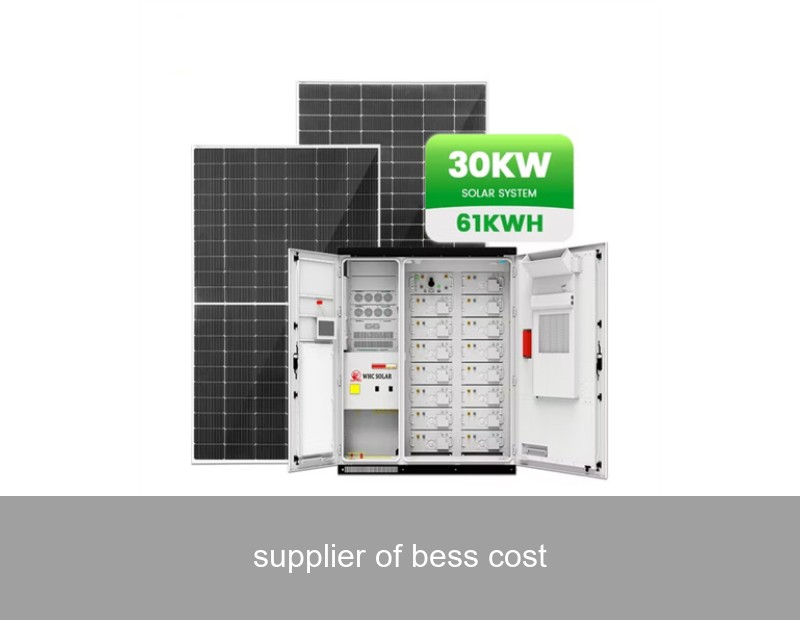
When you're considering an energy storage system, the initial price tag from a supplier of BESS (Battery Energy Storage System) is just the tip of the iceberg. Many business and homeowners in Europe and the US are surprised to find that the true cost of ownership encompasses far more. It's a complex equation where hardware, software, installation, and long-term performance all play a critical role. As a leading supplier of BESS with nearly two decades of experience, Highjoule believes an informed decision starts with understanding this full picture. Let's break down what goes into the cost of a BESS and how choosing the right partner impacts your return on investment.
Table of Contents
Beyond the Sticker Price: The Total Cost of Ownership
Imagine buying a car based only on the showroom price, without considering fuel efficiency, maintenance schedules, or insurance. You'd likely end up with a misleading view of its long-term affordability. The same principle applies to battery storage. The upfront capital expenditure (CapEx) quoted by a supplier of BESS is crucial, but the operational expenditure (OpEx) and the system's revenue-generating or savings potential determine its true value. A cheaper system with lower efficiency or a shorter lifespan will cost you more over ten years than a premium, intelligently managed system.
Key Cost Drivers for a Modern BESS
To navigate the market effectively, you need to know what you're paying for. Here’s a detailed breakdown of the primary cost components.
Hardware: The Core Components
This is the most visible part of the cost and includes:
- Battery Cells & Modules: The chemical technology (e.g., LFP - Lithium Iron Phosphate, now the dominant choice for safety and longevity) and cell quality directly impact cycle life, degradation, and safety. LFP cells, while sometimes slightly higher in initial cost, offer a superior total cost per cycle over their lifetime.
- Battery Management System (BMS): A sophisticated BMS is non-negotiable. It ensures cell balance, monitors health, and protects against hazards. A weak BMS can lead to premature failure, negating any upfront savings.
- Power Conversion System (PCS / Inverter): This converts DC battery power to AC for your building or grid. Its efficiency rating (e.g., 98% vs. 95%) directly affects how much stored energy you actually get to use. Highjoule's systems integrate industry-leading inverters to maximize round-trip efficiency.
- Enclosure & Thermal Management: A robust, weatherproof enclosure and an effective cooling/heating system are critical for safety and performance, especially in extreme climates like Scandinavian winters or Arizonan summers.

Image Source: Unsplash - Representative image of BESS hardware components.
Software & Intelligence: The System's Brain
This is where the real magic happens and where suppliers differentiate themselves. A "dumb" battery is a cost center; a smart BESS is a revenue-generating asset. The software cost is often embedded in the solution.
- Energy Management System (EMS): This intelligent platform controls when to charge, discharge, or idle. Advanced EMS platforms, like Highjoule's Helios AI Platform, use machine learning and weather forecasting to optimize for time-of-use rates, demand charge reduction, or grid services.
- Monitoring & Diagnostics: Remote, 24/7 monitoring platforms provide peace of mind and predictive maintenance alerts, preventing costly downtime.
Installation & Commissioning
Costs vary significantly based on site complexity, local labor rates, permitting, and grid interconnection fees. A reputable supplier of BESS will provide comprehensive site assessment and project management to control these variables. Highjoule's global network of certified installers ensures standardized, efficient deployment.
Ongoing Operational Costs
These are the often-overlooked expenses:
| Cost Factor | Description | Impact on TCO |
|---|---|---|
| Warranty & Degradation | A warranty guaranteeing 70% capacity after 10 years is standard. Performance beyond warranty affects long-term value. | High |
| Maintenance | Routine inspections, software updates, and potential component replacement. | Medium |
| Grid Service Fees | Some utilities charge fees for systems interconnected to the grid. | Low-Medium |
| Insurance | Coverage for the asset may be required. | Low |
Case Study: Real Savings in Action
Let's look at a concrete example from California, USA, where time-of-use (TOU) rates and demand charges are significant. A medium-sized commercial bakery with high afternoon energy use partnered with Highjoule to address soaring electricity bills.
The Challenge: The bakery faced peak demand charges of over $15,000 monthly and high TOU rates during the 4-9 PM "peak" period.
The Solution: Highjoule deployed a 250 kW / 500 kWh BESS with our Helios AI Platform. The system was programmed for dual optimization: demand charge management (smoothing peak power draws) and energy arbitrage (charging with cheap solar/off-peak power, discharging during expensive peak hours).
The Data-Driven Result: Within the first year of operation:
- Demand Charges Reduced by 40%: Saving approximately $72,000 annually.
- Energy Cost Savings: An additional $18,000 saved through TOU arbitrage.
- Total Annual Savings: ~$90,000.
With a total project cost (including installation) under $450,000, the simple payback period was under 5 years. More importantly, the system continues to deliver savings well beyond that, proving that the right BESS is a strategic investment, not just an expense. You can explore more on the value of demand charge management via the U.S. Department of Energy.
The Highjoule Difference: Optimizing Cost & Value
As a global supplier of BESS, Highjoule's philosophy is to engineer systems that maximize lifetime value, not just minimize upfront cost. Our integrated approach ensures all components—from our proprietary LFP battery packs to the Helios AI—work in perfect harmony. This delivers:
- Superior Lifetime Economics: Higher cycle life and lower degradation mean more usable energy over the system's life, driving down the levelized cost of storage (LCOS).
- Future-Proof Design: Our software is updateable over-the-air, allowing your system to adapt to new tariff structures or grid service opportunities (like FERC Order 2222 markets in the US), protecting your investment against regulatory changes.
- Single-Point Accountability: From design to commissioning and long-term support, you have one responsible partner. This eliminates finger-pointing between component suppliers and reduces project risk and hidden costs.
For a commercial or industrial operation, this holistic value proposition translates directly to a stronger bottom line and enhanced energy resilience.

Image Source: Unsplash - Commercial solar and battery storage installation.
Questions to Ask Your Potential BESS Supplier
To cut through the marketing and get to the true cost, arm yourself with these essential questions:
- What is the expected round-trip efficiency of the entire system under real-world conditions?
- Can you provide a detailed 10-year Total Cost of Ownership (TCO) and ROI projection based on my specific load profile and local tariffs?
- How does your EMS software actively optimize for my primary goals (savings, backup, revenue)?
- What is included in the warranty? Does it cover both performance (capacity retention) and defects?
- Can you share case studies or performance data from systems with a similar profile that have been operating for 3+ years?
The conversation with a supplier of BESS should feel like a strategic consultation, not just a sales transaction. So, what is the one energy cost on your utility bill that keeps you up at night, and how could a strategically deployed BESS address it?
 Inquiry
 Online Chat