


BESS vs ESS: Choosing the Right Supplier for Your Energy Storage Needs
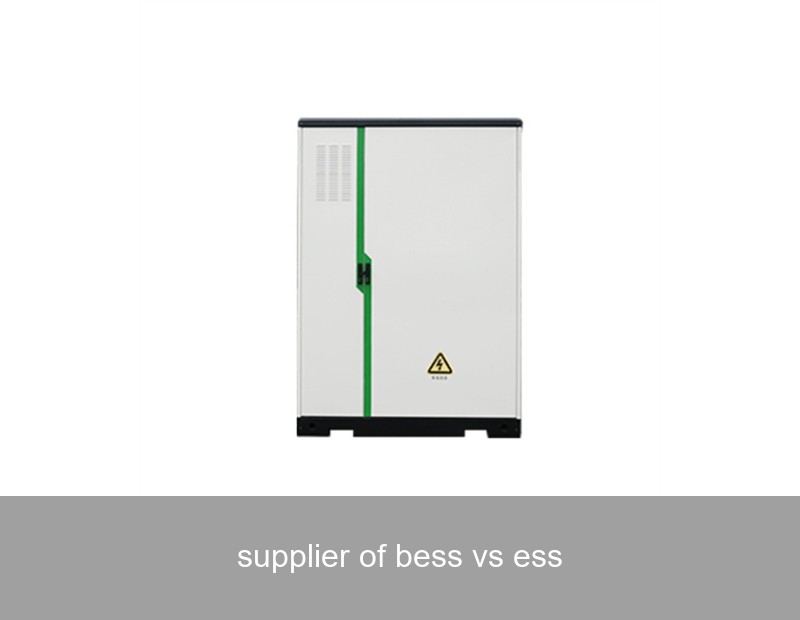
You're exploring energy storage solutions and keep seeing two acronyms: BESS and ESS. They seem interchangeable, but are they? As a business leader, facility manager, or homeowner investing in a resilient energy future, understanding this subtle but crucial distinction is the first step in selecting the right supplier of BESS vs ESS. The choice impacts your system's performance, cost, and long-term value. Let's demystify these terms and guide you toward a partnership that delivers more than just hardware.
Table of Contents
ESS vs. BESS: More Than Just a Letter
Think of Energy Storage Systems (ESS) as the entire orchestra. It's the complete setup that stores energy for later use. This includes the core battery (if there is one), the power conversion system (PCS), the battery management system (BMS), thermal management, safety systems, and the all-important software brain that controls it all.
A Battery Energy Storage System (BESS) is a specific, dominant type of ESS. It's like highlighting the string section of that orchestra. A BESS explicitly uses electrochemical batteries (like lithium-ion) as its core storage medium. So, while every BESS is an ESS, not every ESS is a BESS. Other ESS types could use flywheels, compressed air, or pumped hydro, though these are less common for commercial and residential applications.

Image Source: Unsplash - Representative image of a modern BESS installation.
The Core Components: Where Suppliers Diverge
A true supplier of ESS provides integrated solutions. Their expertise lies in harmonizing all components. A supplier of BESS often focuses on the battery pack and its immediate management systems. The difference becomes clear in their offerings:
| Focus Area | Typical BESS Supplier | Holistic ESS Supplier (Like Highjoule) |
|---|---|---|
| Primary Offering | Battery racks, modules, BMS | Fully integrated system (Battery, PCS, software, controls) |
| Software & Intelligence | Basic monitoring | Advanced energy management for peak shaving, grid services, renewables optimization |
| System Design | Often component-centric | Application-centric (designed for your specific use case) |
| Long-term Value | Primarily hardware warranty | Hardware + software updates + performance analytics |
Why the "Supplier" Distinction Matters for Your Project
Why should you care? Because the scope of your supplier dictates the success of your installation. A component-focused BESS supplier delivers a vital organ, but a full-system ESS supplier delivers a living, breathing solution tailored to your energy metabolism.
Consider this data point: According to a 2023 NREL report, software and controls are increasingly responsible for up to 30% of the total value captured by an energy storage system over its lifetime. That value—from maximizing self-consumption of solar to participating in grid revenue programs—is unlocked by the system's intelligence, not just its battery chemistry.
The Integration Challenge
Procuring a BESS from one vendor, inverters from another, and software from a third creates integration risk. Who is responsible when the system underperforms? A holistic ESS supplier like Highjoule assumes single-point accountability. Our H-IQ Energy Platform is the central nervous system for our storage solutions, ensuring all components communicate seamlessly to execute strategies like demand charge reduction or backup power sequencing flawlessly.
Real-World Impact: A European Case Study
Let's look at a concrete example. A mid-sized dairy processing plant in Germany faced two problems: volatile energy prices cutting into margins and a need for uninterrupted power for refrigeration. They initially sought quotes from several suppliers of BESS for a large battery installation.
However, after consulting with Highjoule as their supplier of ESS, the solution changed. We analyzed their load profile, solar generation, and local grid service (Primärregelleistung) opportunities. The implemented solution included:
- A 500 kWh Highjoule IntelliStack battery system
- Bi-directional inverters optimized for fast grid response
- H-IQ Platform configured for triple-duty: peak shaving, solar time-shifting, and frequency regulation participation.
The Result? The system achieved a 24-month payback period—faster than the battery-only projection. It reduces the plant's annual energy costs by €68,000, generates €15,000 in annual grid service revenue, and provides 8 hours of critical backup for refrigeration. This value stack was only possible through an integrated ESS approach with intelligent software.
Choosing a Partner, Not Just a Supplier
When evaluating a supplier of BESS vs ESS, shift your mindset from buying a product to forming a partnership. Ask these questions:
- Do you provide application engineering? Can you design the system for my specific goal (savings, resilience, revenue)?
- What is the role of your software? Is it a simple monitor or an active optimization engine?
- Can you ensure long-term performance? How do you handle software updates and battery degradation analytics?
- What is your track record in my market? Do you understand local regulations and incentives (like the U.S. Investment Tax Credit or European grid codes)?
The Highjoule Approach: Intelligent Storage Solutions
At Highjoule, founded in 2005, we position ourselves as your strategic partner and premier supplier of ESS. Our solutions, from residential HomePower units to utility-scale GridMax systems, are built on a foundation of integration and intelligence. We don't just supply batteries; we deliver a guaranteed outcome—whether it's lower bills, reliable backup, or a smoother path to net-zero.
Our systems are designed for the complexities of modern energy markets. For instance, our commercial PowerVault series comes pre-integrated with the H-IQ platform, enabling businesses to automatically switch between cost-saving modes based on real-time utility rates and on-site solar production.

Image Source: Unsplash - Example of a residential ESS integrated with solar.
Beyond the Hardware: The Software Edge
This is where the ESS philosophy shines. The H-IQ Platform can receive weather forecasts, allowing it to pre-charge batteries before a cloudy day or a storm that might cause an outage. It can interface with building management systems and generator sets. This level of foresight and integration is what separates a basic storage component from a smart energy asset.
What's Your Storage Priority?
Your journey toward energy independence and cost control starts with the right partner. Are you looking for a commodity battery to meet a basic specification, or are you seeking a intelligent system engineered to maximize your financial and operational return for the next 15+ years?
We invite you to share your biggest energy challenge. Is it unpredictable demand charges, renewable curtailment, or the need for critical backup power? Let's discuss what an integrated ESS approach can do for you.
 Inquiry
 Online Chat