


Choosing the Right Supplier of Energy Group Solutions: A Guide to Future-Proof Power
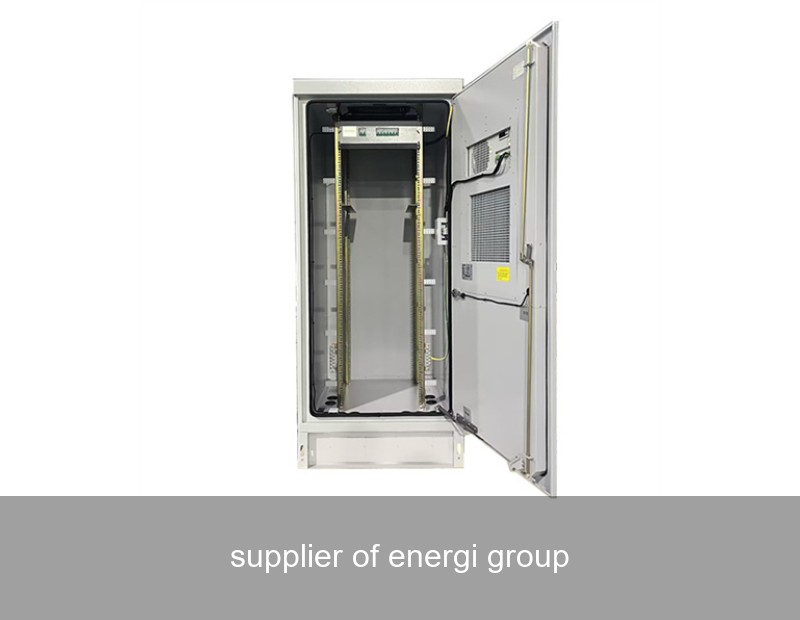
Have you ever considered what truly powers progress in our modern world? Beyond the flick of a switch lies a complex dance of generation, storage, and management. For businesses, communities, and even entire regions, the quest for reliable, clean, and cost-effective power is more pressing than ever. This is where the strategic role of a supplier of energy group solutions becomes critical. It's not just about providing batteries or solar panels; it's about delivering an integrated ecosystem that intelligently manages energy flows, maximizes self-consumption, and ensures resilience. In an era of volatile energy prices and ambitious sustainability goals, partnering with the right technology provider is the cornerstone of a successful energy transition.
Table of Contents
- The Phenomenon: From Passive Consumer to Active Prosumer
- The Data: Quantifying the Energy Independence Imperative
- The Case Study: A European Industrial Park's Transformation
- The Framework: What Makes a Leading Supplier of Energy Group Solutions?
- Highjoule's Role as Your Integrated Energy Partner
- The Future of Energy Groups: Beyond Single Solutions
The Phenomenon: From Passive Consumer to Active Prosumer
The traditional, centralized energy model is undergoing a radical decentralization. We are witnessing a global shift where businesses and homeowners are no longer mere consumers. They are becoming "prosumers"—both producing and consuming energy, primarily through rooftop solar. However, solar generation is intermittent. The sun doesn't shine at night, and peak production often doesn't align with peak consumption. This mismatch creates a challenge and an opportunity. An effective supplier of energy group solutions addresses this core issue by integrating storage and smart management, turning a simple generation asset into a controllable, value-optimizing power plant.

Image Source: Unsplash - Illustrating the combination of solar generation and battery storage at a commercial facility.
The Data: Quantifying the Energy Independence Imperative
Let's talk numbers, because the business case for integrated energy groups is compelling. According to the International Renewable Energy Agency (IRENA), the cost of utility-scale solar PV has fallen by 89% since 2010. Meanwhile, grid electricity prices for businesses in Europe and the U.S. have seen significant volatility and increases. For instance, in 2022, average wholesale electricity prices in many European countries were over 200% higher than the 2019 average. This volatility isn't just a line-item expense; it's a direct threat to operational stability and competitiveness.
| Challenge | Impact | Solution via Energy Group |
|---|---|---|
| High & Volatile Grid Prices | Unpredictable OPEX, reduced profitability | Peak shaving, time-of-use optimization |
| Grid Instability & Outages | Production downtime, data loss, safety risks | Backup power & seamless islanding |
| Carbon Reduction Targets | Regulatory pressure, ESG reporting demands | Maximized renewable self-consumption |
| Intermittent Solar/Wind Power | Excess energy wasted, grid feed-in tariffs falling | Energy storage to capture surplus |
The Case Study: A European Industrial Park's Transformation
Consider the real-world example of the "Mittelpunkthafen" industrial park in Germany. This logistics and manufacturing hub faced steep demand charges and sought to stabilize its energy costs while improving its carbon footprint. Their previous setup included a sizable solar array, but without storage, a significant portion of midday generation was exported to the grid at low rates, while they later purchased expensive power in the evening.
They partnered with a supplier of energy group solutions to design and deploy a 2.4 MWh battery energy storage system (BESS) integrated with their existing solar and building management systems. The results, monitored over 18 months, were striking:
- Self-Consumption Rate: Increased from 35% to over 80%, drastically reducing grid reliance.
- Peak Demand Reduction: The system shaved peak loads by 40%, leading to a direct reduction in monthly demand charges.
- ROI: Projected payback period of under 6 years, factoring in energy savings and government incentives for storage.
- Resilience: The system now provides critical backup power for security and cold storage facilities during grid outages.
This case underscores that the right solution isn't a standalone product, but a harmonized energy group working in concert.
The Framework: What Makes a Leading Supplier of Energy Group Solutions?
Not all providers are created equal. When evaluating a supplier of energy group technologies, you should look beyond hardware specs. The true value lies in the integration, intelligence, and long-term partnership.
1. Technology Agnosticism vs. Optimized Integration
A superior provider offers products engineered to work seamlessly together—like inverters, batteries, and management software speaking the same language. This avoids the compatibility headaches and performance gaps of a Frankenstein system pieced together from multiple vendors.
2. Intelligence at the Core: The Software Layer
The hardware is the muscle, but the software is the brain. Advanced Energy Management Systems (EMS) use AI and real-time data to make decisions: when to store, when to discharge, when to sell back to the grid based on weather forecasts and price signals. This is where the real optimization and ROI are generated.
3. Depth of Application Expertise
Does the supplier understand the unique load profiles of a hospital versus a data center versus a supermarket? A proven track record across commercial, industrial, and residential segments is a strong indicator of an ability to tailor solutions.
4. Lifecycle Support and Services
The relationship begins at installation, not ends there. Look for comprehensive warranties, remote monitoring, predictive maintenance, and performance guarantees. As noted by the National Renewable Energy Lab (NREL), proper O&M is critical for long-term battery health and system performance.
Highjoule's Role as Your Integrated Energy Partner
This is precisely the philosophy that has guided Highjoule since 2005. As a global leader in advanced energy storage systems, we position ourselves not just as a manufacturer, but as your dedicated supplier of energy group solutions. Our approach is holistic:
- Highjoule HPS Series: Our flagship commercial & industrial battery storage systems are modular, scalable from 100 kWh to multi-MWh configurations, and built with industry-leading lithium iron phosphate (LFP) cells for safety and longevity.
- IntelliGrid EMS Platform: This proprietary software is the command center for your energy group. It integrates solar, storage, grid connection, and even backup generators, optimizing for cost, carbon, and resilience based on your customizable priorities.
- End-to-End Services: From initial feasibility studies and financial modeling to system design, grid connection approval support, installation supervision, and 24/7 monitoring via our Highjoule Guardian Network, we are with you for the long haul.

Image Source: Unsplash - Representing a modern energy management system interface monitoring multiple power sources.
For a residential community in California or a manufacturing plant in Bavaria, our systems are designed to create cohesive, autonomous energy groups that deliver tangible value every day.
The Future of Energy Groups: Beyond Single Solutions
The evolution is towards virtual power plants (VPPs) and peer-to-peer (P2P) energy trading. Imagine your facility's energy group, managed by Highjoule's IntelliGrid, not only saving you money but also participating in grid-balancing services. By aggregating the flexible capacity of thousands of distributed systems, VPPs can provide critical grid stability, turning your energy assets into a new revenue stream. This is the next frontier, and it requires a supplier of energy group solutions with robust, secure, and grid-interactive technology.
The question is no longer if you should invest in an integrated energy strategy, but how and with whom. The landscape is complex, but the path to greater control, sustainability, and economic advantage is clear.
What is the single biggest energy challenge currently preventing your organization from achieving its financial and sustainability goals, and how might a truly integrated energy group address it?
 Inquiry
 Online Chat