


Optimizing Your Energy Independence: A Deep Dive into the 2 Solar Panel, 1 Battery Connection
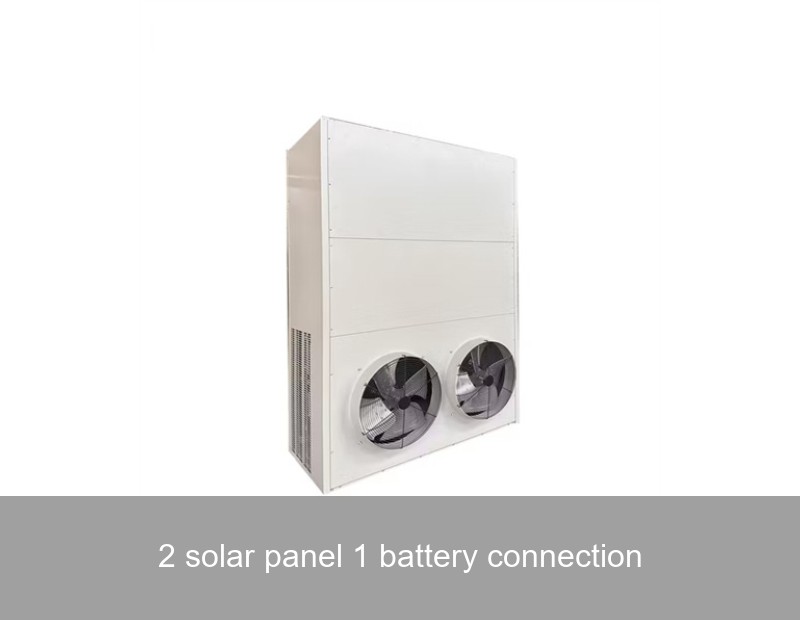
So, you're thinking about solar. You've got your eye on a couple of high-efficiency panels for your roof and a sleek battery to store that clean power for nighttime. The concept seems straightforward: connect two solar panels to one battery, and you're set for energy independence. But here's a question we hear often at Highjoule: is it really that simple? The short answer is no—but understanding the "why" unlocks the true potential of a safe, efficient, and durable home energy system. This configuration is a popular starting point for many homeowners in Europe and the US, offering a tangible step into renewable energy. Let's unravel the technical symphony behind this seemingly simple setup.
The Power Ratio Puzzle: Why It's More Than Simple Math
The first instinct is to think of this setup as a basic equation: Panel Power + Panel Power = Battery Storage. However, this is where many DIY projects hit a snag. You're not just connecting wires; you're managing an energy flow.
Imagine your two solar panels as diligent workers, producing DC (Direct Current) electricity at varying rates throughout the day, heavily influenced by weather and sunlight angle. Your battery, on the other hand, is a sophisticated reservoir with strict rules. It has a specific voltage rating (e.g., 48V for a typical home system) and a charge current limit (the maximum flow of electricity it can safely accept). Connecting two panels directly to a battery without regulation is like trying to fill a modern smart water tank with two fire hoses—you risk overwhelming and permanently damaging the system.
The critical intermediary is the charge controller (or inverter-charger in AC-coupled systems). This device acts as a brainy traffic cop. It takes the variable output from your panels, conditions it to the perfect voltage and current, and safely delivers it to the battery. For a "2 panel, 1 battery" system, you must ensure the combined maximum output of the panels does not exceed the charge controller's and battery's input capabilities. This is the foundational rule of a safe connection.
Understanding Panel Configuration: Series vs. Parallel
How you wire your two panels fundamentally changes the input to your system. This choice is dictated by your equipment's specifications and your environmental conditions.
| Configuration | How It Works | Voltage | Current | Best For... |
|---|---|---|---|---|
| Series | Connect the positive of Panel A to the negative of Panel B. | Adds (e.g., 40V + 40V = 80V) | Stays the same as one panel | Long wire runs, systems requiring higher voltage to start charging (like many 48V batteries), or shaded conditions where micro-inverters are used. |
| Parallel | Connect all positives together and all negatives together. | Stays the same as one panel | Adds (e.g., 10A + 10A = 20A) | Systems with lower voltage battery banks (e.g., 12V, 24V), or when partial shading is a concern with a traditional charge controller. |
Choosing incorrectly can lead to severe underperformance or even equipment damage. For instance, a high-voltage series output might fry a low-voltage charge controller.
Key Components for a Successful Setup
Beyond panels and a battery, a robust system needs:
- MPPT Charge Controller: The gold standard. An MPPT (Maximum Power Point Tracking) device intelligently finds the optimal operating point of your panels, squeezing up to 30% more energy from them compared to older PWM types, especially in non-ideal weather. This is crucial for maximizing the yield from your two panels.
- Hybrid Inverter: For most modern homes, this is the heart of the system. It combines the functions of a solar inverter (converting DC from panels to AC for your home), a battery charger, and a grid interface. It seamlessly manages power flow between your panels, battery, home, and the grid.
- Safety & Monitoring: This includes DC isolators, fuses, circuit breakers, and a dedicated energy management system (EMS). The EMS, like the one integrated into every Highjoule system, gives you real-time insight into production, consumption, and storage levels via a smartphone app.
Real-World Case Study: Maximizing a North-Facing Roof in Berlin
Let's move from theory to practice. Consider the Müller family in Berlin, Germany. They had a primary south-west facing roof section, but only space for two high-wattage panels (each 450W). Their goal was to power their home office (computers, router, lighting) and critical loads (refrigerator) during evening hours, reducing grid dependence.
Their Challenge: Limited roof space, non-optimal orientation, and the desire for a simple, expandable system. A basic, off-the-shelf kit would have underperformed.
The Highjoule Solution: Our team designed a system using:
- 2 x 450W Bifacial Solar Panels: Capturing light from both sides to boost yield from reflective surfaces.
- 1 x Highjoule HES-10.5 Hybrid Energy Stack: This all-in-one unit houses a high-efficiency hybrid inverter, a built-in MPPT charge controller, and our proprietary Adaptive Charge Management software. It's pre-configured for easy "2 panel, 1 battery" integration.
- 1 x Highjoule HPB-LFP 10.2 kWh Lithium Iron Phosphate Battery: Known for its safety, longevity (over 6000 cycles), and stable performance.

Image Source: Unsplash (Representative image of a residential solar installation)
The Data & Outcome: Despite the sub-optimal roof angle, the MPPT technology in the HES-10.5 ensures the panels operate at their peak. On a typical day, the system generates ~5-6 kWh. The intelligent EMS prioritizes direct consumption of solar power during the day, then charges the battery with the excess. The result? The Müllers now cover over 70% of their home office and critical load consumption with self-generated solar, even after sunset, and saw a 40% reduction in their grid electricity bill in the first quarter. The system's modular design also allows them to easily add more panels or a second battery in the future.
Highjoule's Intelligent Solutions: Simplifying the Optimal Pairing
At Highjoule, we've moved beyond the complexity of piecing together separate components. We engineer integrated systems where the "connection" between your solar panels and battery is managed by sophisticated, self-optimizing software. For setups like the 2:1 panel-to-battery ratio, our HES Series Hybrid Energy Stacks are ideal.
How do we make it seamless?
- Pre-Configured Compatibility: Our systems come with clear technical specifications, taking the guesswork out of voltage and current matching for your panels and battery.
- Adaptive Charge Management (ACM): This proprietary software doesn't just charge the battery; it learns your consumption patterns, weather forecasts, and utility rate schedules (where applicable) to decide the most economical moment to store or use energy.
- Scalable Architecture: Starting with a "2 solar panel, 1 battery connection" doesn't mean you're stuck there. Highjoule systems are designed for effortless expansion—add more panels or additional battery modules as your needs and budget grow.
Why Battery Chemistry Matters: LFP for Peace of Mind
Not all batteries are created equal. For residential applications, Highjoule exclusively uses Lithium Iron Phosphate (LFP) chemistry. Compared to older NMC batteries, LFP offers superior thermal stability (enhanced safety), a longer lifespan (often 2-3 times more cycles), and maintains performance better in a wider range of temperatures. When you're making a long-term investment in your home, the battery's inherent safety and durability are non-negotiable. You can read more about the safety advantages of LFP chemistry from the U.S. Department of Energy.
Future-Proofing Your Energy System
The energy landscape is evolving rapidly. When installing a system today, consider its role tomorrow. A well-designed "2 panel, 1 battery" system should be the core of a future smart home energy ecosystem.
With a Highjoule system, you're not just buying hardware; you're gaining a platform. Our EMS can integrate with smart home systems and, in many regions, participate in grid services like demand response. Imagine your system automatically using stored battery power during a brief grid peak, earning you credits, all without interrupting your home's supply. This level of intelligence transforms a simple generation-and-storage setup into an active asset.
For a deeper look at how home storage integrates with the modern grid, research from institutions like the International Energy Agency provides valuable context.

Image Source: Unsplash (Representative image of a modern home battery installation)
So, as you contemplate those two panels and one battery, what specific energy goal—be it resilience during outages, locking in long-term electricity costs, or simply reducing your carbon footprint—is driving your decision to explore solar plus storage today?
 Inquiry
 Online Chat