


Finding the Right Supplier of ESS in Kenya: Your Guide to Sustainable Power Solutions
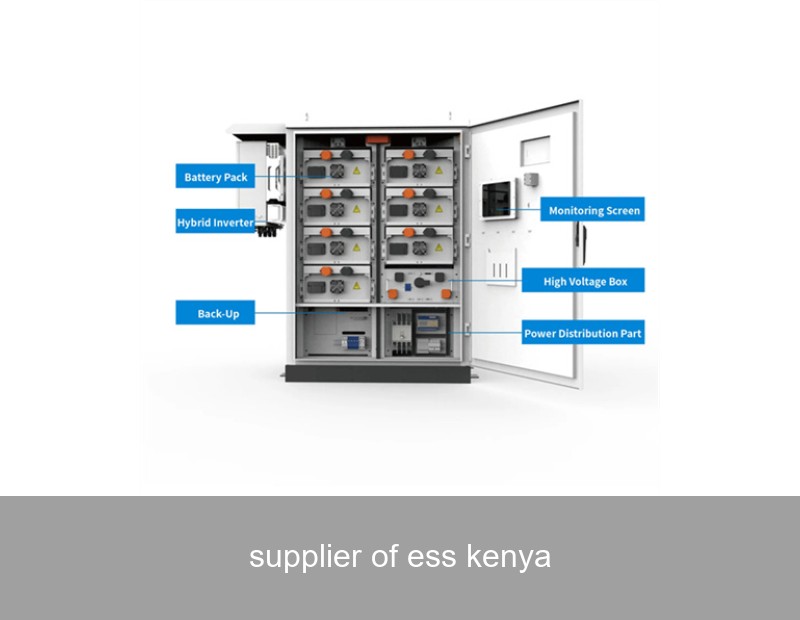
Imagine your business in Nairobi, a manufacturing plant in Mombasa, or a farm in the Rift Valley. Now, imagine the lights flickering, machinery grinding to a halt, and productivity vanishing—all because of an unreliable grid. This isn't a hypothetical scenario; it's a daily reality for many across Kenya, where energy demand is surging but supply remains inconsistent. This is where choosing the right supplier of ESS (Energy Storage Systems) in Kenya becomes not just a procurement decision, but a strategic move towards energy independence and economic resilience.
Table of Contents
The Kenyan Energy Context: A Nation Poised for Storage
Kenya is a leader in renewable energy in Africa, with over 80% of its grid electricity coming from green sources like geothermal, hydro, and wind. Yet, paradoxically, grid reliability is a persistent challenge. The Kenya Power and Lighting Company (KPLC) often implements load-shedding to manage demand, disrupting businesses and daily life. Furthermore, the country's ambitious development goals, including the Vision 2030 blueprint, are inherently energy-intensive.
This creates a perfect storm of opportunity for energy storage. An ESS acts as a buffer, storing excess solar energy generated during the day for use at night or during grid outages. It stabilizes mini-grids and allows commercial entities to avoid costly diesel generators. The data is compelling: The global energy storage market is exploding, and Africa is a key frontier. According to the International Energy Agency (IEA), achieving universal energy access in Africa will require a significant increase in investment in battery storage, with mini-grids and stand-alone systems playing a central role.

Image Source: Unsplash - Representative image of solar potential in similar climates.
What Makes a Great ESS Supplier? Beyond the Hardware
Choosing a supplier of ESS in Kenya is about more than just buying batteries. You're investing in a long-term partnership for your energy security. Here’s what to look for:
- Deep Technical Expertise & Product Quality: The supplier must understand the specific electrochemical, thermal, and cycling demands of the Kenyan environment. Systems must be robust, with high-temperature tolerance and advanced Battery Management Systems (BMS) for safety and longevity.
- Full-System Integration Capability: The best suppliers don't just provide a battery rack. They offer, or partner for, a complete system: PV panels, inverters, transformers, and crucially, the software for energy management and monitoring.
- Localized Support & Service: Can they provide timely technical support, maintenance, and warranty services locally? A supplier with a strong local presence or dedicated in-country partners is invaluable.
- Financial & Project Viability: They should help you model the financial returns (ROI), navigate any available financing or incentives, and ensure the system design meets your specific load profiles and backup requirements.
Case Study: Powering Education Uninterrupted at The Riara Group of Schools, Nairobi
Let's look at a real-world example. The Riara Group of Schools, a prestigious educational institution in Nairobi, faced frequent power outages that disrupted digital learning, administrative operations, and security systems. Their reliance on diesel generators was noisy, polluting, and expensive.
The Challenge: Ensure 24/7 clean power for IT labs, classrooms, and admin blocks, reduce operational costs, and provide a hands-off, silent power solution.
The Solution: A turnkey solar-plus-storage microgrid was installed. This included a substantial rooftop solar array coupled with a 240 kWh lithium-ion battery energy storage system and intelligent energy management software.
| Metric | Result |
|---|---|
| Grid Independence During Sunlight | ~95% |
| Backup Duration for Critical Loads | Over 8 hours |
| Annual Diesel Fuel Savings | Approximately 18,000 liters |
| CO2 Emissions Avoided Annually | ~48 tonnes |
| Projected Payback Period | Under 5 years |
Highjoule's Tailored Solutions for the Kenyan Market
As a global leader in advanced energy storage since 2005, Highjoule understands the unique challenges and opportunities in Kenya. We are more than just a supplier of ESS in Kenya; we are a technology partner committed to building sustainable power resilience.
Our approach for the Kenyan market is built on three pillars:
- The Highjoule H-Series Commercial & Industrial (C&I) ESS: This is our workhorse for businesses, factories, and institutions. Its modular design allows for scalable capacity from 100 kWh to multi-MWh projects. Featuring liquid cooling and our proprietary Alchemy BMS, it is engineered to perform reliably in Kenya's varied climates, maximizing cycle life and safety. Integrated with smart inverters, it enables peak shaving, load shifting, and seamless backup transition.
- Highjoule Energy Management Platform (HEMP): Hardware is only half the story. Our cloud-based platform gives you real-time visibility and control over your energy assets. You can monitor state-of-charge, track savings, schedule operations, and even participate in future grid services, all from a dashboard on your phone or computer.
- Partnership-Driven Local Support: We work through a network of certified, trained local EPC (Engineering, Procurement, and Construction) partners. This ensures that system design, installation, and after-sales service are handled by experts who know the local regulations, grid codes, and practical realities on the ground.

Image Source: Unsplash - Representative image of modern energy storage system monitoring.
Applications We Power in Kenya
- Commercial & Industrial: Reduce demand charges, ensure production continuity, and meet CSR goals.
- Agro-Processing & Cold Storage: Prevent spoilage and maintain 24/7 refrigeration for milk, tea, and horticulture.
- Telecom Towers: Provide reliable backup for critical communications infrastructure, replacing diesel.
- Residential Estates & Micro-Grids: Offer developers a unique selling point with guaranteed power for high-end homes or remote communities.
The Future of Energy in Kenya: Your Next Step
The transition to a stable, cost-effective, and clean energy future in Kenya is already underway. The technology is proven, and the economics are increasingly favorable. The question is no longer *if* energy storage is needed, but *how* to implement it effectively. The choice of your technology partner—your supplier of ESS in Kenya—will determine the success of your project for the next decade or more.
So, as you consider taking control of your energy costs and reliability, what specific operational challenge—be it unpredictable utility bills, frequent downtime, or a sustainability target—would you want a tailored energy storage solution to solve first?
 Inquiry
 Online Chat