


Your Strategic Partner: Choosing the Right Supplier of FVE Systems for Long-Term Success
So, you've decided to harness the sun. It's a smart move. Whether you're a homeowner looking to slash energy bills, a factory manager aiming to lock in operational costs, or a municipality planning a greener future, a Photovoltaic (FVE) system is a powerful step toward energy independence. But here's a truth many discover mid-journey: buying solar panels is just one piece of the puzzle. The real key to unlocking decades of reliable, cost-saving, clean energy lies not in a single component, but in choosing the right supplier of FVE systems. This partner defines your experience from design through to the 25-year mark and beyond.

Image: A successful FVE project hinges on seamless integration, not just panels. Credit: Unsplash
Understanding the FVE System Ecosystem
Let's break down what a complete FVE system truly entails. It's a symphony of components, each playing a vital role:
- PV Modules (The Generators): The most visible part, converting sunlight into direct current (DC) electricity.
- Inverters (The Brains & Converters): They transform DC power into the usable alternating current (AC) for your home or business. Their intelligence manages system performance and grid interaction.
- Mounting & Racking (The Foundation): The structural backbone that secures panels to your roof or the ground, designed for specific wind and snow loads.
- Energy Storage Systems (The Freedom): Batteries, like lithium-ion systems, store excess solar energy for use at night or during grid outages, dramatically increasing self-consumption.
- Energy Management System (The Conductor): Smart software that monitors, controls, and optimizes energy flow between solar generation, storage, consumption, and the grid.
A simple vendor might sell you the first three items. A true supplier of FVE systems integrates all five into a cohesive, intelligent, and future-ready solution.
Beyond the Panel: The Critical Role of a Modern Supplier of FVE Systems
The market is evolving rapidly. According to the International Energy Agency (IEA), global renewable capacity is set to expand by 2.5 times by 2030, with solar PV accounting for more than half of this growth. This isn't just about more panels on roofs; it's about smarter, more resilient energy systems.
Why does your choice of partner matter so much? Because the challenges are complex:
| Challenge | Component-Focused Vendor | Integrated System Supplier |
|---|---|---|
| Maximizing Self-Consumption | May oversize the array, exporting excess to the grid at low rates. | Designs an optimally sized PV array paired with storage to store and use >70% of your solar energy on-site. |
| Grid Stability & Regulations | Provides basic grid-tie inverters. | Offers advanced inverters with grid-support functions (like frequency response) and ensures full compliance with local grid codes (like VDE-AR-N 4105 in Germany or UL 1741 SA in the US). |
| Long-Term Performance & ROI | Warranties may be fragmented by component. | Provides a unified performance guarantee and remote monitoring to ensure the system delivers its promised financial return over its entire lifespan. |
From Challenge to Solution: A German Case Study
Consider a real-world scenario from Bavaria, Germany. A medium-sized dairy processing plant faced volatile energy prices and strict sustainability targets. Their initial plan was a 500 kWp rooftop PV system. A basic quote promised significant savings.
However, by partnering with an advanced supplier of FVE systems—Highjoule—the project transformed. Highjoule's analysis revealed the plant's refrigeration units ran heavily at night, misaligned with solar production. The proposed solution: a 480 kWp PV system integrated with a 600 kWh Highjoule H2 Cube battery storage system and their proprietary Energy Management Platform (EMP).
The Result? The system now stores midday solar surplus to power nighttime cooling. The plant increased its on-site solar consumption from an estimated 35% to over 82%. In its first year, it reduced grid energy purchases by 68% and achieved a 12% faster ROI than the storage-less design, all while providing the facility with backup power during brief grid disturbances. This is the power of a system-level approach.

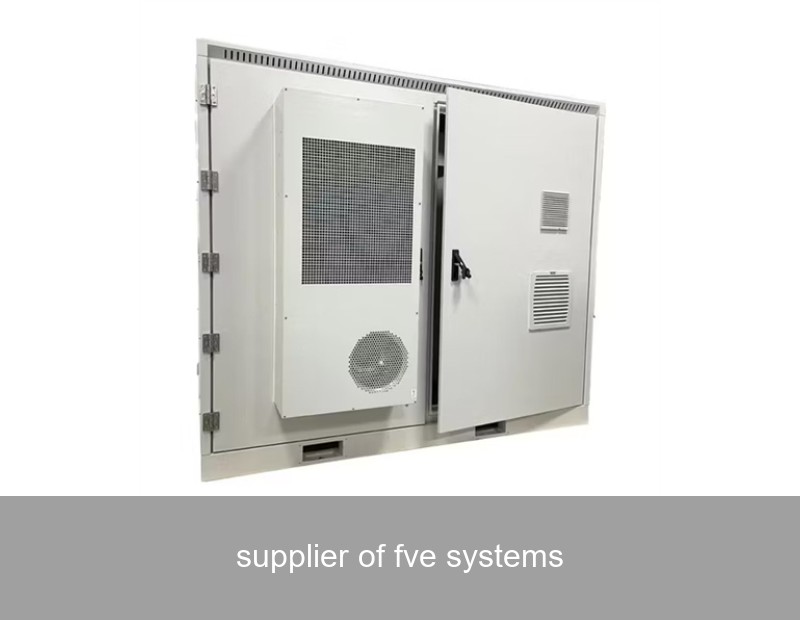
Image: Containerized battery storage systems enable large-scale energy shifting. Credit: Unsplash
The Highjoule Approach: Intelligent Energy Integration
At Highjoule, we have been redefining what it means to be a supplier of FVE systems since 2005. Our philosophy is that true sustainability is achieved through intelligent integration, not just installation. We provide end-to-end solutions where every component is designed to work in harmony.
For our commercial and industrial clients across Europe and North America, this means offering our flagship H-Series Integrated Energy Systems. These are not merely kits of parts, but pre-engineered platforms combining high-efficiency bifacial PV modules, advanced hybrid inverters, and our scalable H2 Cube lithium iron phosphate (LiFePO4) battery systems. The entire ecosystem is governed by our EMP, which uses AI-driven forecasting to optimize energy flows based on weather, usage patterns, and real-time electricity pricing.
For residential and smaller commercial projects, our EcoHome Suite delivers the same principle of integrated intelligence in a compact format. It's a testament to our belief that whether for a family home or a factory, your energy system should be a resilient, self-optimizing asset.
- Expertise in Compliance: Navigating the regulatory landscape of California's Title 24, the UK's G99, or the EU's grid requirements is built into our design process.
- Lifecycle Partnership: From feasibility studies and financial modeling to commissioning, remote monitoring, and preventative maintenance, our role as your supplier extends for the life of the system.
Choosing Your Strategic Partner in Energy Independence
As you evaluate potential partners, move beyond price-per-watt quotes. Ask deeper questions:
- Do you provide a detailed energy yield and financial model that includes storage optimization?
- How does your system ensure compliance and grid support in my specific region?
- What is your single point of accountability for performance, and what does the monitoring interface look like?
- Can you provide a case study or reference from a project with goals similar to mine?
The energy landscape is shifting from centralised generation to distributed, intelligent nodes. Your choice of a supplier of FVE systems will determine whether your investment is a standalone solar installation or the cornerstone of a resilient, efficient, and profitable energy future.
What specific energy challenge—be it peak shaving, backup power, or a carbon reduction target—is driving your search for a solar solution, and how can an integrated system turn that challenge into your greatest advantage?
 Inquiry
 Online Chat