


The Power Behind the Plug: Why Your Choice of Supplier of Li-ion Cells Matters
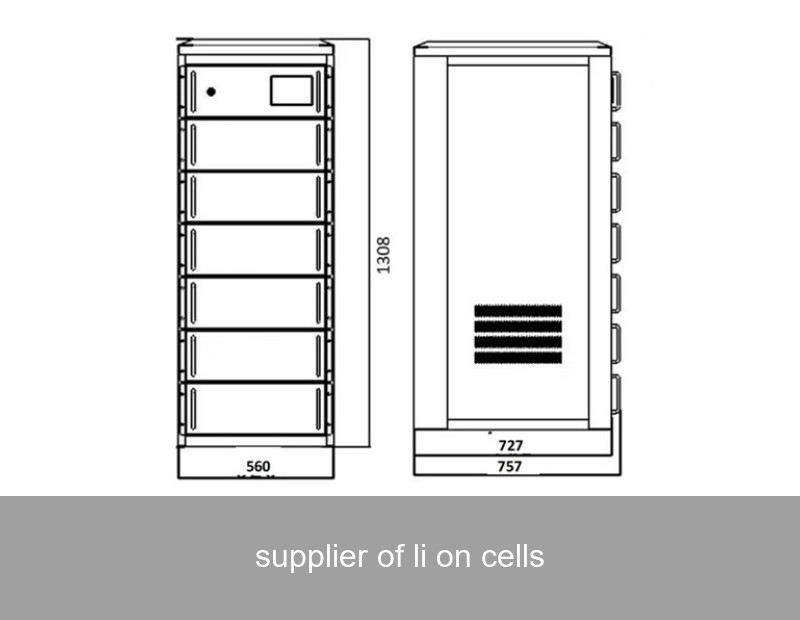
Imagine you're building the heart of a new energy storage system. You've designed the perfect enclosure, selected top-tier inverters, and written sophisticated control software. But the true core—the element that stores every watt-hour of renewable energy—is the lithium-ion cell. Your choice of supplier of li-ion cells isn't just a procurement decision; it's a strategic partnership that will define your system's performance, safety, and longevity for decades. In an era where energy resilience is paramount, the provenance of your battery cells becomes a critical business and operational factor. Let's explore why this partnership is the cornerstone of any successful energy storage project.
Beyond the Spec Sheet: The Unseen Pillars of a Reliable Supplier of Li-ion Cells
Many suppliers can provide a datasheet listing energy density, cycle life, and nominal voltage. However, the difference between a simple vendor and a true strategic supplier of li-ion cells lies in several deeper, often unseen, pillars that directly impact your project's total cost of ownership and risk profile.
Cell Chemistry & Form Factor Expertise
Not all lithium-ion is created equal. The dominant chemistries—Lithium Iron Phosphate (LFP) and Nickel Manganese Cobalt (NMC)—have distinct profiles. A knowledgeable supplier doesn't just sell cells; they guide you. For instance, LFP's superior thermal stability and longer cycle life make it ideal for daily cycling in stationary storage, while NMC's higher energy density might suit applications with space constraints. Furthermore, the form factor (prismatic, cylindrical, pouch) affects pack design, thermal management, and manufacturability. A true partner helps you navigate these choices based on your specific application, be it a residential Powerwall alternative or a grid-scale battery energy storage system (BESS).

Image Source: Unsplash - Photo by American Public Power Association
Uncompromising Quality & Full Traceability
Cell quality is non-negotiable. It starts with the raw materials and continues through every manufacturing step. A top-tier supplier of li-ion cells will have rigorous quality control (QC) protocols, often exceeding basic certifications. They should provide detailed batch test reports and, crucially, offer full traceability back to the production line. This is your insurance policy. If an anomaly is ever detected in the field, traceability allows for targeted, efficient resolution, minimizing downtime and risk. According to a 2021 NREL report on battery lifetime, cell-to-cell variability is a key factor in long-term pack degradation, making stringent supplier QC essential.
Scalability & Supply Chain Resilience
Can your supplier support your pilot of 100 kWh today and your 100 MWh rollout in two years? Scalability involves more than just production capacity; it encompasses a resilient, ethical supply chain for critical materials like lithium and cobalt. The best suppliers proactively audit their supply chains, ensuring stability and adherence to environmental and social governance (ESG) standards—a growing concern for European and North American clients. Partnering with a supplier with a robust, multi-geography supply chain mitigates the risk of disruptive shortages.
Technical Partnership & System Integration Support
This is where the greatest value is created. An advanced supplier acts as an extension of your engineering team. They provide:
- Detailed Cell Characterization Data: Beyond the public datasheet, offering deep dives into performance under various temperatures, C-rates, and aging conditions.
- Thermal & Safety Modeling: Sharing data to inform your Battery Management System (BMS) and thermal management design.
- Failure Mode Analysis: Collaborating on root cause analysis for any field issues, turning incidents into product improvement opportunities.
This level of support transforms the supplier relationship from transactional to collaborative, accelerating your time-to-market and enhancing system reliability.
Case Study: Powering Resilience for a California Community Microgrid
Let's look at a real-world example. A community in Northern California, prone to Public Safety Power Shutoffs (PSPS), sought to build a 2 MWh / 4 MWh battery storage system as the core of a community microgrid. The project's success hinged on a supplier of li-ion cells that could guarantee safety, provide multi-decade performance warranties, and support complex grid-interactive controls.
The system integrator partnered with a supplier providing premium-grade LFP prismatic cells. The supplier's involvement went beyond delivery:
| Challenge | Supplier's Contribution | Outcome |
|---|---|---|
| Stringent Safety Requirements | Provided full cell-level safety testing reports (nail penetration, overcharge, thermal shock) and supported system-level safety certification. | Expedited local fire marshal approval; community trust established. |
| Longevity Assurance | Supplied extended cycle life testing data projecting less than 20% degradation after 7,000 cycles at 100% depth of discharge. | Enabled a bankable 15-year performance guarantee, securing project financing. |
| Grid Code Compliance | Worked with the BMS developer to fine-tune state-of-charge (SOC) and state-of-health (SOH) algorithms for precise grid frequency response. | The system now seamlessly provides grid services, creating a revenue stream that offsets costs. |
Since commissioning, the system has successfully islanded the community during multiple grid outages, providing over 72 hours of critical backup power. The deep technical partnership on cell selection and integration was pivotal. The U.S. Department of Energy highlights such integrated approaches as key to microgrid success.
The Highjoule Approach: From Cell Selection to Optimized System Performance
At Highjoule, our journey as a global energy storage solutions provider since 2005 has taught us that excellence begins at the cell level. We don't just procure cells; we engage in long-term, strategic partnerships with a select group of tier-1 supplier of li-ion cells. This allows us to engineer our commercial, industrial, and residential battery storage systems from the inside out.
Our product lines, like the Highjoule H-Series for C&I applications and the integrated HomePower Hub for residences, are built on a foundation of meticulously sourced LFP cells. We leverage our partners' deep cell data to optimize our proprietary Adaptive Cell Balancing™ and 3D Thermal Management systems. This results in products that deliver on our promise of intelligence, efficiency, and sustainability—extending system life, maximizing return on investment, and ensuring safety for our customers across Europe and North America. For complex microgrid projects, our team provides end-to-end support, starting with the critical advisory role on cell technology selection based on the specific duty cycle and environmental conditions.

Image Source: Unsplash - Photo by ThisisEngineering RAEng
What Does the Future Hold for Energy Storage Partnerships?
The landscape of energy storage is rapidly evolving. We're seeing the emergence of new chemistries like sodium-ion and solid-state batteries on the horizon. The role of a trusted supplier of li-ion cells will evolve from providing a component to co-innovating on next-generation storage solutions. This raises a crucial question for any organization building energy storage today: Is your supply chain just a cost center, or is it a strategic ecosystem capable of adapting and innovating with you to meet the energy challenges of the next decade? The quality of your answer may well determine the resilience and profitability of your energy assets for years to come.
What specific performance parameter in your next project—be it cycle life, charge speed, or operational temperature range—will most influence your choice of cell technology partner?
 Inquiry
 Online Chat