


Why a Smart Battery Pack Cooling System is the Unsung Hero of Energy Storage
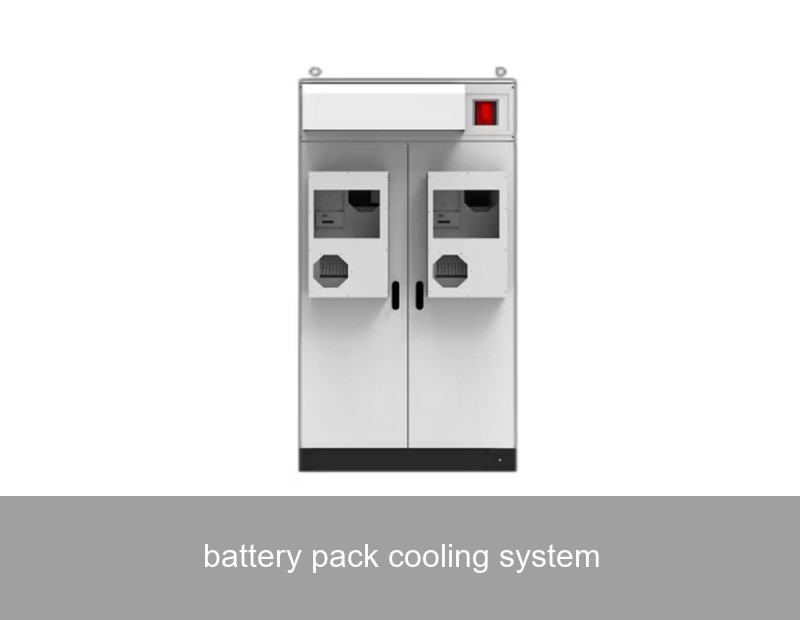
When you think about a battery energy storage system (BESS), what comes to mind? Probably its power rating, capacity in kilowatt-hours, or its sleek exterior. But there's a critical component working tirelessly behind the scenes that often gets overlooked: the battery pack cooling system. This isn't just about keeping batteries from getting warm; it's the cornerstone of safety, longevity, and overall performance. In this deep dive, we'll explore why advanced thermal management is non-negotiable for modern energy storage and how it unlocks true value for your investment.
Table of Contents
- The Hidden Phenomenon: Heat as the Silent Battery Killer
- The Data Reality: How Temperature Dictates Battery Life
- Cooling System Approaches: Air vs. Liquid vs. Phase Change
- Case in Point: Highjoule's Thermoguard™ Active Liquid Cooling in Action
- Beyond Cooling: The Integration with Battery Management
- Future Trends and Your Next Step
The Hidden Phenomenon: Heat as the Silent Battery Killer
Every time a battery charges or discharges, it generates heat due to internal resistance. It's a fundamental physical phenomenon. In a small device like your phone, this is manageable. But scale this up to a container-sized battery pack storing megawatt-hours of energy for a factory or a community, and the heat generation becomes a monumental engineering challenge. Without an efficient battery pack cooling system, this heat doesn't just dissipate. It accumulates, creating hotspots that trigger a cascade of problems:
- Accelerated Degradation: High temperatures speed up chemical side reactions within the cells, permanently reducing their capacity.
- Safety Risks: Excessive heat can lead to thermal runaway—a dangerous, self-perpetuating chain reaction that can result in fire.
- Performance Throttling: To self-protect, systems will often reduce power output (derate) when temperatures rise, meaning you can't use the full power you paid for during peak demand.
So, the question isn't whether you need cooling, but what kind of cooling is smart enough for your specific application.
The Data Reality: How Temperature Dictates Battery Life
Let's talk numbers. The rule of thumb, often cited by battery researchers, is that for every 10°C (18°F) increase in operating temperature above a recommended range, the rate of battery aging doubles. This is known as the Arrhenius equation in action. Consider this illustrative table:
| Average Operating Temperature | Estimated Capacity Loss Per Year* | Impact on 10-Year System Life |
|---|---|---|
| 25°C (77°F) - Optimal | ~2-3% | Retains ~75-80% capacity after 10 years |
| 35°C (95°F) | ~4-6% | Retains only ~50-60% capacity after 10 years |
| 45°C (113°F) | ~8-12%+ | Severe degradation, likely premature system replacement |
*Illustrative data based on general lithium-ion chemistry under constant elevated temperature stress. Actual rates depend on chemistry, cycling patterns, and thermal management.
This isn't just theoretical. A study by the National Renewable Energy Laboratory (NREL) emphasizes that effective thermal management is critical for achieving the long cycle life projected for grid storage systems. The financial implication is clear: a poorly cooled battery is a rapidly depreciating asset.
Cooling System Approaches: Air vs. Liquid vs. Phase Change
Not all cooling is created equal. The evolution of battery pack cooling system technology mirrors the increasing demands we place on energy storage.
- Air Cooling: Uses fans to circulate ambient air. It's simple and low-cost but has low thermal conductivity, making it inefficient for high-power, high-density packs. It's highly dependent on external air temperature, which can be a liability in hot climates.
- Liquid Cooling: Uses a coolant fluid (often a water-glycol mix) circulated through cold plates or tubing that contact the battery cells or modules. Liquid has a much higher heat capacity and thermal conductivity than air, allowing for precise temperature control and handling of high thermal loads. This is the industry standard for demanding applications.
- Phase Change Material (PCM) Cooling: Uses materials that absorb heat by melting (changing from solid to liquid). They are excellent for buffering short-term temperature spikes but often need a secondary system (like liquid cooling) to reject the stored heat to the environment over the long term.

Image: Precision-engineered liquid cooling plates are key to managing heat in high-density battery packs. (Photo source: Unsplash, representative image)
For commercial, industrial, and utility-scale storage where uptime, safety, and total cost of ownership are paramount, active liquid cooling is increasingly the answer. And not all liquid cooling systems are created equal.
Case in Point: Highjoule's Thermoguard™ Active Liquid Cooling in Action
Let's look at a real-world application. A large food processing plant in Bavaria, Germany, installed a 2 MWh battery storage system to participate in frequency regulation markets and provide backup power. Their initial system used a basic air-cooling design. During the summer of 2022, they faced a problem: during consecutive days of high grid activity and ambient temperatures above 35°C (95°F), the battery system would consistently derate its power output by over 30% to avoid overheating. This meant lost revenue and compromised backup readiness.
The plant partnered with Highjoule for a retrofit upgrade. We replaced the thermal management core with our Thermoguard™ Active Liquid Cooling System. Here's what changed:
- Precision Control: Thermoguard uses independent cooling circuits and variable-speed pumps to maintain cell temperature within a ±2.5°C band of the optimal setpoint, regardless of external weather. Intelligent Integration: It's not a standalone component. Thermoguard is governed by Highjoule's proprietary Adaptive Battery Management System (A-BMS), which uses real-time data and predictive algorithms to pre-emptively adjust cooling demand based on load forecasts.
- The Result: Post-retrofit data from the summer of 2023 showed zero performance derating events. The system maintained full 2 MW output capability. More importantly, by keeping temperatures consistently lower, the projected capacity degradation rate improved by an estimated 40%, extending the system's profitable lifespan significantly. The plant manager noted, "The cooling system upgrade transformed our BESS from a fair-weather asset to a 24/7, all-season workhorse."
This case underscores that a sophisticated battery pack cooling system is an enabling technology for revenue generation and reliability, not just a utility.
Beyond Cooling: The Integration with Battery Management
The true magic happens when thermal management is in constant dialogue with the brain of the system. At Highjoule, we design our battery pack cooling system as an integrated subsystem of our overall energy management platform. Our A-BMS doesn't just react to temperature sensors; it anticipates thermal loads.
For example, if the system knows a high-power grid service event is scheduled in 30 minutes, it can pre-cool the battery pack to an ideal starting temperature, ensuring maximum efficiency and minimal stress from the very first second. This level of integration is what defines a modern, intelligent BESS and is a core principle behind our Highjoule H-Series commercial storage systems and Microgrid Core™ controllers.

Image: Centralized control systems allow for real-time monitoring and proactive management of battery thermal conditions. (Photo source: Unsplash, representative image)
Future Trends and Your Next Step
The future of battery pack cooling system technology is leaning towards even greater efficiency and sustainability. We're researching methods like direct refrigerant cooling for even faster heat removal and integrating waste heat recovery to use the captured thermal energy for facility heating, creating a truly circular energy flow within a site. The goal is a system where every joule of energy, thermal or electrical, is optimally used.
The conversation around energy storage is maturing. It's no longer just about "how much energy can it store?" but "how well can it perform over its entire life, and at what true cost?" The thermal management system is central to that answer.
Is your current or planned storage project equipped with a cooling system that can handle both today's demands and tomorrow's heat waves? What would a 40% reduction in degradation do for your project's financial model?
 Inquiry
 Online Chat