


Choosing a Supplier of Linuo Solar: Your Gateway to Intelligent Energy Management
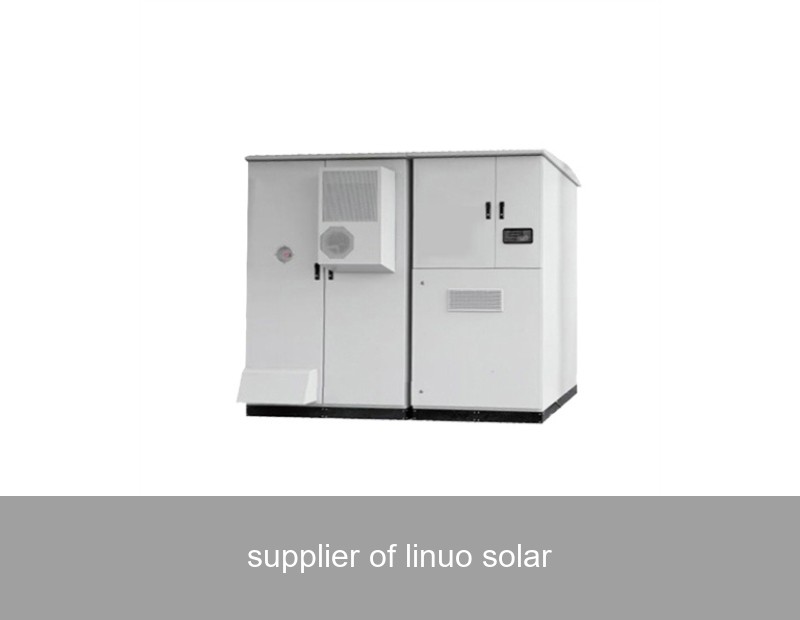
So, you're considering a solar installation and have your eye on quality brands like Linuo Solar. That's a fantastic starting point. The panels are the most visible part of the system, and selecting a reputable manufacturer is crucial. But here's a perspective we often share with our clients: your choice of a supplier of Linuo Solar is about far more than just procuring panels. It's about selecting the architectural partner for your entire energy ecosystem. In today's landscape, especially in markets like Europe and the U.S., solar panels are just one piece of the puzzle. The real value—and challenge—lies in seamlessly integrating them with advanced storage and smart management to create a resilient, efficient, and future-proof power solution.
Beyond Panels: The Complete System is What Delivers ROI
Let's talk about a common phenomenon. A business installs a sizable solar array, expecting dramatic reductions in energy bills and carbon footprint. Initially, the numbers look good. But then they face a harsh reality: overproduction during peak sunlight that goes unused, and a reliance on the grid during evenings or cloudy periods, missing the full potential of their investment. The data is telling. According to the National Renewable Energy Laboratory (NREL), without storage, a typical commercial solar system might only directly offset 20-40% of a site's total load, depending on usage patterns. The rest is either exported to the grid (often at lower rates) or remains unmet by solar.
This is where the role of your supplier evolves. A true partner doesn't just sell you components; they provide a complete system solution. This includes:
- High-Efficiency Solar Panels: Like Linuo's high-performance modules, known for their durability and output.
- Intelligent Battery Storage (BESS): The heart of modern energy independence, storing excess solar for use on demand.
- Advanced Power Conversion Systems: Inverters and converters that efficiently manage the flow between DC solar, AC loads, and DC batteries.
- Energy Management Software (EMS): The "brain" that predicts usage, optimizes storage cycles, and maximizes self-consumption.

Image: A modern commercial solar plus storage installation. Source: Unsplash
Think of it this way: the solar panels are the excellent harvest from your field. But without a silo (storage) and a smart distribution system (EMS), a significant portion of that harvest could go to waste. Your supplier should be an expert in building the entire farm, not just planting the seeds.
Case Study: A European Logistics Hub's Transformation
Let's ground this in a real-world example from our work at Highjoule. A major logistics warehouse in Rhineland-Palatinate, Germany, was facing steep demand charges and wanted to stabilize operations against grid volatility. They had a pre-existing 500 kWp solar array (using quality panels from a manufacturer like Linuo) but were only using about 30% of the generation on-site.
We were engaged not just as a supplier of solar components, but as a solution architect. Here’s what the project entailed:
| Challenge | Highjoule Solution | Quantifiable Outcome |
|---|---|---|
| Low self-consumption of solar energy | Integration of a 372 kWh Highjoule CubeStack™ battery storage system with AI-driven EMS. | On-site solar consumption increased from 30% to over 85%. |
| High peak demand charges from the grid | EMS configured for peak shaving, discharging stored solar energy during high-load periods. | Demand charges reduced by an average of 28% monthly. |
| Need for backup power for critical refrigeration | Seamless integration providing up to 8 hours of backup for designated critical loads. | Achieved operational resilience without a costly dedicated diesel generator. |
The data speaks for itself. Within the first year, the facility's overall energy costs dropped by 34%, and its carbon footprint for grid electricity use was cut by more than half. This case underscores a critical insight: the transformative value came not from the solar panels alone, but from their intelligent marriage with storage and smart controls—a synergy we specialize in at Highjoule.
Choosing the Right Partner: More Than a Catalog
When evaluating a supplier of Linuo Solar or any major brand, your checklist should extend far beyond module pricing. Ask these questions:
- Do you offer integrated storage solutions? Can you provide a single point of responsibility for the entire DC-coupled system?
- What is the intelligence behind your system? Is the EMS proprietary, open-source? Can it adapt to changing weather, tariffs, and usage patterns?
- Can you show me documented case studies in my region? (Like the one above). Experience with local grid codes and incentives is vital in the U.S. and EU.
- What is your long-term service and performance guarantee outlook? A 25-year panel warranty means little if the system integrator is gone in 5.
The Highjoule Difference: Intelligent Energy Integration from the Start
Since 2005, Highjoule has evolved from a component provider to a global leader in advanced, integrated energy storage systems. While we can source and integrate high-tier solar modules like those from Linuo, our core expertise lies in designing the complete energy backbone. For commercial, industrial, and microgrid applications, we don't just add a battery; we design the system holistically.
Our Highjoule PowerStack™ platform is a prime example. It's a containerized, plug-and-play battery energy storage system (BESS) that comes pre-integrated with bi-directional inverters, climate control, and our proprietary Horizon EMS software. This means when you partner with us, you're getting a system where the solar inverter, battery inverter, and management system are designed to communicate flawlessly, maximizing efficiency and simplifying commissioning. For residential applications, our HomeHub series offers similar integration in a sleek, compact format.

Image: Advanced monitoring and management are key to system performance. Source: Unsplash
This integrated approach is crucial for navigating complex markets. In the U.S., it helps optimize for IRA (Inflation Reduction Act) tax credits, which have specific requirements for domestic content and system performance. In Europe, it ensures compliance with grid codes like VDE-AR-N 4105 in Germany or CEI 0-21 in Italy, while also positioning you to participate in lucrative grid service markets.
The Future of Energy is Integrated, Not Isolated
The landscape is moving rapidly. The International Energy Agency (IEA) notes in their Renewables 2023 report that solar PV capacity is set to dominate global capacity additions, but the synergy with storage is what will define its grid impact. The most forward-thinking organizations are now asking: how do we turn our energy assets into a strategic, revenue-generating, and resilient infrastructure?
This shifts the conversation from "Who can supply me these panels?" to "Who can be my strategic partner in building a net-zero, cost-positive energy future?" The right supplier becomes a long-term ally in navigating energy price volatility, enhancing sustainability reporting (ESG), and achieving true operational independence.
Is your organization evaluating solar primarily as a capex project for reducing bills, or as the foundational step towards a fully intelligent and resilient energy ecosystem? What would a 95% self-consumption rate do for your operational stability and bottom line?
 Inquiry
 Online Chat