


Allpowers 21W Solar Charger and the Bigger Picture of Portable Solar Power
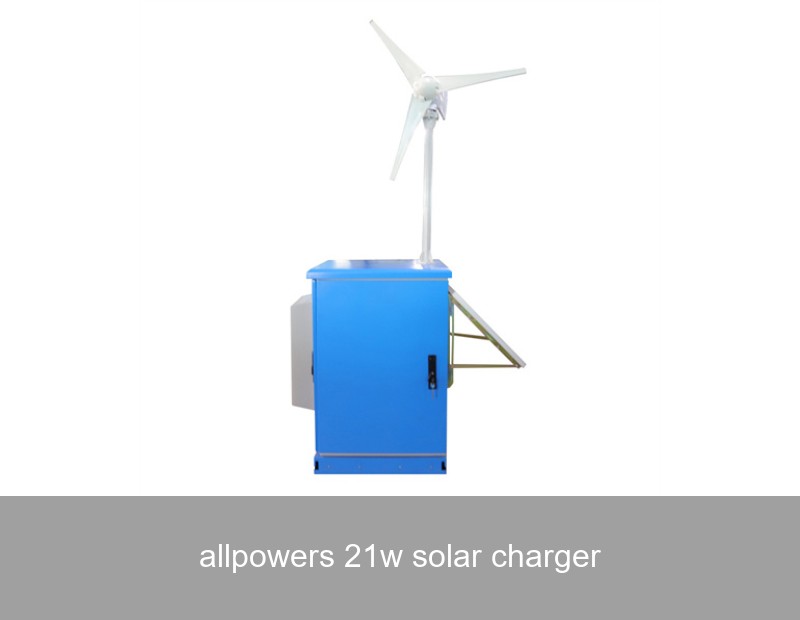
Have you ever been on a hiking trip, your phone battery dipping into the red, and wished you could just tap into the sun? Or perhaps you've managed a remote worksite where keeping drones and radios charged felt like a logistical puzzle. This growing need for off-grid power is precisely what makes compact solar chargers like the Allpowers 21W solar charger so appealing. It's a fantastic personal solution, a testament to how far portable solar technology has come. But what if we told you this is just one piece of a much larger energy story? The same principle of harnessing sunlight that powers your phone can, when scaled intelligently, power businesses, homes, and even entire communities. Let's explore the journey from a handy 21-watt charger in your backpack to the sophisticated, high-capacity systems that are reshaping how we think about energy independence and resilience.
Table of Contents
- The Rise of Portable Solar: From Niche to Necessity
- Beyond the Backpack: The Limitations of Small-Scale Solar
- The Power of Integration: From Solar Panels to Complete Energy Systems
- Real-World Impact: A Case Study in Sustainable Operations
- Choosing the Right Solar Solution for Your Needs
- The Future is Integrated and Intelligent
The Rise of Portable Solar: From Niche to Necessity
The market for portable solar chargers has exploded. A report from the Solar Energy Industries Association (SEIA) highlights consistent growth in the consumer solar segment, driven by improved panel efficiency and lower costs. Devices like the Allpowers 21W solar charger embody this shift. They use monocrystalline silicon cells—once reserved for rooftop installations—packaged into a foldable, weather-resistant format. For the outdoor enthusiast, digital nomad, or emergency prepper, it's a game-changer. You're no longer solely reliant on finding a wall outlet; you carry a miniature power plant.
This democratization of solar technology is powerful. It familiarizes people with the core concept of photovoltaics, building trust and understanding. However, it also reveals a key challenge: intermittency. The sun doesn't always shine when you need power. Your 21W charger is brilliant at noon but useless at night. This limitation, inherent to all solar generation, is the critical puzzle that the next level of energy solutions is designed to solve.
Beyond the Backpack: The Limitations of Small-Scale Solar
Think about your Allpowers 21W solar charger. Its primary job is to charge a battery bank or device directly. It's a direct, immediate energy transfer. Now, scale that need up. Imagine a remote telecommunications tower, a farm with irrigation systems, or a small manufacturing workshop. Their energy demands aren't measured in watt-hours for a phone, but in kilowatt-hours or even megawatt-hours per day. The challenges multiply:
- Energy Storage: The sun's energy must be stored for use around the clock.
- Power Management: Energy needs to be converted (from DC to AC), regulated, and distributed safely to various appliances and machinery.
- System Durability: Requires industrial-grade components built to withstand decades of weather, not just a few camping trips.
- Safety & Compliance: Must meet strict national and international electrical codes for grid-connection or standalone use.
This is where the domain of specialized energy system providers begins. Companies like Highjoule, with nearly two decades of experience since 2005, bridge this gap. They don't just provide solar panels; they engineer complete Battery Energy Storage Systems (BESS) that integrate generation, storage, and intelligent management into a seamless, reliable power source.

Image Source: Unsplash (Professional photography of solar farm)
The Power of Integration: From Solar Panels to Complete Energy Systems
So, what does a "complete system" look like? Let's use the analogy of a computer. A portable solar panel is like a great keyboard—a vital input device. But you need a full computer (CPU, memory, software) to run complex applications. In the energy world, Highjoule's solutions are that full computer.
Their expertise lies in creating intelligent photovoltaic and battery storage systems for commercial, industrial, residential, and microgrid applications. A typical Highjoule system might include:
- High-Efficiency Solar Panels: Capturing maximum sunlight, similar in principle but vastly larger in scale than a portable charger.
- Advanced Lithium-Ion Battery Banks: Safely storing excess energy with sophisticated Battery Management Systems (BMS) for longevity and safety.
- Smart Hybrid Inverters: The brain of the operation. These devices manage energy flow—from solar panels to the battery, from the battery to your appliances, and even to/from the grid if connected. They optimize self-consumption and ensure seamless power during outages.
- Energy Management Software (EMS): This is the intelligent layer that allows users to monitor performance, control settings remotely, and even participate in grid services like demand response.
This integrated approach transforms solar from a supplemental trickle charger into a primary, resilient power foundation. It addresses the core intermittency issue head-on, ensuring power is available 24/7.
How Highjoule Complements Your Solar Journey
It's not an either/or choice. Using an Allpowers 21W solar charger for your personal devices is a brilliant first step into renewable energy. Highjoule's role is to provide the same peace of mind and energy independence at a scale that powers critical operations. Whether it's a factory looking to cut energy costs and carbon footprint, a hospital requiring backup resilience, or a neighborhood creating a shared microgrid, Highjoule's tailored solutions make it possible. They handle the complex system integration so the end-user simply experiences reliable, clean power.
Real-World Impact: A Case Study in Sustainable Operations
Let's move from theory to a tangible example. Consider a winery in California's Napa Valley. Wine production is energy-intensive, requiring refrigeration, lighting, and processing equipment. The winery faced high time-of-use electricity rates and wanted to bolster its sustainability credentials—a key market differentiator.
The Challenge: Reduce grid dependence, manage peak demand charges, and ensure uninterrupted power for critical cooling systems.
The Highjoule Solution: A customized 250 kW solar array coupled with a 500 kWh battery storage system was installed. The smart inverter system was programmed to prioritize solar self-consumption, charge batteries during off-peak hours, and discharge during expensive peak periods (a strategy called peak shaving).
| Metric | Result |
|---|---|
| Annual Grid Electricity Consumption | Reduced by 68% |
| Peak Demand Charges | Reduced by over 40% |
| System Uptime | 100% during planned utility outages |
| Estimated CO2 Reduction | ~180 metric tons annually |
This case, documented in a U.S. Department of Energy case study library, illustrates the multiplicative effect of scaling solar + storage. The financial savings directly impact the bottom line, while the environmental and resilience benefits enhance brand value and operational security. It's a far cry from charging a single phone, yet it's powered by the same fundamental technology.
Choosing the Right Solar Solution for Your Needs
How do you navigate this spectrum of solutions? It starts by clearly defining your needs.
- For Personal, Mobile Power ( < 100W): A portable solar charger like the Allpowers 21W is perfect. Look for features like multiple USB ports, high conversion efficiency, and rugged build.
- For Residential Backup & Bill Savings (3kW - 20kW): You need a permanent, roof-mounted system with integrated storage. Look for providers offering complete packages with warranty, monitoring, and professional installation. Highjoule's residential solutions, for instance, focus on seamless integration and user-friendly control via a smartphone app.
- For Commercial & Industrial Applications (50kW - 10MW+): This requires a customized engineering approach. Key considerations include detailed load profiling, financial modeling (ROI), and future expansion capability. Providers like Highjoule excel here, offering feasibility studies, turnkey project management, and long-term service agreements.
The key is to see these solutions on a continuum. Your positive experience with a small, portable charger can—and should—inform your confidence in the larger technology. The principles of durability, efficiency, and smart management are consistent, just executed at different levels of complexity.

Image Source: Unsplash (Modern sustainable home with solar panels)
The Future is Integrated and Intelligent
The trajectory is clear. According to research from the International Energy Agency (IEA), solar PV is set to dominate global capacity additions, and storage is its indispensable partner. The future isn't just about generating more solar power; it's about creating intelligent energy ecosystems. Imagine your home system not only powering your appliances but also intelligently charging your EV when solar production is high, or a microgrid that can island itself from the main grid during a storm, powered by community solar and shared storage.
This is the frontier companies like Highjoule are working on. Their systems are increasingly software-defined, capable of communicating with other devices and the grid to optimize for economics, carbon footprint, and reliability automatically.
Your Next Step in Energy Independence
We started with a simple, powerful tool in your hand—the Allpowers 21W solar charger. It represents personal empowerment and a direct connection to clean energy. That feeling of empowerment shouldn't stop at the edge of your backpack. Whether you're a homeowner tired of volatile utility bills, a business owner looking to future-proof operations, or a community leader envisioning greater resilience, the technology to take control exists.
The question is no longer if solar and storage work, but how they can be tailored to work best for you. What would reliable, clean, and self-generated power allow you to achieve or protect in your own world?
 Inquiry
 Online Chat