


Beyond the Megawatt: What It Truly Means to Be a Supplier of Macro Energy Today
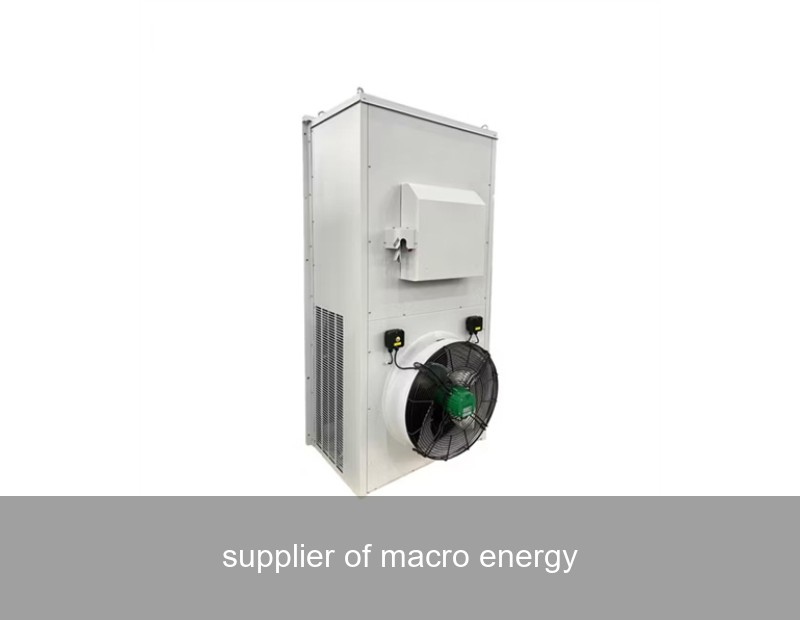
When you hear "supplier of macro energy," what comes to mind? Vast power plants, sprawling coal facilities, or towering hydroelectric dams? While these have been the traditional pillars, a profound shift is redefining this very concept. Today, a modern supplier of macro energy is increasingly defined by the ability to aggregate, store, and intelligently dispatch electricity at scale, providing not just raw power, but predictability and stability for the entire grid. This evolution is driven by the rise of renewables and the critical need for storage, moving us from a one-way supply chain to a dynamic, interactive energy network.
What is a "Supplier of Macro Energy" in Today's Grid?
Traditionally, macro-energy supply was about massive generation feeding into a one-way grid. The new paradigm is about capacity and control. It involves deploying large-scale energy storage systems (ESS) that can act as a buffer, absorbing excess solar and wind power when production is high and releasing it during peak demand or when the sun isn't shining. This transforms intermittent resources into reliable, dispatchable assets. Companies like Highjoule are at the forefront of this shift, providing the advanced technology that allows businesses, utilities, and communities to become active participants in the macro-energy landscape.
The Phenomenon: From Centralized Power to Distributed Resilience
Look at our weather patterns. From intense heatwaves straining cooling systems to unexpected freeze events spiking heating demand, grid stress is becoming more common. The rapid influx of renewable energy, while environmentally crucial, introduces variability. The grid wasn't originally built for this. The phenomenon we see is a growing reliability gap between when clean energy is produced and when it's most needed. This creates a pressing need for large-scale "shock absorbers" – essentially, macro-energy storage platforms that can balance these fluctuations in real-time.

Image: Utility-scale solar coupled with battery storage is key to modern macro energy supply. (Photo by American Public Power Association on Unsplash)
What the Data Tells Us: The Economics of Grid Stability
The numbers paint a clear picture of both the challenge and the opportunity. According to the U.S. Energy Information Administration (EIA), battery storage capacity in the United States is expected to nearly double in 2024 alone. In Europe, the European Association for Storage of Energy (EASE) estimates that the EU will need around 200 GW of energy storage by 2030 to meet its decarbonization targets. Why this explosive growth? The economics are becoming undeniable.
| Grid Challenge | Traditional Response | Modern Solution via Storage |
|---|---|---|
| Peak Demand ("Peaker Plants") | Fire up costly, inefficient natural gas plants | Dispatch stored renewable energy, avoiding fuel costs and emissions |
| Renewable Curtailment | Pay wind/solar farms to turn off (wasted energy) | Capture excess generation for later use, maximizing asset ROI |
| Frequency Regulation | Requires constant adjustment from large generators | Provide millisecond-fast response from battery systems |
Case in Point: A European Industrial Park's Transformation
Consider a real-world example from Northern Germany. A large manufacturing industrial park, heavily reliant on onsite wind turbines and a grid connection, faced two issues: volatile energy prices and occasional grid congestion warnings that threatened their operations. They partnered with Highjoule to become their own supplier of macro energy for the park.
Highjoule deployed a integrated HiveGridTM Industrial solution: a 12 MWh battery energy storage system (BESS) coupled with advanced energy management software. The results over 18 months were significant:
- Cost Savings: Reduced energy procurement costs by 34% through peak shaving and arbitrage (buying low, storing, using high).
- Revenue Generation: Earned approximately €280,000 annually by providing frequency containment reserve (FCR) services to the national grid.
- Reliability: Eliminated risk from grid congestion events, ensuring uninterrupted production.
- Sustainability: Increased the direct consumption of their own wind power from 55% to over 80%.
This case illustrates how a localized asset, intelligently managed, can perform macro-energy functions, contributing to wider grid stability while delivering compelling private economics.
The Highjoule Approach: Intelligent Energy Platforms, Not Just Batteries
At Highjoule, we understand that being a true partner in macro-energy supply requires more than just containerized batteries. It requires an integrated platform approach. Our solutions, like the HiveGridTM Commercial & Industrial and HiveGridTM Utility systems, are built on three pillars:
- Hardware Excellence: Our BESS units use high-cycle life, safety-certified lithium-iron-phosphate (LFP) battery cells, designed for decades of demanding grid service.
- Software Intelligence: The proprietary HiveOSTM is the brain. It continuously analyzes weather, market prices, grid signals, and onsite load to optimize every kilowatt-hour for economic and operational goals.
- Grid Integration: Our systems are designed from the ground up to communicate seamlessly with grid operators (like ENTSO-E in Europe or ISOs in the U.S.), enabling participation in critical service markets.
Whether it's for a university campus seeking energy independence, a data center needing ultra-reliable backup, or a utility integrating a new solar farm, Highjoule provides the scalable, intelligent infrastructure to act as a modern macro-energy hub.

Image: Intelligent control systems are crucial for managing macro-scale storage. (Photo by Michael Fousert on Unsplash)
The Future Macro Energy Supplier: Your Questions Answered
The landscape is evolving daily. With policies like the U.S. Inflation Reduction Act (IRA) and the EU's Green Deal accelerating investment, the question for many organizations is no longer "if" but "how." How do you start evaluating your role in this new energy ecosystem? What does the investment timeline look like for a 1 MW vs. a 10 MW system? How do you navigate the complex web of grid interconnection requirements and market rules in your region?
These are the practical conversations we have every day at Highjoule. The goal is to move from seeing energy as a pure cost center to recognizing its potential as a strategic, value-generating asset. As you look at your own energy profile, what single question about resilience, cost, or sustainability would you need answered to take the first step toward becoming a more active player in your energy future?
 Inquiry
 Online Chat