


Finding the Right Supplier of Market Solar: Your Guide to Smart Energy Independence
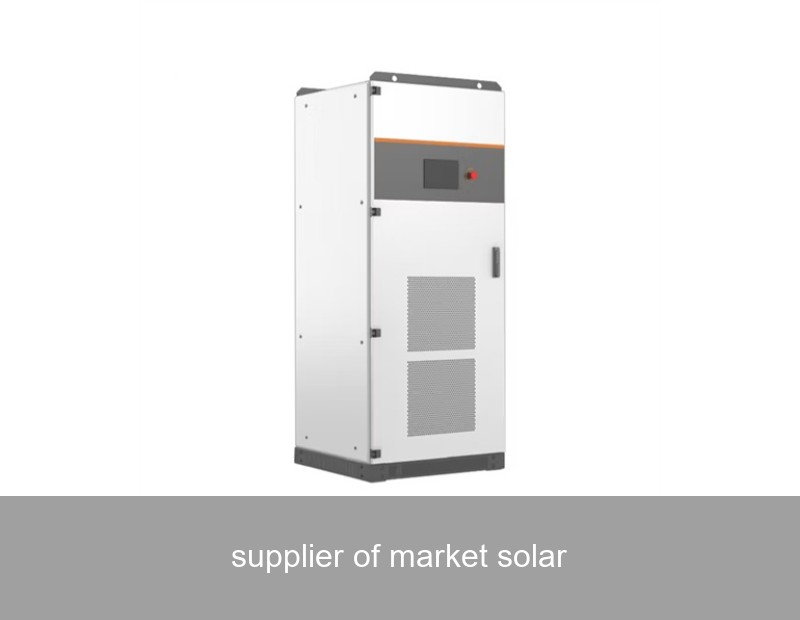
You've decided to harness the sun. The motivation is clear: rising electricity costs, a desire for energy security, and a commitment to a sustainable future. But here's where many homeowners and businesses stumble—navigating the crowded landscape to find a reliable supplier of market solar and storage solutions. It's not just about panels on a roof; it's about a holistic system that generates, stores, and manages power intelligently. This article will guide you through the key considerations, using real-world data and insights, to help you choose a partner that delivers true energy independence and return on investment.
Table of Contents
- The Phenomenon: Beyond the Solar Panel
- The Data: Why Storage is the New Solar
- Case Study: A German Manufacturing Plant's Journey
- Choosing Your Supplier: More Than a Quote
- The Highjoule Integrated Approach
- Your Role in the Future Grid
The Phenomenon: Beyond the Solar Panel
For years, going solar meant installing photovoltaic (PV) panels and feeding excess energy back to the grid. This model worked with favorable feed-in tariffs. However, the energy landscape is shifting rapidly. Grid stability concerns, volatile energy prices, and the simple fact that the sun doesn't shine at night have exposed the limitations of solar-only systems. The modern challenge isn't just generation; it's optimization. A true supplier of market solar today must address the full cycle of energy: capture, storage, dispatch, and management. This evolution from a simple generator to a resilient power asset is what defines the next era of solar energy.

Image Source: Unsplash - A modern solar-plus-storage home installation.
The Data: Why Storage is the New Solar
The numbers paint a compelling story. According to the International Energy Agency (IEA), global renewable capacity is set to expand by 2.5 times by 2030. But critically, they note that system integration and flexibility are now key priorities. Let's break down a typical homeowner's dilemma with data:
| Scenario | Solar Only (No Battery) | Solar + Battery System |
|---|---|---|
| Self-Consumption | ~30-40% of solar energy used directly | ~60-80% or more of solar energy used directly |
| Impact During Grid Outage | Home loses power (safety shutoff) | Critical loads remain powered for hours or days |
| Bill Savings Potential | Good, but limited to daytime | Excellent, leverages cheap stored power at peak rates |
This data shows that adding storage nearly doubles the utilization of your self-generated solar energy. For businesses, this isn't just about savings; it's about predictable operational costs and continuity. The right supplier of market solar will emphasize this integrated value, not just the cost per watt of the panels.
Case Study: A German Manufacturing Plant's Journey
Let's look at a real example from Bavaria. A mid-sized automotive parts manufacturer faced steep "peak demand" charges from their utility and growing sustainability goals. Their old solar PV system covered only base-load daytime office consumption, leaving the energy-intensive production line at the mercy of the grid.
In 2022, they partnered with an advanced system integrator who specified a turnkey solution. The project included a 500 kWp solar array expansion coupled with a 1 MWh containerized battery energy storage system (BESS). The BESS was programmed for peak shaving (charging with solar/grid during low-tariff times and discharging during production peaks) and backup power for critical processes.
- 30% Reduction in overall electricity costs, primarily from slashing demand charges.
- 75% Self-Sufficiency during production hours.
- Carbon footprint reduced by an estimated 450 tonnes annually.
- ROI period calculated at under 7 years, factoring in German energy price trends.
This case underscores that a sophisticated supplier of market solar and storage delivers financial engineering as much as electrical engineering.
Choosing Your Supplier: More Than a Quote
So, what should you look for? Here’s a checklist beyond the bottom-line price:
- System Intelligence: Does the solution include smart energy management software that learns and adapts to usage patterns?
- Technology Agnosticism: Will they recommend the best-in-class components (inverters, batteries) for your needs, or are they locked into a single brand?
- Lifecycle Support: What are the warranties, and do they offer ongoing performance monitoring and maintenance?
- Grid Services Understanding: Can they advise on potential revenue streams, like participating in grid-balancing programs (e.g., Frequency Regulation)?
Your chosen partner should act as a long-term consultant for your energy assets.
The Highjoule Integrated Approach
This is where Highjoule's philosophy comes into play. Since 2005, we have evolved from a component provider to a global supplier of market solar and comprehensive storage solutions. We understand that every project—residential, commercial, or microgrid—has unique demands.
For the residential market, our EcoHome ESS is more than a battery. It's an AC-coupled system with integrated AI-driven energy management. It prioritizes using your solar power, can be configured for backup, and even allows for virtual power plant (VPP) participation where available, giving homeowners an active role in the energy market.
For commercial & industrial (C&I) clients, our PowerStack C&I series offers modular, scalable battery storage. These systems are engineered for peak shaving, load shifting, and providing backup power to critical operations. We work with developers and EPCs to design systems that meet specific financial metrics, like internal rate of return (IRR).
Finally, our GridMax solutions are designed for utility-scale and microgrid applications, providing stability and enabling higher penetration of renewables. As a true partner, Highjoule provides everything from initial feasibility studies and design to commissioning and 24/7 remote monitoring via our JouleBrain™ platform.

Image Source: Unsplash - Technician monitoring a commercial battery energy storage system.
Your Role in the Future Grid
The transition to a decentralized, renewable-powered grid is accelerating. By choosing an advanced supplier of market solar and storage, you're not just buying a product; you're investing in a resilient, cost-controlling asset. You become a proactive "prosumer"—both producing and intelligently consuming energy. This shift is supported by policies like the EU's REPowerEU plan and the U.S. Inflation Reduction Act (IRA), which create favorable frameworks for storage adoption.
The question is no longer *if* you should add storage to your solar, but *how* and *with whom*. Are you ready to explore what your specific energy profile could look like with a system designed for maximum independence and economic return?
 Inquiry
 Online Chat