


Choosing the Right Supplier of MSA Power: A Guide to Modern, Sustainable Energy Solutions
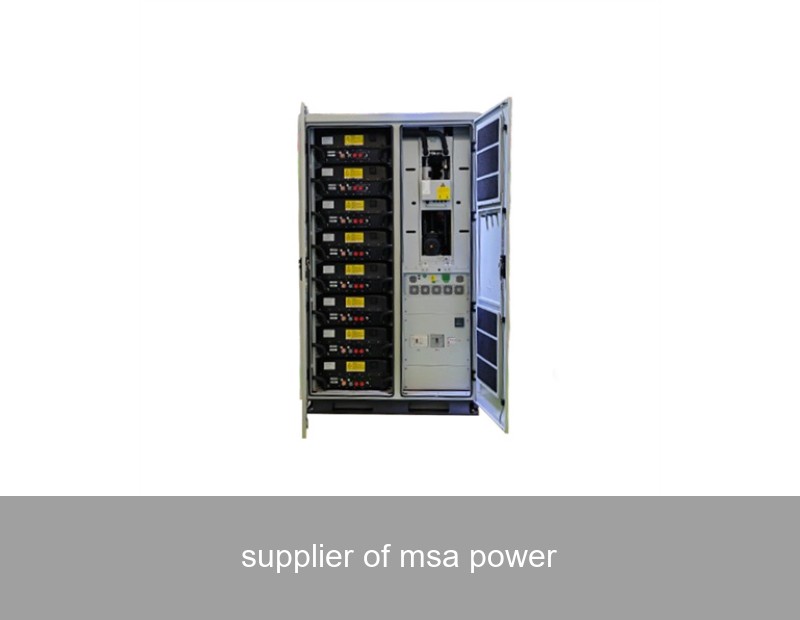
Table of Contents
If you manage energy for a business, industrial facility, or community, you've likely heard the term "MSA Power" more frequently. But what does it really mean for your operations, and more importantly, how do you choose a supplier of MSA power that delivers not just hardware, but true reliability and value? Let’s break down why this partnership is pivotal for your transition to a resilient, cost-effective, and sustainable energy future.
The Modern Energy Challenge
Across Europe and the U.S., organizations face a perfect storm: volatile energy prices, increasing grid instability, and stringent sustainability targets. The old model of passive consumption from the utility grid is becoming a significant financial and operational risk. The need is clear—a move towards Modular, Scalable, and Autonomous (MSA) power systems. These aren't just backup generators; they are intelligent, integrated ecosystems that combine solar generation, battery storage, and advanced software to create a self-optimizing microgrid.
Consider this: In 2023, the U.S. experienced an all-time high in power outages, while European industrial electricity prices remained significantly above pre-crisis levels. This isn't just an inconvenience; it's a direct hit to the bottom line. The solution lies in taking greater control of your power.
What is MSA Power, and Why Does Your Supplier Matter?
MSA Power stands for:
- Modular: Systems that can start small and grow with your needs, adding battery capacity or solar panels without costly overhauls.
- Scalable: Solutions that work for a 50kW commercial site or a 50MW industrial complex, using standardized, interoperable components.
- Autonomous: Intelligent systems that can island from the grid during an outage, optimize self-consumption of solar, and even participate in grid services—all with minimal human intervention.
Your choice of supplier of MSA power is critical because you're not just buying a product; you're entering a long-term partnership for your energy infrastructure. The right partner provides the technology stack, the software intelligence, and the ongoing support to ensure the system delivers promised ROI and resilience for decades.
The Highjoule Difference: More Than a Supplier
Since 2005, Highjoule has evolved from a component provider to a global leader in complete, intelligent energy storage solutions. We understand that being a trusted supplier of MSA power means delivering a seamless, end-to-end experience.
Our core offering, the Highjoule H-Series, embodies the MSA principle. These containerized or skid-mounted battery energy storage systems (BESS) are pre-engineered for rapid deployment and feature:
- Lithium iron phosphate (LFP) battery chemistry for superior safety and longevity.
- Native integration with leading solar inverters and building management systems.
- Our proprietary Orion Energy Management System (EMS), the "brain" that autonomously manages energy flows, maximizes self-consumption, and can generate revenue through frequency regulation markets where available.
Image: A modular battery storage solution like Highjoule's H-Series enables scalable power resilience. (Source: Unsplash, representative image)

For commercial and industrial clients, our services include detailed feasibility studies, turnkey EPC (Engineering, Procurement, and Construction), and comprehensive O&M (Operations & Maintenance) packages. We become an extension of your team, ensuring your energy assets perform optimally year after year.
A Real-World Case: Manufacturing Resilience in Germany
The theory of MSA power is compelling, but how does it translate on the ground? Let's look at a project with a mid-sized automotive parts manufacturer in Bavaria, Germany.
The Challenge: The facility faced frequent, brief grid dips ("micro-outages") that disrupted sensitive robotic assembly lines, causing approximately €150,000 in annual production losses and scrap. They also sought to reduce their carbon footprint and hedge against soaring energy costs.
The Highjoule Solution: We deployed a 750 kW / 1.5 MWh H-Series BESS, integrated with their existing rooftop solar PV. The system was configured for:
- Ultra-fast frequency response: The Orion EMS detects grid disturbances and switches to island mode in under 20 milliseconds, keeping critical loads online.
- Solar self-consumption optimization: Excess daytime solar charges the batteries, which then power evening shift operations, reducing grid draw.
- Peak shaving: The system automatically discharges during daily price peaks, slashing demand charges.
The Results (18 Months Post-Installation):
| Metric | Result | Impact |
|---|---|---|
| Production Downtime | Reduced to zero | €150k+ saved annually |
| Grid Electricity Consumption | Reduced by 35% | Lower operational costs |
| Carbon Footprint | Reduced by 290 tons CO2e/year | Progress toward sustainability goals |
| ROI Period | Projected under 5 years | Strong financial return |
This case exemplifies the multifaceted value a true supplier of MSA power delivers: not just storage, but uptime, savings, and sustainability.
Key Criteria for Selecting Your MSA Power Partner
Based on two decades of experience, we advise any organization to vet potential partners on these dimensions:
- Technology Agnosticism & Integration Prowess: Do they offer best-in-class, interoperable components, or are they locked into a single brand? Can their EMS seamlessly talk to your solar, generators, and grid connection?
- Proven Track Record & Financial Stability: Request case studies from your specific sector. A partner like Highjoule, with a 18-year global history, offers the security of a company that will be there for the system's entire lifespan.
- Software & Intelligence: The hardware stores energy; the software creates value. Insist on a demo of the EMS platform. Can it provide actionable insights, automate complex decisions, and adapt to future market rules? The National Renewable Energy Laboratory (NREL) emphasizes the critical role of software in maximizing grid value.
- Service & Long-Term Support: What does the O&M agreement include? Remote monitoring? Performance guarantees? Spare parts logistics? This ongoing relationship is where reliability is cemented.
Image: Advanced Energy Management Software is the command center of any effective MSA power system. (Source: Unsplash, representative image)

Future-Proofing Your Energy Strategy
The energy landscape is evolving rapidly. Policies like the EU's REPowerEU plan and the U.S. Inflation Reduction Act are accelerating the adoption of distributed energy resources. An MSA system today is a platform for tomorrow's opportunities—whether it's bidding into virtual power plants (VPPs), charging electric vehicle fleets, or adapting to new carbon accounting standards.
The question is no longer if you need a more resilient and intelligent power setup, but how to build it successfully. It starts with choosing a partner whose vision aligns with yours, whose technology is built to adapt, and whose commitment extends far beyond the commissioning handshake.
What is the single biggest energy vulnerability in your operations today, and how could a modular, intelligent power system turn that vulnerability into a strategic advantage? We invite you to share your challenge with Highjoule's experts.
 Inquiry
 Online Chat