


What is an Energy Absorption Company and Why is it Key to a Stable Grid?
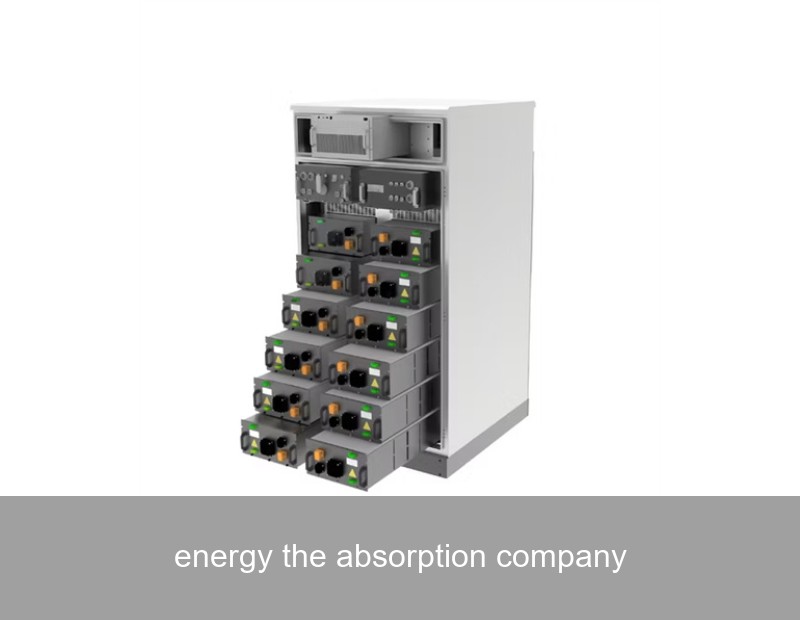
You've likely heard the terms "solar power" and "wind energy" countless times. The narrative is clear: we are transitioning to renewable energy. But there's a critical, less-discussed player behind the scenes making this transition possible: the energy absorption company. Unlike traditional generators, these companies specialize not in creating power, but in intelligently managing, storing, and releasing it. They "absorb" excess energy when production is high and demand is low, holding it securely until it's needed most. This capability is the cornerstone of grid stability in our new energy era. For nearly two decades, Highjoule has been at the forefront of this very mission, evolving from a pioneer to a global leader in providing advanced energy absorption solutions for businesses, industries, and communities.
Table of Contents
The Phenomenon: The Renewable Energy Rollercoaster
Imagine a bright, windy day in California or a stormy afternoon in the North Sea. Solar farms and wind turbines are operating at peak capacity, flooding the grid with clean, low-cost electricity. Now, imagine a calm, cloudy evening when demand for power spikes as people return home, but renewable generation plummets. This is the "duck curve" – a graphical representation of the deepening imbalance between renewable supply and electricity demand. This volatility poses a fundamental challenge: how do we keep the lights on when the sun doesn't shine and the wind doesn't blow? The answer lies not in building more fossil-fuel "peaker" plants, but in developing sophisticated systems to absorb and time-shift energy.

Image Source: U.S. Department of Energy, illustrating the "Duck Curve" of net load.
The Data: Quantifying the Imbalance
The scale of this challenge is backed by compelling data. According to the International Energy Agency (IEA), global energy storage capacity needs to expand dramatically to meet climate goals. To align with a net-zero emissions by 2050 scenario, the world requires about 680 GW of grid-scale storage capacity by 2030, up from just over 80 GW in 2023. That's an eight-fold increase in less than a decade. This isn't just about capacity; it's about the value of flexibility. A study by the National Renewable Energy Laboratory (NREL) found that energy storage can provide over $10 billion per year in grid services in the U.S. alone by 2050, from frequency regulation to transmission upgrade deferral. These numbers underscore that energy absorption is no longer a niche service but a central pillar of modern energy infrastructure.
The Role of a Modern Energy Absorption Company
So, what exactly does an energy absorption company like Highjoule do? Think of us as the ultimate grid facilitators and energy arbitrage experts. Our role encompasses three core functions:
- Energy Time-Shifting (Arbitrage): This is the foundational service. We absorb inexpensive, surplus renewable energy (e.g., midday solar) and store it. Hours later, during peak demand periods when electricity prices are high, we discharge that stored energy back to the grid or for direct use.
- Grid Services and Stability: The grid requires a constant, precise frequency (60 Hz in the US, 50 Hz in Europe). Sudden changes in supply or demand can cause dangerous fluctuations. Our systems can respond in milliseconds to inject or absorb power, providing critical services like frequency regulation and voltage support, acting as a shock absorber for the entire grid.
- Enabling Energy Independence: For commercial, industrial, and residential clients, we provide the tools to maximize self-consumption of on-site renewables. Instead of selling solar power back to the grid at a low rate, a business can store it and use it in the evening, significantly reducing reliance on the utility and protecting against price volatility.
At Highjoule, we deliver this through integrated Battery Energy Storage Systems (BESS). Our flagship product, the Highjoule H-Series, is a modular, containerized solution built with industry-leading lithium iron phosphate (LFP) battery cells for safety and longevity. Paired with our proprietary Adaptive Grid OS software, the H-Series doesn't just store energy; it intelligently decides the most economically and operationally valuable action every second of the day, whether it's for a manufacturing plant, a hospital, or a utility-scale solar farm.
Case Study: Stabilizing a German Industrial Park
Let's look at a real-world application in Bavaria, Germany. A large industrial park with several manufacturing facilities had invested heavily in rooftop solar, often generating more power than it could consume during midday. However, its operations ran 24/7, leading to massive electricity draws from the grid during night-time and early morning peaks, resulting in crippling capacity charges.
The Challenge: Reduce grid dependency, manage peak demand charges, and increase the utilization of self-generated solar power.
The Highjoule Solution: We deployed a 4 MWh H-Series BESS integrated with the park's energy management system. Our Adaptive Grid OS was programmed with multiple objectives: prioritize self-consumption of solar, shave peak demand by discharging the battery during known high-load periods, and participate in the German primary control reserve market—a service where grid operators pay for rapid frequency stabilization.
The Results (12-month period):
| Metric | Result |
|---|---|
| Peak Demand Charge Reduction | 28% |
| Solar Self-Consumption Increase | From 35% to over 65% |
| Revenue from Grid Services | ~€85,000 annually |
| ROI Period | Projected under 5 years |
This case exemplifies the multi-faceted value a sophisticated energy absorption partner provides: direct cost savings, enhanced sustainability, and new revenue streams.
Core Technology: Beyond the Basic Battery
Being an effective energy absorption company requires deep technological expertise. It's far more than connecting batteries. Highjoule's systems are engineered for performance, safety, and longevity.
- Advanced Battery Chemistry: We utilize LFP chemistry for its superior thermal stability, long cycle life (typically over 6,000 cycles), and absence of cobalt, enhancing both safety and supply chain ethics.
- Intelligent Power Conversion (PCS): The heart of our system is a bi-directional inverter that manages the precise flow of energy between AC and DC. Our PCS is designed for high efficiency (>98%) and rapid response, crucial for grid service markets.
- Predictive Energy Management Software: This is our secret sauce. The Adaptive Grid OS uses weather forecasts, historical load data, and real-time electricity price signals to optimize the system's operation. It can even "stack value" by performing multiple services (e.g., solar shifting and frequency response) in a single day, maximizing the asset's financial return.

Image Source: National Renewable Energy Laboratory (NREL), depicting a grid-scale BESS control room.
The Future of Energy Absorption
The trajectory is clear. As mandates like the EU's REPowerEU plan and the U.S. Inflation Reduction Act accelerate renewable deployment, the demand for energy absorption will explode. We are moving towards virtual power plants (VPPs), where thousands of distributed storage systems, like those from Highjoule, are aggregated to act as a single, dispatchable power plant. Furthermore, innovations in long-duration storage (LDES) technologies will allow us to absorb energy not just for hours, but for days or even weeks, tackling seasonal variations.
Highjoule is actively developing next-generation solutions for these frontiers, including software platforms for VPP aggregation and piloting new battery chemistries. Our goal is to be the trusted absorption partner for every entity—from a homeowner with solar panels to a national grid operator—that is committed to a resilient, decarbonized energy future.
Is Your Business Ready to Absorb the Future?
The question is no longer if energy storage is necessary, but when and how to integrate it. Have you analyzed your facility's load profile to identify your most expensive hours of grid dependency? Could your renewable investment be working harder for you? Exploring the role of an energy absorption partner is the first step toward unlocking greater control, sustainability, and profitability in your energy strategy. What will your first question be for a potential partner like Highjoule?
 Inquiry
 Online Chat