


Finding the Right Supplier of Panel 350W for Your Solar Project: A Complete Guide
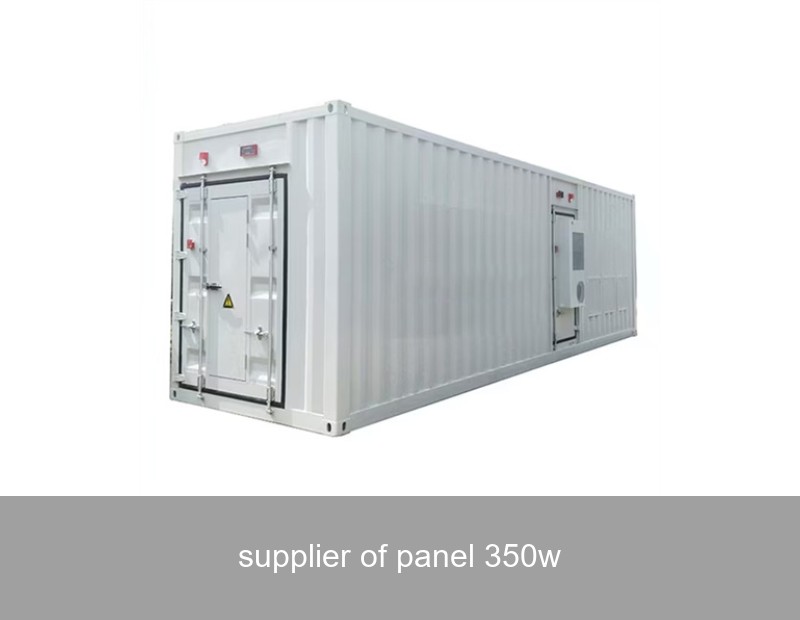
Table of Contents
- The 350W Panel Phenomenon: Why This Sweet Spot Matters
- Beyond the Panel: The Critical Role of Your System Supplier
- Data for Decision: Efficiency, Degradation, and Real-World Output
- Case Study: Maximizing a Commercial Rooftop in Germany
- Future-Proofing Your Investment: The Integrated System Approach
- Choosing Your Partner: More Than Just a Supplier of Panel 350W
So, you're planning a solar installation and have zeroed in on 350-watt panels. Smart move. This power class has become a global workhorse, offering an excellent balance of efficiency, physical size, and cost-effectiveness for countless residential and commercial projects. But here's the crucial question many overlook: is your search for a supplier of panel 350W focused solely on the module, or on the performance of the entire energy system? The distinction is everything. In today's market, the right partner doesn't just ship boxes; they deliver guaranteed outcomes.
The 350W Panel Phenomenon: Why This Sweet Spot Matters
The 350W panel isn't an arbitrary number. It represents a mature, optimized point in photovoltaic technology, typically using 60-cell or 120-half-cut cell designs. For installers and project developers, this specification offers predictable sizing, easier handling compared to larger format panels, and high compatibility with a wide range of racking and inverter systems. Whether you're fitting panels on a Dutch barn roof or a suburban American home, the 350W range provides the flexibility to design systems that maximize available space without pushing the boundaries of logistics or structural engineering.

But procuring these panels is just the first link in the energy value chain. The real magic—and the real risk management—happens in how they are integrated, managed, and sustained over a 25+ year lifespan.
Beyond the Panel: The Critical Role of Your System Supplier
Think of a high-quality 350W panel as a powerful, efficient engine. An engine alone, however, doesn't make a reliable car. You need the transmission, drivetrain, and control systems—all perfectly matched—to translate that power into smooth, dependable mileage. This is the core difference between a simple component vendor and a true supplier of panel 350W systems.
Companies like Highjoule embody this integrated approach. With nearly two decades of experience since 2005, Highjoule operates not as a mere panel distributor, but as a provider of complete, intelligent storage and energy management solutions. While they can facilitate access to top-tier 350W panels, their greater value lies in seamlessly coupling that generation with their advanced battery storage systems and AI-driven energy management platforms. This ensures every watt you generate is captured, stored, and utilized with maximum efficiency, turning a solar array into a truly resilient and cost-saving energy asset.
Key Components of a True System Supplier:
- Panel Procurement & Quality Assurance: Access to Tier-1 manufacturers with robust warranties, backed by technical vetting.
- Balance of System (BOS) Expertise: Optimal selection of inverters, mounting, and wiring for your specific site conditions.
- Storage Integration: The game-changer. Pairing solar with battery systems (like Highjoule's commercial and residential storage solutions) to shift solar energy for use at night or during peak tariffs.
- Energy Management Intelligence: Software that optimizes energy flow between solar, storage, the grid, and loads in real-time.
Data for Decision: Efficiency, Degradation, and Real-World Output
Not all 350W panels are created equal. Two key data points separate the premium products from the also-rans: module efficiency and annual degradation rate.
| Specification | Standard 350W Panel | High-Performance 350W Panel | Impact on Your Project |
|---|---|---|---|
| Module Efficiency | ~19-20% | ~20-21.5% | More power per square meter, crucial for space-constrained roofs. |
| 1st-Year Degradation | Up to 3% | Typically ≤ 2% | Preserves more of your initial investment in output. |
| Annual Degradation (Thereafter) | ~0.7% | ~0.4-0.5% | Significantly higher energy yield over 25 years. |
| Power Warranty (25-year) | 80-82% of nominal output | 84-87% of nominal output | A direct promise of long-term financial return. |
According to the National Renewable Energy Laboratory (NREL), ongoing improvements in cell technology and packaging are steadily pushing these benchmarks higher. A sophisticated supplier will help you navigate this data, aligning panel specifications with your financial models, not just your immediate budget.
Case Study: Maximizing a Commercial Rooftop in Bavaria, Germany
Let's look at a real-world application. A mid-sized dairy processing plant in Bavaria aimed to reduce its grid dependency and hedge against volatile energy prices. The initial plan: a 200kW rooftop array using 350W panels from a local distributor.
However, after consulting with Highjoule, the project was redesigned into an integrated solar-plus-storage microgrid. Here’s the breakdown:
- Generation: 571 x 350W panels (total ~200 kW).
- Storage: A Highjoule HVC 150 commercial battery energy storage system (BESS) with 150 kWh capacity.
- Intelligence: Highjoule's Neuron energy management platform for forecasting and optimization.
- Self-Consumption Rate Increased: From an estimated 35% (solar only) to over 80% with storage.
- Grid Peak Demand Charges Reduced: By 40% through strategic battery discharge during high-cost periods.
- Total Energy Cost Savings: Exceeded projections by 22%, providing a payback period of under 7 years.
The client's takeaway? Choosing Highjoule as their supplier of panel 350W and the surrounding ecosystem transformed their project from a simple CAPEX spend into a strategic energy asset with a superior ROI. The panels were the source, but the integrated system was the solution.

Future-Proofing Your Investment: The Integrated System Approach
The energy landscape is shifting from one-way consumption to interactive, smart energy management. Regulations like the EU's "Winter Package" and net metering evolutions in U.S. states are increasingly favoring self-consumption and grid services. In this context, a standalone solar array has diminishing returns.
An integrated system, where solar generation is coupled with storage and smart controls, is inherently future-proof. It allows you to:
- Participate in demand response programs.
- Create a backup power resilient during grid outages.
- Easily expand capacity as your needs grow.
This is the design philosophy behind Highjoule's offerings. Their storage systems, from compact residential units to containerized industrial solutions, are engineered for seamless solar integration from the start. When you source your 350W panels through a partner with this capability, you're building a platform for energy independence, not just installing a static array.
Choosing Your Partner: More Than Just a Supplier of Panel 350W
Your checklist for selecting a partner should extend far beyond the dollar-per-watt price of the panels. Here are the critical questions to ask:
- Can you provide a detailed performance simulation for my specific location (using tools like NREL's PVWatts)?
- What is your process for ensuring compatibility between the panels, inverters, and storage technology?
- Do you offer a unified performance monitoring platform for the entire system (solar + storage)?
- Can you provide case studies or references for similar integrated projects in my region?
- What is the long-term service and support model for the entire system?
The goal is to find a partner who views your project through the lens of lifetime energy yield and operational value. As a global provider, Highjoule's expertise lies in crafting these tailored, high-efficiency ecosystems. They ensure that the 350W panels you select operate at their full potential for decades, as part of a smarter, more resilient energy infrastructure.

Ready to see how the right 350W panel supplier can design a system that not only meets but exceeds your energy and financial targets? What's the biggest energy challenge you're hoping to solve with your next solar project?
 Inquiry
 Online Chat