


Your Guide to Choosing a Reliable Supplier of PBI Energy Systems
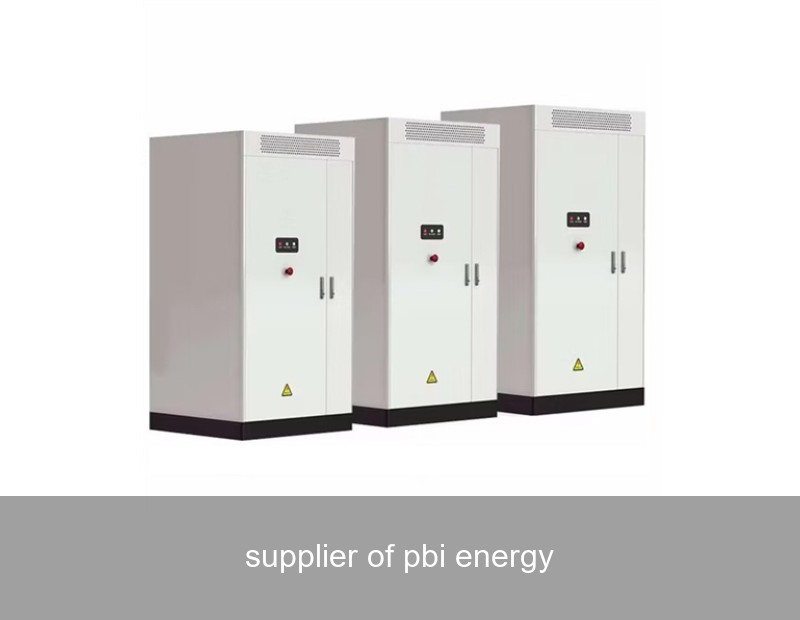
If you're managing a commercial facility, industrial plant, or a community microgrid, you've likely heard the buzz around battery energy storage. But within that world, a specific term is gaining serious traction: PBI energy. Perhaps you're asking, "What exactly is PBI, and more importantly, how do I find a trustworthy supplier of PBI energy solutions?" You're not alone. The transition to resilient, sustainable power is a major decision, and the partner you choose is critical to its success. This article will demystify PBI technology and provide a clear framework for selecting a supplier that delivers not just hardware, but long-term performance and peace of mind.
The PBI Challenge: Why Your Choice of Supplier Matters
Let's start by clarifying the term. PBI stands for Performance-Based Infrastructure. In the context of energy storage, it moves beyond simply purchasing a battery system. A PBI model focuses on the outcomes the system delivers—like guaranteed peak shaving, demand charge reduction, or renewable self-consumption optimization. You're not just buying kilowatt-hours of capacity; you're investing in a guaranteed financial and operational result.
The phenomenon is clear: energy volatility is a growing business risk. In the US, commercial demand charges can constitute up to 50% of an electricity bill, while in Europe, soaring spot market prices have made energy cost predictability a top boardroom concern. The data shows that businesses are seeking stability. According to the International Energy Agency, global grid-scale battery storage capacity is set to multiply exponentially, with a significant portion driven by commercial and industrial (C&I) applications seeking cost control and backup power.
This is where the supplier of PBI energy becomes your strategic ally. A box-moving vendor sells you components. A true PBI partner designs, installs, monitors, and maintains a system with contractual performance guarantees. The difference is profound, impacting your ROI, system longevity, and overall stress levels.

Image Source: Unsplash - Professional energy system planning is crucial for PBI success.
Key Criteria for Choosing Your PBI Energy Supplier
Selecting the right partner requires looking beyond glossy brochures. Here are the non-negotiable pillars to evaluate:
- Proven Track Record & Financial Stability: Can they provide verifiable case studies with real performance data? Are they established enough to honor a 10+ year performance guarantee? Look for a supplier with a long history and a strong balance sheet.
- Technology Agnosticism & Integration Expertise: The best supplier isn't wedded to a single battery chemistry. They should recommend the optimal technology (e.g., LFP - Lithium Iron Phosphate) for your specific use case, load profile, and climate. Their system's Energy Management System (EMS) must seamlessly integrate with your existing infrastructure, solar PV, and the grid.
- Comprehensive Service Model: True PBI encompasses full lifecycle support. This includes 24/7 remote monitoring, predictive maintenance, performance reporting, and guaranteed response times. Ask: "Is your service revenue-based or performance-based?" The answer is telling.
- Financial Modeling & Transparency: A credible partner will provide a clear, granular financial model showing your payback period, NPV, and the exact calculations behind performance guarantees. No black boxes allowed.
Questions to Ask Any Potential Supplier
| Area of Inquiry | What to Ask | What a Good Answer Sounds Like |
|---|---|---|
| Performance Guarantee | "How is the performance guarantee structured and what are the remedies if it's not met?" | "We contractually guarantee X% peak demand reduction or Y MWh of throughput annually, with financial penalties or make-good provisions if we fall short." |
| Technology | "Why is your chosen battery technology the best for my application in [Your City/State]?" | "For your high-cycle, daily use case, we recommend LFP chemistry for its safety, longevity (10,000+ cycles), and stable performance in our temperature range, even if the upfront cost is slightly higher than NMC." |
| Long-Term Support | "Who is responsible for software updates, performance degradation, and end-of-life recycling?" | "We own the system's performance for the contract term, including all software and firmware updates. We have a degradation warranty and a certified battery recycling partner to ensure full compliance at end-of-life." |
The Highjoule Approach: Intelligent PBI Solutions Built for the Long Term
This is where our experience at Highjoule comes into focus. Since 2005, we've evolved from a component supplier to a global supplier of PBI energy solutions. Our philosophy is that an energy storage system is a dynamic asset, not a static purchase. Our HPS-IntelliSeries for commercial and industrial applications is the embodiment of this principle.
What sets our approach apart is the Highjoule Neuron™ AI-driven EMS. This isn't just a simple controller; it's a learning system that continuously analyzes your energy consumption patterns, weather forecasts, and tariff structures. It autonomously optimizes dispatch to maximize your financial return, whether the goal is arbitrage, demand charge management, or providing grid services. For our clients, this means we can confidently underwrite performance guarantees because our intelligent software ensures the system adapts to changing conditions to meet its targets.
Furthermore, our GridSync™ integration platform allows our systems to safely and compliantly interact with utility grids and microgrids, a critical feature for projects in both the US (FERC 841/2222) and European grid service markets. As your supplier of PBI energy, we provide a single point of accountability: from custom feasibility study and financing support to installation, long-term operation, and performance assurance.
Case Study: PBI in Action for a German Industrial Complex
Let's make this concrete with a real example from our European operations. A major automotive parts manufacturer in Bavaria faced two problems: extremely high strompreisbremse (power price brake) costs due to peak demand spikes from their press lines, and a desire to increase the consumption of their existing 2 MW rooftop solar array.
The Challenge: Reduce peak grid demand by 30% and increase solar self-consumption by over 50%, with a guaranteed financial outcome.
The Highjoule PBI Solution: We installed a 1.5 MWh HPS-IntelliSeries system with our Neuron™ EMS. The system was financed under a 10-year Performance-Based Contract, where the client pays a fixed monthly service fee based on achieved savings, not a large upfront capital outlay.
The Data-Driven Results (First 12 Months):
- Peak Demand Reduction: 34% (exceeding the 30% guarantee)
- Solar Self-Consumption: Increased from 35% to 68%
- Annual Energy Cost Savings: €182,000
- Payback Period for Client: Immediate (due to service fee model, with net positive cash flow from month one)
The system's AI proactively charges the batteries with excess solar and strategically discharges during the 15-minute windows when the press lines cycle, seamlessly clipping demand spikes. The client enjoys predictable energy costs, and Highjoule's remote operations center ensures the system performs optimally every day to meet our contractual obligations.

Image Source: Unsplash - Modern industrial energy storage systems like Highjoule's HPS-IntelliSeries provide critical peak shaving.
The Future Outlook for PBI Energy Systems
The landscape is moving towards even greater sophistication. We see the role of a supplier of PBI energy evolving into a Virtual Power Plant (VPP) aggregator. Imagine your storage asset, alongside hundreds of others, being orchestrated to provide grid stability services, generating an additional revenue stream for your business. This is already a reality in markets like California, Texas, and parts of the EU. The right PBI contract today should be flexible enough to allow your business to participate in these value streams tomorrow.
Furthermore, the integration of second-life EV batteries into stationary storage is on the horizon, offering potential cost advantages for certain applications. A forward-thinking supplier will have a strategy for this circular economy transition.
Is Your Business Ready for a Performance-Based Partnership?
The journey to a more resilient and cost-effective energy footprint starts with the right questions and the right partner. It's not about finding the cheapest battery; it's about securing the most reliable and valuable energy outcome for your specific operation. What is the single biggest energy cost uncertainty keeping you up at night, and have you quantified what eliminating that risk could do for your operational budget and sustainability goals?
 Inquiry
 Online Chat