


Finding the Right Supplier of Residential and Commercial Solar Solutions
Have you noticed your electricity bills climbing, yet feel powerless to control them? You're not alone. Across Europe and the US, homeowners and business operators are facing the dual challenge of volatile energy prices and a growing desire to reduce their carbon footprint. The solution seems clear: go solar. But the journey from decision to a fully operational, efficient solar system hinges on one critical choice: selecting the right supplier of residential and commercial (RESCOM) solar solutions. This isn't just about buying panels; it's about partnering with a company that provides integrated, intelligent, and sustainable power for the long term. Let's explore what makes this partnership so vital.
Table of Contents
- The Phenomenon: More Than Just Panels on a Roof
- The Data: Why Storage is the Game-Changer
- The Case Study: A German Bakery's Recipe for Energy Independence
- The Insight: What to Look for in a RESCOM Solar Supplier
- The Highjoule Approach: Intelligent Energy Integration
- What's Your Energy Resilience Plan?
The Phenomenon: More Than Just Panels on a Roof
The solar landscape has evolved dramatically. A decade ago, a solar installation was primarily a collection of panels designed to offset grid consumption during sunny hours. Today, that's only half the story. The modern energy consumer—whether a family in California or a factory in Bavaria—demands resilience, intelligence, and true independence. They don't just want to generate power; they want to manage it. This shift has transformed the role of a supplier of residential and commercial solar from a simple equipment vendor to a full-scale energy solutions architect. The key differentiator? The seamless integration of solar generation with advanced battery storage and smart energy management systems.
The Data: Why Storage is the Game-Changer
Solar panels alone have a limitation: the sun doesn't shine 24/7. Without storage, excess energy generated at noon is often sold back to the grid at low rates, only for you to buy it back at night at higher prices. This is where data reveals the true power of an integrated system.
- Self-Consumption Boost: According to the International Renewable Energy Agency (IRENA), coupling solar PV with battery storage can increase self-consumption of solar electricity from 30-50% to 60-80% or more for a typical household.
- Grid Stress Relief: In markets like California and parts of Europe, "peak shaving"—using stored energy during high-demand, high-cost evening hours—is becoming crucial for grid stability and cost savings.
- ROI Enhancement: A system with intelligent storage better leverages time-of-use rate differentials, protecting against future tariff hikes and accelerating the return on investment.
The message is clear: the value of your solar investment multiplies when it includes smart storage. This is the core expertise that separates leading suppliers from the rest.

Image: A modern home with integrated solar and battery storage. Source: Unsplash (Representative Image)
The Case Study: A German Bakery's Recipe for Energy Independence
Let's look at a real-world example from Southern Germany. Bäckerei Schmidt (a mid-sized bakery with three retail shops and a central production facility) faced crippling energy costs. Their ovens, refrigerators, and lighting created a constant, high base load with sharp peaks in the early morning. Their existing solar array only covered about 40% of their daytime needs and did nothing for their pre-dawn production or evening retail hours.
They partnered with a supplier of commercial solar that provided a holistic upgrade: not just additional panels, but a tailored Highjoule HI-Stack Commercial Battery Energy Storage System (BESS) and advanced energy management software. The results, measured over one year, were compelling:
| Metric | Before Upgrade | After Upgrade |
|---|---|---|
| Grid Electricity Consumption | 100% (Baseline) | 35% |
| Solar Self-Consumption Rate | 42% | 89% |
| Peak Demand from Grid | 180 kW | 65 kW |
| Annual Energy Cost Savings | - | €18,500 |
| CO2 Emissions Reduction | - | 62 tonnes/year |
The Highjoule system was programmed to charge from excess solar and during low-cost night-time hours, then discharge to power the ovens during the expensive morning peak. This intelligent load shifting turned the bakery from a grid-dependent business into a proactive energy manager, achieving payback in under 7 years with guaranteed performance for over 15.
The Insight: What to Look for in a RESCOM Solar Supplier
Based on this evolution and real cases, choosing a supplier requires a checklist that goes beyond price-per-watt.
1. System Integration Capability
Your supplier must offer a unified solution. Ask: Do they provide their own storage technology, or are they simply reselling a third-party battery? An integrated system from a single provider, like Highjoule's ecosystem, ensures seamless communication between inverters, batteries, and management software, leading to higher efficiency and simpler warranties.
2. Intelligence and Software
The hardware is the body; the software is the brain. A true partner provides an intuitive platform (like the Highjoule Energy Hub) that allows you to monitor production, consumption, storage status, and savings in real-time, often from a smartphone app. It should offer customizable modes like "Maximize Self-Consumption," "Cost Savings," or "Backup Priority."
3. Long-Term Performance and Warranty
Solar is a 25+ year investment. Ensure your supplier offers robust performance guarantees for both panels and batteries. Highjoule, for instance, backs its lithium iron phosphate (LiFePO4) battery systems with a 10-year warranty, guaranteeing a high residual capacity at the end of the term, which speaks to the quality and durability of the product.
4. Scalability and Service
Your energy needs will change. A residential customer might buy an electric vehicle. A business might expand. Your chosen supplier of residential and commercial solar should offer modular, scalable storage solutions that can grow with you, supported by a reliable local service and maintenance network.

Image: A technician monitoring a commercial-scale battery storage installation. Source: Unsplash (Representative Image)
The Highjoule Approach: Intelligent Energy Integration
At Highjoule, our philosophy as a global supplier of residential and commercial solar and storage is built on the principle of intelligent integration. Since 2005, we have focused on creating systems where every component is designed to work in perfect harmony.
For homeowners, our HI-Power Home System is more than a battery. It's an all-in-one unit that combines a hybrid inverter, a high-cycle LiFePO4 battery, and smart controls into a compact, wall-mounted system. It integrates effortlessly with new or existing solar arrays, providing whole-home backup power, maximizing solar use, and giving families complete control over their energy destiny.
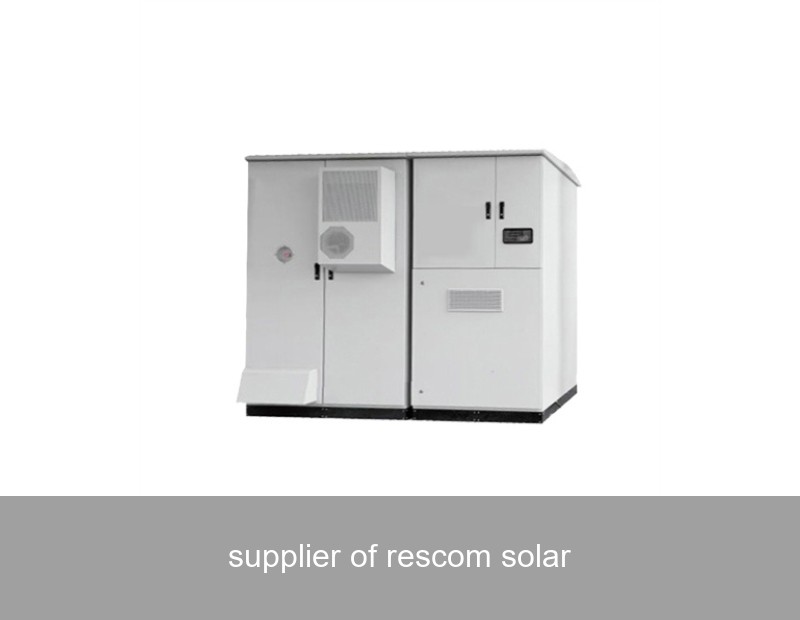
For businesses and industries, our HI-Stack Commercial BESS is a modular, containerized solution. It's engineered for demanding applications, offering features like peak shaving, load shifting, and even participation in grid services (where markets allow). Our energy management software acts as a central command center, automating energy decisions to optimize financial returns. For microgrids and larger installations, we provide complete turnkey solutions, from design and engineering to commissioning and long-term support.
Our role is to be your strategic partner, providing not just products, but a comprehensive, future-proof energy strategy that delivers resilience, sustainability, and compelling economics.
What's Your Energy Resilience Plan?
The transition to renewable energy is inevitable, but its effectiveness depends on the intelligence of the system you choose. As you evaluate potential partners, ask them not just about the panels, but about the brain of the operation. How will their system ensure you use every kilowatt-hour you produce? How will it protect you from the next outage or price spike? With the right supplier of residential and commercial solar, your investment becomes a dynamic asset that pays dividends for decades. So, what's the first step you'll take to move from being a passive energy consumer to an active energy producer and manager?
 Inquiry
 Online Chat