


Unlocking Solar Power's Full Potential: The Essential Guide to the Energy Storage Cabinet for Photovoltaics
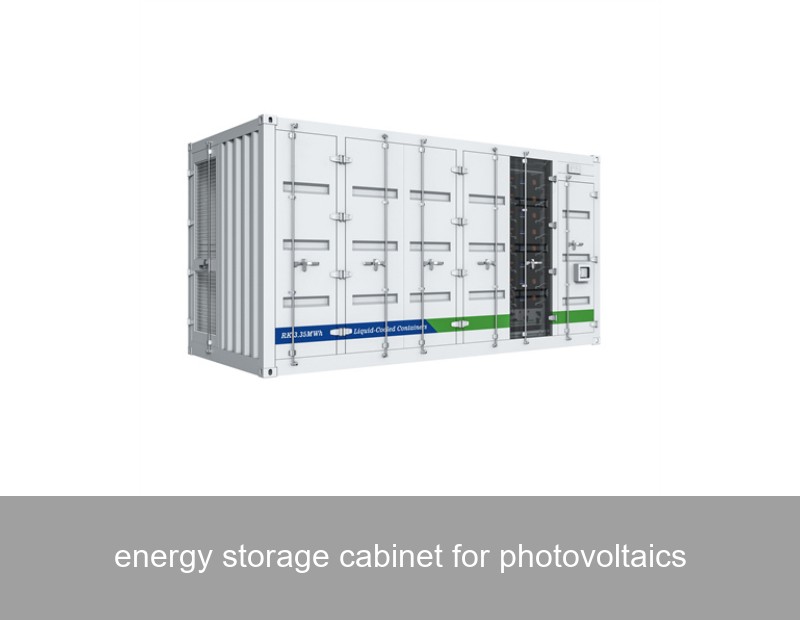
You've made the smart decision to invest in solar panels. They're on your roof, silently converting sunlight into clean electricity, reducing your bills and your carbon footprint. But have you ever watched your energy meter on a brilliantly sunny afternoon and thought, "Where is all this excess power going?" Or felt a pang of frustration when clouds roll in, and your system's output plummets? This, right here, is the critical gap between having a solar array and achieving true energy independence. The solution is elegantly contained in one pivotal system: the energy storage cabinet for photovoltaics. This isn't just a battery in a box; it's the intelligent brain and resilient heart of a modern solar power system, designed to capture, hold, and dispatch solar energy precisely when you need it most.
What is a Photovoltaic Energy Storage Cabinet?
At its core, a photovoltaic (PV) energy storage cabinet is an integrated system that stores the excess electricity generated by your solar panels for later use. Think of it as a high-tech energy pantry. During peak production hours, instead of sending surplus energy back to the grid (often for minimal compensation), it is directed into the storage cabinet. When the sun sets, during peak utility rate periods, or in a power outage, the cabinet seamlessly powers your home or business.
Modern solutions, like the Highjoule H-Cube Commercial Series, go far beyond simple storage. These cabinets are all-in-one units that integrate lithium-ion battery modules, a sophisticated battery management system (BMS), thermal management, safety systems, and an inverter/charger into a single, compact, and UL-certified enclosure. This integrated design simplifies installation, enhances safety, and provides a unified interface for monitoring and control, making advanced energy management accessible for businesses and homeowners alike.

Image Source: Unsplash - A modern residential energy storage setup.
The Challenge of Solar Intermittency: More Than Just a Cloudy Day
The phenomenon is clear: solar power is inherently variable. The National Renewable Energy Laboratory (NREL) consistently highlights grid integration challenges due to renewable intermittency. This isn't just a technical concern—it hits your wallet and your operations.
- The Duck Curve: In markets like California, high midday solar production creates a dramatic dip in net grid demand, followed by a steep ramp-up as the sun sets. This "duck curve" stresses the grid and makes your exported solar power less valuable.
- Time-of-Use (TOU) Rates: Utilities are increasingly shifting to TOU rates, where electricity is most expensive in the early evening—exactly when solar production stops. Without storage, you're buying expensive grid power after generating cheap solar all day.
- Grid Instability & Outages: From extreme weather events in the US to energy security concerns in Europe, grid reliability is no longer a guarantee. A solar-only system typically shuts off during a blackout for safety, leaving you in the dark even with a sunny roof.
The data is compelling. According to industry analyses, pairing solar with storage can increase a homeowner's consumption of self-generated solar power from a typical 30-50% to over 80% or more. For a commercial entity, the figures translate directly into enhanced resilience and significant demand charge reduction.
Key Components and Benefits of a Modern PV Storage Cabinet
So, what makes a top-tier energy storage cabinet? Let's break down the key components and the tangible benefits they deliver.
| Component | Function | Direct Benefit to You |
|---|---|---|
| Lithium-Ion Battery Bank | The core energy reservoir, using proven LiFePO4 or NMC chemistry for high density and long cycle life. | High usable capacity, 10+ year lifespan, and stable performance. |
| Battery Management System (BMS) | The "brain" that monitors cell voltage, temperature, and state of charge to ensure safety and longevity. | Prevents overcharge/over-discharge, enables safe operation, and maximizes battery life. |
| Integrated Inverter/Charger | Converts DC power from batteries and solar to AC for your building, and AC to DC for charging. | Seamless backup power, efficient energy conversion, and single-unit simplicity. |
| Thermal Management System | Active cooling and heating to maintain optimal battery temperature. | Ensures performance in all climates, enhances safety, and extends lifespan. |
| Grid & Safety Interfaces | Includes automatic transfer switches, circuit breakers, and isolation systems. | Safe, code-compliant operation and automatic switchover to backup during outages. |
For businesses and communities seeking even greater scale and intelligence, Highjoule's GridStack Microgrid Solution takes the cabinet concept further. It clusters multiple storage cabinets with advanced energy management software (EMS) to form a controllable, grid-independent microgrid. This allows facilities like factories, hospitals, or university campuses to not only backup critical loads but also participate in grid services like frequency regulation, creating a potential new revenue stream.
A Real-World Case Study: The Bavarian Dairy Farm
Let's move from theory to practice. Consider a mid-sized dairy farm in Bavaria, Germany. The farm installed a 150 kWp solar array on its barn roofs, but faced two issues: a significant portion of its solar energy was being exported to the grid at low feed-in tariffs, and the milking parlour's high-power cooling systems created expensive demand spikes.
Their solution was the installation of a Highjoule H-Cube 100 energy storage cabinet with a usable capacity of 102 kWh.
- Data & Results (First 12 Months):
- Self-Consumption Rate: Increased from 35% to 88%.
- Grid Energy Purchased: Reduced by 68%, particularly during high-rate evening hours.
- Demand Charges: Smoothed peak demand, leading to a 22% reduction in monthly capacity charges.
- ROI Timeline: Projected payback period of 6.5 years, factoring in German energy prices and avoided costs.
The farm manager noted, "The system runs automatically. It stores the sun from midday to run our coolers in the evening. During a recent local grid fault, our critical refrigeration stayed online. It's not just savings; it's business continuity." This case exemplifies the dual financial and resilience benefits of a well-integrated PV storage cabinet in a European agricultural context.

Image Source: Unsplash - Solar panels on a farm barn, a common application for storage.
Choosing the Right Solution: What to Look For
With many options on the market, selecting the right energy storage cabinet is crucial. Here are key factors to consider, drawing from Highjoule's 18+ years of industry experience:
- Capacity & Power Rating: Match the usable energy (kWh) to your nightly load or backup needs, and the power rating (kW) to your largest appliances. An undersized unit won't meet your goals; an oversized one hurts ROI.
- Depth of Discharge & Cycle Life: A battery rated for 6,000 cycles at 90% Depth of Discharge (DoD) will outlast one rated for 3,000 cycles at 80% DoD. This defines the system's long-term value.
- Integration & Smart Controls: The cabinet should seamlessly communicate with your existing or new solar inverters. Look for user-friendly monitoring apps and compatibility with smart home systems or grid services.
- Safety & Certification: Insist on UL 9540 (USA) or IEC 62619 (EU) certification for the entire cabinet unit. This ensures rigorous testing for electrical, fire, and environmental safety.
- Scalability: Can you add more battery modules later if your needs grow? Modular designs like Highjoule's offer this future-proof flexibility.
The Future of Solar Storage and Your Role in It
The trajectory is clear. As noted by the International Energy Agency (IEA), energy storage is a cornerstone of clean energy transitions worldwide. The energy storage cabinet for photovoltaics is evolving from a premium option to a standard component of a rational solar investment. It transforms solar power from a partial solution into a comprehensive one, delivering control, resilience, and maximized financial return.
Is your current solar system only operating at half its potential? What would uninterrupted power for your critical loads during the next grid outage be worth to your home or business?
 Inquiry
 Online Chat