


Finding the Right Supplier of Solar 100kW Systems for Your Energy Independence
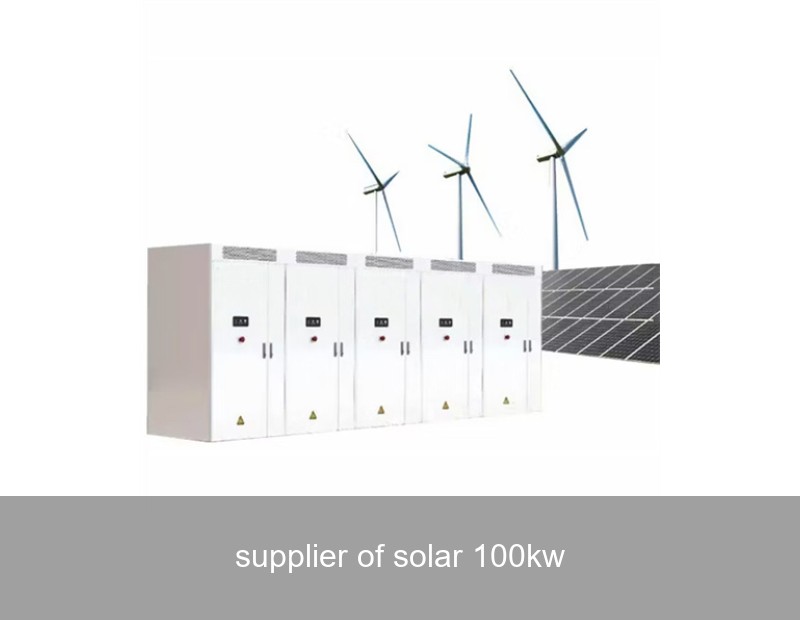
You've made the decision. Transitioning to solar power is no longer just a consideration; it's a strategic move for your business, farm, or large property. The 100kW solar system emerges as a sweet spot—powerful enough to make a significant dent in operational costs and carbon footprint, yet manageable in scale. But here lies the critical challenge: your project's success hinges not just on the panels, but on choosing the right supplier of solar 100kW solutions. This isn't merely a purchase; it's forming a partnership for the next 25+ years of energy generation. Let's navigate what truly defines a leading supplier in today's market.
Table of Contents
- The Phenomenon: The 100kW Solar Sweet Spot
- Beyond Panels: What a True 100kW Supplier Provides
- Data-Driven Decisions: The Financial & Operational Impact
- Case Study: A California Winery's Transformation
- The Highjoule Approach: Intelligent Storage as a Game-Changer
- Choosing Your Partner: Key Questions to Ask
The Phenomenon: The 100kW Solar Sweet Spot
Why is the 100kW (kilowatt) solar system such a popular benchmark? It perfectly bridges the gap between residential-scale projects and utility-scale farms. Typically comprising 250-300 high-efficiency panels, a 100kW array can generate approximately 120,000 to 160,000 kWh annually, depending on your location. To put that in perspective, that's enough to power 20-30 average U.S. homes for a year.
This scale is ideal for a wide range of applications: medium-sized manufacturing facilities, agricultural operations (like dairy farms or greenhouses), commercial warehouses, school districts, small municipalities, and large hospitality venues. The goal here isn't just to offset a portion of your bill; it's to achieve a substantial degree of energy independence and price predictability.

Image Source: Unsplash - A typical scale for commercial solar installations.
Beyond Panels: What a True 100kW Supplier Provides
Many companies can source and install solar panels. A premier supplier of solar 100kW systems, however, acts as a total solution provider. The panel is just one component. The real value lies in the system integration, long-term performance, and the intelligence built into the entire energy asset.
- Engineering-First Design: Every roof, field, and energy load profile is unique. Superior suppliers use advanced modeling software (like Aurora or Helioscope) to design for maximum yield, considering shading, orientation, and local weather patterns.
- Component Harmony: They ensure perfect compatibility between high-efficiency modules, durable racking, smart inverters, and monitoring systems. Mismatched components are a leading cause of underperformance.
- Grid Integration & Compliance: Navigating interconnection agreements, local building codes, and utility requirements (like UL 1741 SA in the U.S.) is complex. Your supplier should handle this seamlessly.
- Performance Guarantees: Look for robust workmanship warranties and production guarantees that ensure your system delivers the promised financial return.
Highjoule's Role as a System Partner
At Highjoule, our perspective extends beyond the solar array itself. We see a 100kW solar installation as the cornerstone of a smarter energy ecosystem. Since 2005, we've specialized in integrating advanced battery energy storage systems (BESS) with solar generation. Why is this critical? Solar alone generates power only when the sun shines. Pairing it with an intelligent storage system, like our Highjoule HPS Series, transforms your project: it allows you to store excess daytime energy for use at night, provides backup power during outages, and can even enable participation in grid services programs for additional revenue.
Data-Driven Decisions: The Financial & Operational Impact
Let's talk numbers. The investment in a 100kW system is significant, and the right supplier will provide transparent, data-backed projections.
| Metric | Typical Range (U.S. Example) | Impact |
|---|---|---|
| System Cost (before incentives) | $250,000 - $350,000 | Varies with component quality and installation complexity. |
| Federal Investment Tax Credit (ITC) | 30% of eligible cost | Can reduce net cost by $75,000 - $105,000. |
| Annual Energy Production | 120,000 - 160,000 kWh | Directly offsets utility purchases. |
| Simple Payback Period | 5-8 years | After which, 17+ years of nearly free electricity. |
| Lifetime CO2 Offset | ~2,500 metric tons | Equivalent to planting over 40,000 tree seedlings. |
These figures are illustrative. A reputable supplier will conduct a site-specific analysis. For instance, electricity prices in Europe have been notably volatile. According to Eurostat, the first half of 2023 saw household electricity prices in the EU average €28.9 per 100 kWh, with wide variations. This volatility makes the price-lock effect of solar even more valuable.
Case Study: A California Winery's Transformation
Let's examine a real-world application. A family-owned winery in Sonoma County, California, faced rising energy costs and increasing concern over grid reliability during harvest season—a critical period where power loss could spoil entire batches.
The Challenge: High daytime energy use for cooling, lighting, and processing, coupled with a need for operational resilience.
The Solution: They partnered with a turnkey supplier of solar 100kW systems who integrated a 105kW rooftop solar array with a 240kWh Highjoule HPS battery storage unit. The system was designed to prioritize self-consumption of solar energy and provide seamless backup power.
The Results (18 Months Post-Installation):
- Energy Bill Reduction: 92% reduction in net electricity costs from the grid.
- Backup Power: The system automatically provided 48 hours of critical load backup during a planned public safety power shutoff (PSPS) event, saving an estimated $80,000 in potential product loss.
- Sustainability Credential: Achieved a leading certification for sustainable winemaking, enhancing brand value.

Image Source: Unsplash - Solar installations are common in the agriculture and viticulture industry.
The Highjoule Approach: Intelligent Storage as a Game-Changer
This case study highlights why the conversation is evolving from "solar supplier" to "smart energy partner." At Highjoule, we believe a 100kW solar system reaches its full potential only when coupled with intelligent storage and energy management. Our HPS (High-performance Storage) series for commercial and industrial applications is built with lithium iron phosphate (LFP) battery chemistry, known for its safety, longevity, and cycle life.
Our integrated energy management system (EMS) doesn't just store and release energy. It learns your consumption patterns, considers real-time utility rate structures (like time-of-use rates common in California and parts of Europe), and can be configured to discharge batteries during peak price periods for maximum savings. For microgrid applications, this intelligence is the very brain that ensures stability and efficiency.
When you choose Highjoule as your technology partner, you're not just buying hardware; you're accessing over 15 years of deep expertise in making renewable energy systems reliable, profitable, and truly sustainable. We encourage you to explore the technology behind grid-forming inverters, a key feature in modern storage, as explained by the National Renewable Energy Laboratory (NREL).
Choosing Your Partner: Key Questions to Ask
As you evaluate potential suppliers, move beyond price per watt. Engage them in a technical dialogue:
- "How will you model my specific shade and production profile?"
- "What is your process for securing interconnection approval?"
- "Can you provide a detailed breakdown of all system components (make, model, warranty)?"
- "How do you design for future expansion, particularly adding battery storage?"
- "Can you show me case studies or monitoring data from a system you installed 5+ years ago?"
- "What is your protocol for ongoing monitoring, maintenance, and performance alerts?"
The right partner will welcome these questions and have clear, confident answers backed by data and experience.
Final Thought: The Future-Proofed System
The energy landscape is shifting rapidly. Regulations like the EU's REPowerEU plan are accelerating the adoption of renewables. Choosing a supplier of solar 100kW systems who understands this broader context and designs for adaptability is crucial. Will your system be ready to integrate with vehicle-to-grid (V2G) technology as your fleet electrifies? Can it participate in demand response programs?
Given your specific site's goals and challenges, what single energy management capability—be it peak shaving, outage resilience, or carbon reduction—would deliver the most immediate value to your operations?
 Inquiry
 Online Chat