


Choosing Your Supplier of Solar Generation: A Guide to True Energy Independence
So, you've decided to harness the power of the sun. Excellent choice. Whether you're a homeowner looking to slash electricity bills, a factory manager aiming for operational resilience, or a developer crafting a sustainable community, selecting the right supplier of solar generation is the most critical decision you'll make. But here's a thought that might surprise you: in today's energy landscape, a supplier that only sells you panels and inverters might be leaving you—and your potential savings—half in the dark. The true value no longer lies solely in generation, but in what you do with that energy once it's produced. Let's explore why.
The Phenomenon: The Solar Boom and Its Hidden Challenge
Across Europe and the United States, solar adoption is accelerating. Rooftops and fields are gleaming with photovoltaic panels, a testament to our collective push for cleaner energy. The initial goal is straightforward: generate your own power and reduce grid dependence. However, a common phenomenon is emerging for many early adopters. You install a sizable system, watch it produce a beautiful curve of energy during the day, and then… the sun sets. Your energy consumption often peaks in the early morning and evening, creating a frustrating mismatch.
This is the solar "duck curve"—a graph that shows a deep dip in net grid demand during sunny afternoons (when solar floods the grid) and a steep ramp-up as the sun goes down. For the grid operator, it's a challenge. For you, the energy producer, it means you're still buying expensive power from the grid during peak hours, while potentially exporting excess midday energy at low, sometimes even negative, rates. Your supplier of solar generation provided the tools to create energy, but not necessarily the tools to maximize its economic and practical value for your specific load profile.

Image Source: U.S. Department of Energy - illustrating the "duck curve" challenge.
The Data: Why Generation Alone Isn't Enough
Let's put some numbers to this phenomenon. According to the International Energy Agency (IEA), solar PV is set to become the largest source of installed power capacity globally. Yet, studies like those from the National Renewable Energy Laboratory (NREL) highlight that the value of solar electricity to the grid (and thus, often to you through net metering policies) decreases as penetration increases—a concept known as value deflation.
What does this mean in practice?
- Self-Consumption is King: The most valuable kilowatt-hour (kWh) is the one you generate and use instantly, avoiding both grid purchase and export.
- Peak Shaving Pays: Commercial and industrial electricity bills are heavily influenced by "demand charges" based on your highest 15-30 minute power draw each month. Solar alone may not consistently cover this spike.
- Resilience Has a Price Tag: During grid outages, most standard grid-tied solar systems shut off for safety. To have power when the grid is down, you need additional technology.
Case Study: A German Manufacturing Plant's Journey to True Energy Independence
Let's examine a real-world example from Bavaria, Germany. A mid-sized automotive parts manufacturer installed a 500 kWp rooftop solar system in 2019. Their initial goal was to meet sustainability targets and reduce costs. By 2021, they faced the classic mismatch: 70% of their solar generation occurred outside their highest operational energy usage periods. They were exporting over 40% of their solar yield to the grid at low feed-in tariffs while simultaneously paying high rates for evening power and demand charges.
In 2022, they partnered with a new kind of provider—not just a supplier of solar generation, but an energy solutions partner. The solution involved:
- Retrofitting a 250 kWh / 500 kW Battery Energy Storage System (BESS): This system was programmed to store the midday solar excess.
- Intelligent Energy Management Software (EMS): The EMS uses forecast data and real-time monitoring to make decisions: charge the batteries with solar, discharge to cover the evening peak, and even participate in grid flexibility programs.
| Metric | Before (Solar Only) | After (Solar + Storage + EMS) |
|---|---|---|
| Grid Energy Import | Reduced by 35% | Reduced by 78% |
| Peak Demand Charge | Reduced by 15% | Reduced by 92% |
| Self-Consumption of Solar | ~60% | ~98% |
| ROI Period (Estimated) | 8 years | 5 years |
The result? Dramatically lower energy costs, unprecedented protection against peak pricing, and a giant leap towards 24/7 clean energy usage. This is the power of an integrated approach.
The Modern Solution: What to Look for in Your Supplier of Solar Generation
Based on the phenomenon, data, and case studies, your selection criteria must evolve. Your ideal partner should offer a holistic suite:
1. Core Generation Technology
High-efficiency PV modules, reliable string or micro-inverters, and robust mounting systems remain the foundation. Quality here is non-negotiable.
2. The Brain: Energy Management System (EMS)
This is the differentiator. A smart EMS should optimize for self-consumption, peak shaving, time-of-use arbitrage, and even grid services, all based on your unique goals.
3. The Anchor: Battery Storage
Storage is what transforms solar from a daytime supplement to a 24-hour power source. Look for safe, long-cycle-life battery technology (like Lithium Iron Phosphate) with scalable capacity.
4. Ongoing Support & Grid Integration Expertise
Your supplier should understand local grid codes, interconnection processes, and potential incentive programs (like the U.S. Investment Tax Credit or European Union schemes). Post-installation monitoring and support are crucial for long-term performance.
Highjoule's Role: Your Partner in Intelligent Energy Management
This is precisely where Highjoule, with nearly two decades of experience since 2005, redefines what it means to be a supplier of solar generation. We don't just provide components; we deliver turnkey, intelligent energy ecosystems.
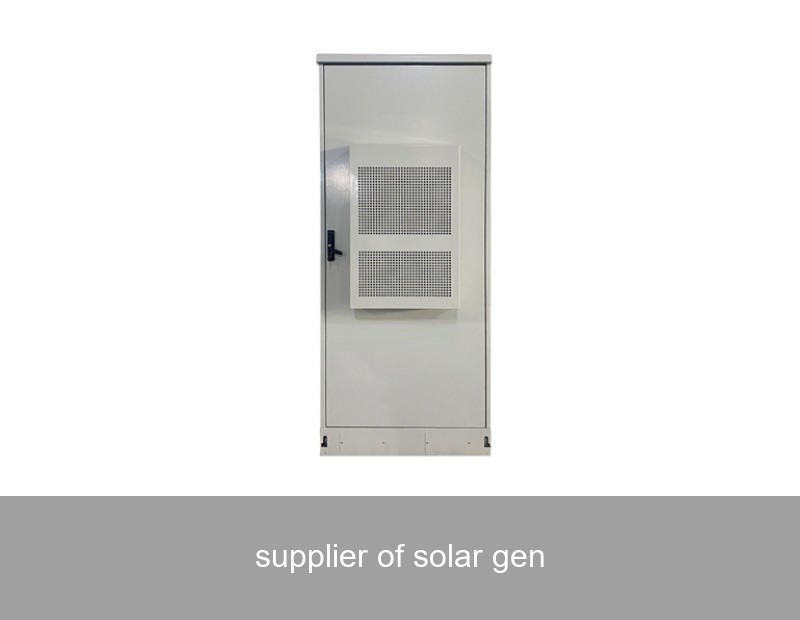
For our commercial and industrial clients across Europe and North America, we integrate premium solar arrays with our flagship HPS Series Battery Storage Systems. These modular, containerized or skid-mounted solutions are built with safety and longevity at their core. They are controlled by our proprietary JouleMind AI-Powered Platform, which acts as the central nervous system of your energy assets.
Imagine a system that:
- Automatically forecasts solar production and your facility's load for the next 48 hours.
- Decides the most economical moment to store energy, use it, or (where beneficial) sell it back to the grid.
- Seamlessly switches to backup power mode during an outage, keeping critical operations running.
- Provides you with a clear, real-time dashboard of your energy independence and carbon savings.

Image Source: Unsplash - depicting a modern commercial solar plus storage installation.
Looking Ahead: The Future of Energy Supply
The energy landscape is shifting from a one-way grid to a dynamic network of prosumers—those who both produce and consume. In this new world, the most successful businesses and communities will be those who treat energy as a strategic asset to be managed, not just a commodity to be purchased.
So, as you evaluate your options for a supplier of solar generation, we leave you with this question: Is your goal simply to install solar panels, or is it to achieve genuine, resilient, and cost-effective energy independence? What would it mean for your operations or home to have not just a source of power, but a fully optimized, intelligent energy system tailored to your life and work?
 Inquiry
 Online Chat