


Paneles Solares de Ultima Generacion: Beyond the Hype, Into the Age of Intelligent Energy
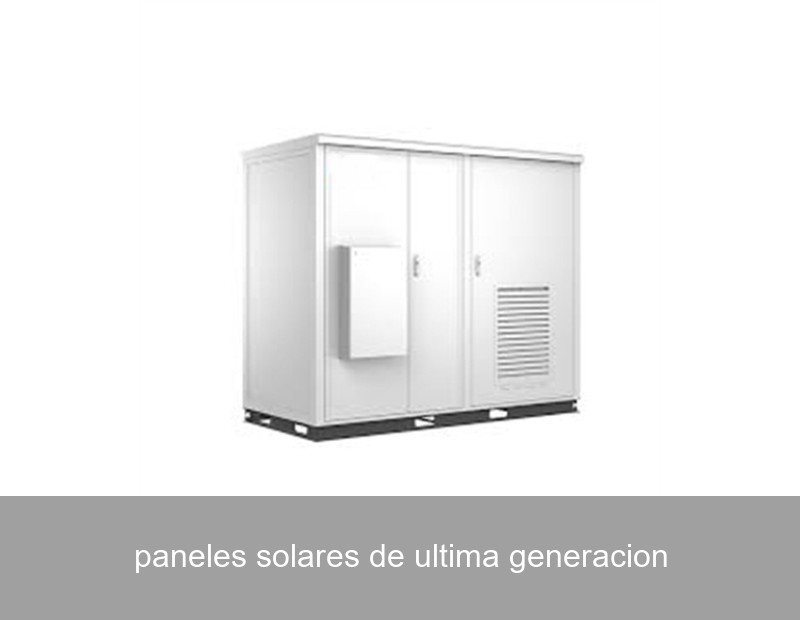
Welcome, eco-conscious homeowner or forward-thinking business leader. You've likely heard the buzz about "paneles solares de ultima generacion" (next-generation solar panels). The promise is alluring: higher efficiency, sleek designs, and smarter systems. But what does "next-generation" truly mean in a market flooded with claims? More importantly, how do you ensure this significant investment translates into real-world resilience and maximum return, especially when the sun isn't shining? Let's move beyond the spec sheets and explore how the latest solar technology is only one piece of the modern energy independence puzzle.
Table of Contents
- The Phenomenon: The Surge of Next-Gen Solar
- The Data: Efficiency Gains and the Critical Limitation
- The Case Study: From Solar Array to Resilient Microgrid
- The Insight: Generation is Just the Beginning
- The Highjoule Solution: Intelligent Storage for Ultimate Generation
- Your Energy Future: A Question of Control
The Phenomenon: The Surge of Next-Gen Solar
Across Europe and the United States, rooftops and fields are transforming. The familiar blue-tinted panels are increasingly joined by sleek, all-black modules and innovative building-integrated designs. This shift represents the move towards paneles solares de ultima generacion, characterized primarily by advances in cell technology. We're talking about PERC (Passivated Emitter and Rear Cell), TOPCon (Tunnel Oxide Passivated Contact), and even heterojunction (HJT) cells. In simple terms, these panels are engineered to capture more sunlight and convert it into electricity more efficiently than ever before, sometimes exceeding 23% module efficiency. This means you can generate more power from the same roof space—a compelling proposition for anyone with energy goals.

Image: Modern, high-efficiency solar panels. Source: Unsplash (Representative image)
The Data: Efficiency Gains and the Critical Limitation
The numbers are impressive. According to the National Renewable Energy Laboratory (NREL), laboratory cell efficiencies for new technologies have skyrocketed past 26%. Commercial panels now readily offer 400W to 500W+ per unit. However, here's the pivotal data point often overlooked: Solar panels only generate power for an average of 4 to 6 peak hours per day. That leaves 18+ hours where your home or business relies on the grid or another source. This intermittency is the fundamental challenge. Even the most advanced paneles solares de última generación produce a surplus at noon that vanishes by evening—precisely when energy demand and costs often peak. The graph below illustrates this daily mismatch:
| Time of Day | Solar Generation | Typical Home/Business Demand | Grid Reliance |
|---|---|---|---|
| 6 AM - 9 AM | Low / Rising | High (Morning Routine) | High |
| 10 AM - 3 PM | Very High (Peak) | Moderate | Low or None (Surplus) |
| 4 PM - 9 PM | Low / Falling to Zero | Very High (Evening) | Very High |
| Overnight | Zero | Base Load | Constant |
This disconnect means that without a solution to time-shift energy, a significant portion of your solar investment's potential value is lost.
The Case Study: From Solar Array to Resilient Microgrid
Let's look at a real-world application. A medium-sized winery in Northern California, a region with abundant sun but also an increasing risk of public safety power shutoffs (PSPS) due to wildfire risk. In 2021, they installed a state-of-the-art 250 kW solar canopy system using top-tier paneles solares de ultima generacion. Their generation during the day was excellent, covering 100% of their operational needs and sending excess back to the grid. However, during the critical fall harvest season, a planned PSPS event threatened to shut down their refrigeration and processing facilities for 48 hours—risking millions in inventory.
The winery's solution wasn't to add more panels. In 2022, they partnered with Highjoule to integrate a 500 kWh Highjoule HiveStack™ commercial battery energy storage system (BESS). The results were transformative:
- 100% Energy Continuity: During the next PSPS event, the facility seamlessly transitioned to solar + storage power, with zero operational downtime.
- Enhanced Financial Return: The system is programmed to store midday solar surplus and discharge during the expensive 4 PM - 9 PM peak rate period, slashing demand charges and generating grid service revenue.
- ROI Acceleration: The combined solar + storage system is projected to pay for itself in 6 years, 40% faster than solar alone, thanks to stacked value streams (bill savings, resilience, grid services).
This case exemplifies the paradigm shift: the highest value of modern solar is unlocked only when paired with intelligent storage.
The Insight: Generation is Just the Beginning
The true "next-generation" energy system isn't defined by panels alone. It's defined by intelligence and integration. Your paneles solares de ultima generacion are the source, but the brain of the operation is the energy management system, and its essential counterpart is the battery. Think of it this way: a solar panel is like a brilliant rain shower. A battery storage system is the reservoir that captures the water for when you're truly thirsty. Without it, the water simply runs off.
This is where expertise in system integration becomes critical. The battery's chemistry, power conversion efficiency, thermal management, and software intelligence determine how much of your precious solar energy you actually get to use. For instance, a low-efficiency or poorly managed battery system can lose 15-20% of the energy you feed into it, negating a significant portion of your solar panel's advanced efficiency gains.

Image: A modern Battery Energy Storage System (BESS). Source: Unsplash (Representative image)
The Highjoule Solution: Intelligent Storage for Ultimate Generation
At Highjoule, we've focused on this critical link in the energy chain since 2005. While premium paneles solares de ultima generacion capture electrons, our mission is to empower them. We provide the advanced storage and control systems that transform a solar installation from a partial solution into a complete, resilient, and intelligent energy asset.
Our product suites are designed to match the performance of your advanced solar array:
- For Homes & Residential Communities: The Highjoule HomePower series features sleek, wall-mounted lithium iron phosphate (LiFePO4) batteries with integrated energy management. Our software learns your consumption patterns, automatically optimizing when to store solar energy and when to use it, ensuring you maximize self-consumption and gain peace of mind during outages.
- For Commercial & Industrial (C&I) Applications: The scalable Highjoule HiveStack™ modular BESS is the industrial partner to large-scale solar arrays. It provides critical backup power, manages peak demand charges—which can constitute up to 50% of a commercial electricity bill—and can participate in grid-balancing programs. Its advanced thermal management ensures high round-trip efficiency, preserving more of your solar energy.
- For Microgrids & Utilities: Our GridMax solutions offer utility-scale storage that stabilizes grids with high solar penetration, turning intermittent renewable generation into a firm, dispatchable resource.
Our systems are built with a core principle: your solar energy shouldn't go to waste. By integrating a Highjoule system, you're not just buying a battery; you're investing in the control center for your personal or organizational energy ecosystem.
Why Highjoule's Technology Complements Your Solar Investment
Choosing a storage system is a technical decision. Here’s how we ensure synergy with your advanced panels:
- High Round-Trip Efficiency (RTE): Our systems achieve over 95% RTE, meaning for every 100 kWh of solar energy you store, you get >95 kWh back. This maximizes the financial return on your high-efficiency panels.
- Advanced DC-Coupling Option: For new installations, we offer DC-coupled solutions, which allow solar energy to flow directly into the battery with fewer conversion losses compared to traditional AC-coupled setups.
- Intelligent Energy Management Software (EMS): The Highjoule Nexus™ EMS platform is the brain. It makes real-time decisions based on weather forecasts, electricity rates, and your usage patterns to autonomously optimize energy flow, ensuring every kilowatt-hour from your paneles solares de ultima generacion is used in the most economical and strategic way possible.
Your Energy Future: A Question of Control
The conversation about solar energy is evolving. It's no longer just about "how much can I generate?" but "how much can I control and utilize?" The most sophisticated solar panels on the market are only as good as the system that harnesses their output. As you consider upgrading to or installing paneles solares de ultima generacion, what is your strategy for the energy they will produce when you don't immediately need it? Are you prepared to turn that surplus into resilience against outages, into tangible savings on your peak demand charges, and into a faster return on your sustainability investment?
The future of energy is not just generation—it's intelligent storage and control. We invite you to explore what your complete energy ecosystem could look like. What would absolute energy independence mean for your home or the operational resilience of your business?
 Inquiry
 Online Chat