


Understanding Grid-Connected Photovoltaic Systems: Your Gateway to Energy Independence
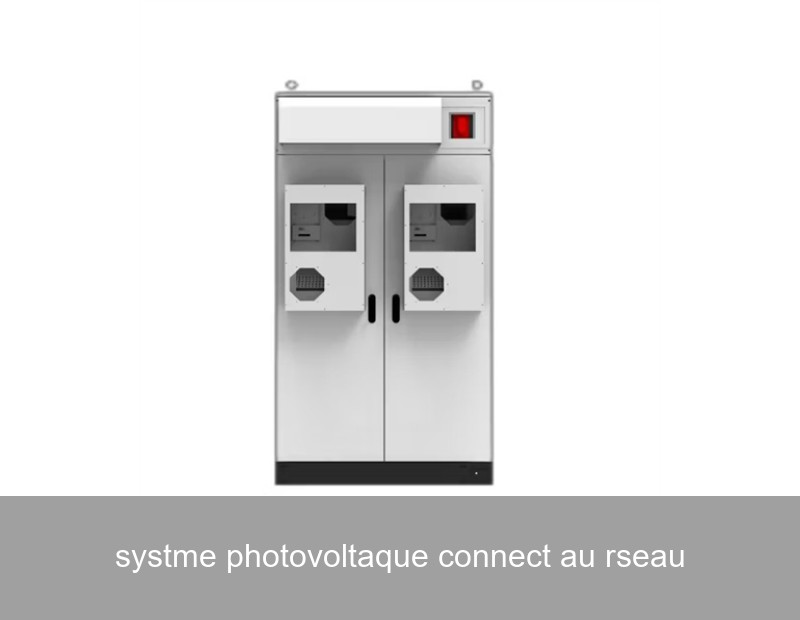
Have you ever looked at your rising electricity bill and wondered if there's a smarter, more sustainable way to power your home or business? You're not alone. Across Europe and the US, a quiet revolution is happening on rooftops and in fields: the widespread adoption of système photovoltaïque connecté au réseau, or grid-connected photovoltaic systems. Unlike off-grid setups, these systems work in harmony with the public utility grid, allowing you to generate clean solar power, use what you need, and seamlessly send the excess back. Let's explore how this technology works, its undeniable benefits, and how it's shaping our energy future.
Table of Contents
What is a Grid-Connected Photovoltaic System?
In simple terms, a grid-connected PV system is a solar power installation that remains linked to the main electrical grid. Think of it as a two-way street. During sunny days, your solar panels generate DC electricity, which is converted by an inverter into AC power for your immediate use. If you produce more than you consume, the surplus flows back to the grid. At night or during periods of high cloud cover, you simply draw power from the grid as usual. This synergy offers the best of both worlds: significant energy autonomy without the need for expensive battery backup (though you can add one), and the security of an unlimited power reserve from the grid.
Image source: Unsplash - Representative image of a residential grid-tied solar installation.
Key Components of a Modern Grid-Tied PV System
Understanding the main parts demystifies the technology. A reliable system consists of:
- Solar Panels (PV Modules): Capture sunlight and convert it to direct current (DC) electricity.
- Grid-Tie Inverter(s): The heart of the system. It converts DC to grid-compatible AC power and synchronizes its frequency and voltage perfectly with the utility grid. Modern models offer advanced monitoring.
- Mounting System & Wiring: Securely fixes panels to your roof or ground and connects all components.
- Bi-Directional Meter: Installed by your utility company, it measures both power drawn from the grid and excess power fed back into it, enabling net metering.
- Optional: Energy Management System & Battery Storage: For greater self-consumption and backup power, systems like those from Highjoule integrate smart controllers and battery storage to optimize every kilowatt-hour.
The Crucial Role of the Inverter
The inverter is more than just a converter; it's an intelligent gateway. It ensures the power quality you send to the grid meets strict utility standards (like VDE-AR-N 4105 in Germany or UL 1741 SA in the US). If the grid goes down, safety regulations require the inverter to automatically shut off, preventing it from sending power to lines where technicians might be working—a feature known as anti-islanding.
The Compelling Economic Case: Data and Savings
The phenomenon of soaring energy costs is global. The data makes a powerful argument. According to the International Energy Agency (IEA), solar PV is now the cheapest source of electricity in history for many countries. Let's break down the financial logic using a PAS (Problem-Agitate-Solution) framework:
- Problem: Volatile and consistently rising electricity prices for homes and businesses.
- Agitate: This uncertainty makes budgeting difficult and erodes profitability for enterprises. Dependence on the grid means you're fully exposed to every price hike.
- Solution: A système photovoltaïque connecté au réseau locks in a significant portion of your energy cost at a fixed, predictable rate—essentially the cost of your system over its 25+ year lifespan. Through mechanisms like net metering or feed-in tariffs, excess generation can further offset your bill.
| Metric | Value | Note |
|---|---|---|
| Annual Energy Production | ~14,000 kWh | Highly location-dependent |
| Self-Consumption Rate (without battery) | ~30-35% | Can exceed 70% with smart management & battery |
| Annual Savings on Electricity Bill | €1,500 - €2,200+ | Based on an avg. price of €0.22/kWh |
| Simple Payback Period | 6 - 9 years | Incentives and local costs vary |
A Real-World Case Study: The German Bakery
Let's move from theory to practice. Consider "Bäckerei Schmidt," a medium-sized artisan bakery in Bavaria, Germany. Facing energy costs exceeding €45,000 annually for ovens, refrigeration, and lighting, they turned to a grid-connected solar solution in 2021.
- System Size: 50 kWp rooftop PV system.
- Key Challenge: High daytime energy consumption, but production did not always match peak baking times, especially in winter.
- Integrated Solution: They partnered with Highjoule to install not just panels and inverters, but our HI-Energy Hub, a smart energy management system coupled with a 40 kWh battery storage unit. The system intelligently directs solar power to priority loads, stores excess for use during morning and evening peaks, and only exports to the grid when the battery is full.
- Results after 2 years: The bakery now covers 68% of its total electricity demand directly from its solar+storage system. Grid electricity purchases have been reduced by over 60%, translating to annual savings of more than €27,000. The system also provides critical backup power for refrigeration during brief grid outages, preventing spoilage. The investment is projected to pay for itself in under 7 years.
This case, documented in part by the Fraunhofer Institute for Solar Energy Systems ISE, highlights the evolution of a simple grid-feed system into an intelligent, self-optimizing energy asset for commercial users.
How Highjoule Enhances Your Grid-Connected Solar Experience
Since 2005, Highjoule has moved beyond being just a component supplier. We provide intelligent, integrated energy solutions that maximize the value of your système photovoltaïque connecté au réseau. Our expertise lies in making these systems smarter and more adaptable.
For residential and commercial clients in Europe and the US, our HI-PowerStack lithium-ion battery systems can be seamlessly added to new or existing grid-tied PV installations. This turns a system that merely exports surplus into one that maximizes self-consumption, provides backup power, and allows participation in utility demand-response programs. Our cloud-based EnergyOS platform gives you real-time visibility and control over your energy flows, helping you make informed decisions to save even more.
Image source: Unsplash - Representative image of a commercial-scale solar and storage system.
For microgrid and large-scale industrial applications, our solutions ensure stability and efficiency, allowing facilities to operate as grid-connected energy islands when beneficial, reducing demand charges and enhancing sustainability profiles.
The Future: Smarter Grids and Prosumer Power
The future grid will be decentralized and digital. As more homes and businesses install grid-connected PV, they transform from passive consumers ("consumers") into active producer-consumers ("prosumers"). This collective power can stabilize grids if managed intelligently. Technologies like Highjoule's smart inverters and energy management systems are pivotal, allowing for grid-supportive functions such as voltage and frequency regulation.
Emerging trends like virtual power plants (VPPs), where thousands of distributed systems are aggregated to act as a single power plant, are becoming reality. By choosing an advanced system today, you're future-proofing your investment and potentially creating a new revenue stream.
An Open Question to Ponder
If your electricity bill represents a recurring cost with zero equity, what would it mean for your home's value or your business's competitiveness to convert that expense into a fixed, depreciable asset that generates returns for decades? The technology is proven, the economics are clear, and the path to greater energy independence starts with a conversation. What's the first question you would ask an expert about powering your property with a grid-connected solar system?
 Inquiry
 Online Chat