


Beyond Generators: Why Modern Temporary Power Solutions Are Smarter, Cleaner, and More Reliable
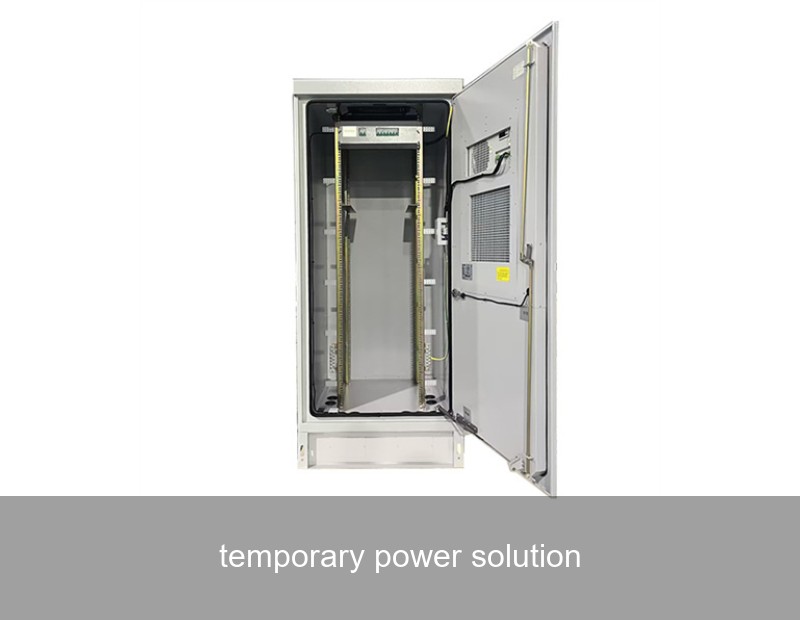
Table of Contents
- The Problem: More Than Just Noise and Fumes
- The Data: The Rising Demand for Clean, Quiet Power
- Case Study: A Berlin Film Festival's Silent Success
- How Modern Temporary Power Solutions Work
- Highjoule's Role: Powering Events and Projects Intelligently
- Choosing the Right System for Your Needs
- The Future of Temporary Power
a bustling outdoor event, a critical construction site, or a film set in a pristine natural location. The common thread? They all need reliable electricity, but connecting to the main grid isn't an option. For decades, the immediate answer was a diesel generator—a loud, fuming machine that gets the job done at a significant cost to the environment, neighborly relations, and often, the budget. But what if your temporary power solution could be not just a source of energy, but a strategic asset that's silent, emission-free, and smarter than a simple plug? The shift from noisy generators to intelligent, battery-based systems is revolutionizing how we power projects and events temporarily.
The Problem: More Than Just Noise and Fumes
The traditional diesel generator is a known quantity. It's also a known problem. Beyond the obvious carbon emissions and air pollution, they create noise pollution that can violate local ordinances (common in European cities and US residential areas) and disrupt the very activity they're powering. Think of a gourmet food festival where chefs and patrons are shouting over generator hum, or a wildlife documentary film crew scaring away their subjects. Furthermore, fuel logistics—storage, delivery, refueling—add layers of cost, complexity, and safety concerns. This old model treats temporary power as a brute-force necessity, not an integrated part of project planning.
The Data: The Rising Demand for Clean, Quiet Power
The market is speaking loudly and clearly. A growing number of municipal regulations, particularly in Europe and progressive US states like California, are imposing strict limits on noise and emissions for outdoor events and construction. For instance, many European cities now have "low-emission zones" that can apply to temporary equipment. Simultaneously, the levelized cost of energy from solar-plus-storage has fallen dramatically, making it competitive with diesel in many applications. According to a report by Wood Mackenzie, the global market for behind-the-meter battery storage is set to grow exponentially, driven partly by commercial and temporary use cases. The data points to a simple conclusion: sustainable, silent power is no longer just a "nice-to-have" for eco-conscious brands; it's becoming a baseline requirement for operational permits and social license to operate.
Case Study: A Berlin Film Festival's Silent Success
Let's look at a concrete example. In the summer of 2023, a prestigious open-air film festival in Berlin faced a challenge. Their historic venue, a city-center park, had no grid connection for the large screens, sound systems, and vendor stalls. Diesel generators were banned by the city council due to noise complaints from previous years and alignment with the city's carbon neutrality goals. The festival needed a temporary power solution that was silent, emission-free, and capable of delivering 150 kWh of energy over a 6-hour period each evening.
The organizers partnered with a local energy services company that deployed a solution centered on Highjoule's HJ CubeStack mobile battery storage systems. Three units were positioned discreetly around the site. During the day, they were slowly charged via a temporary, low-impact connection to a nearby building's main supply. At night, they silently discharged to power the entire event.
| Metric | Traditional Diesel Solution | Highjoule Battery Solution |
|---|---|---|
| Noise Level | >75 dB (disruptive) | < 40 dB (quieter than conversation) |
| Local CO2 Emissions | ~450 kg per night | 0 kg on-site |
| Fuel Logistics | Required nightly refueling | None - "set and forget" |
| Attendee Feedback | Historical complaints | Praised the peaceful atmosphere |
The result was a critically acclaimed event that met all regulatory requirements, enhanced the audience experience, and provided a new blueprint for sustainable urban events. The festival director noted, "The power was so seamless and quiet, we almost forgot it was there—which is the highest compliment."
How Modern Temporary Power Solutions Work
So, what replaces the diesel generator? The modern temporary power solution is typically a containerized or skid-mounted battery energy storage system (BESS). Here's the breakdown:
- The Core: High-capacity lithium-ion or LiFePO4 battery modules, known for their high energy density, long cycle life, and safety.
- The Brain: An integrated inverter and energy management system (EMS). This smart technology converts DC battery power to AC for your equipment and intelligently manages charge/discharge cycles, system health, and safety protocols.
- The Flexibility: These systems are designed for mobility. They can be trailer-mounted, containerized, or modular for easy transport and rapid deployment on-site.
- The Charging Options: They can be charged from a weak or distant grid connection overnight (when demand is low and often cheaper), from onsite solar panels, or even from a hybrid setup with a small, optimized generator used solely for charging the batteries, running at its most efficient constant speed.

This setup decouples power generation from power consumption, allowing for silent, clean, and flexible energy delivery exactly when and where it's needed.
Highjoule's Role: Powering Events and Projects Intelligently
At Highjoule, we've been at the forefront of this transition. Since 2005, our mission has been to provide intelligent, efficient power solutions that go beyond the temporary fix. For temporary power applications, our HJ MobilePower Series is engineered for the toughest job sites and most sensitive events. These plug-and-play units offer:
- Silent Operation: Zero noise pollution, enabling 24/7 operation even in residential areas or noise-sensitive environments like hospitals or schools.
- Zero Local Emissions: Improve air quality on-site and help projects meet stringent environmental, social, and governance (ESG) targets.
- Grid Independence & Stability: Provide pure sine wave power that protects sensitive electronic equipment—crucial for film production, medical field camps, or data centers.
- Remote Monitoring & Control: Our proprietary Highjoule SynergyOS platform allows fleet managers to monitor state-of-charge, performance, and health of all deployed units from a single dashboard, optimizing logistics and uptime.
Whether it's powering a weekend music festival in California, providing backup during a grid upgrade for a German factory, or supporting disaster relief efforts where fuel supply is unreliable, our systems deliver resilience without compromise.
Choosing the Right System for Your Needs
Not all temporary power needs are the same. Selecting the right solution involves a few key questions:
- Power (kW) vs. Energy (kWh): What is the peak power demand of your equipment (kilowatts), and how long do you need to run it (defining total kilowatt-hours)?
- Site Logistics: How will the system be transported and positioned? Is there access for solar panels or a grid connection for charging?
- Duration & Duty Cycle: Is this for a 48-hour event, a 6-month construction project, or indefinite off-grid operation?
- Environmental Conditions: What are the noise, emission, and visual impact constraints of the location?
As a rule of thumb, battery-based temporary power solutions excel in scenarios with moderate, predictable loads, noise-sensitive areas, and where fuel logistics are costly or complex. For extremely high-power, continuous loads in remote locations, hybrid systems (battery + optimized generator) often provide the best balance of cost and sustainability.
The Future of Temporary Power
The trajectory is clear. As battery technology continues to advance—offering higher energy density and lower cost—and as renewable energy sources become more ubiquitous, the temporary power station of the future will be a self-sustaining, smart microgrid. Imagine a construction site where solar canopies charge mobile battery packs that power tools and site offices, all managed by AI to optimize for weather and work schedules. The line between "temporary" and "permanent" power will blur, favoring flexible, modular assets that can be deployed and redeployed as needed. Resources like the U.S. Department of Energy's Solar Office and the European Commission's Energy Directorate are actively fostering this innovation, recognizing its role in decarbonizing not just the grid, but the entire economy.
What's the next project or event on your calendar that depends on reliable, quiet, and clean power? Could rethinking your temporary power solution be the key to unlocking its full potential—for your bottom line, your community, and your environmental goals?
 Inquiry
 Online Chat