


Finding the Best Energy Storage Cabinet for Home Use: Your Guide to Energy Independence
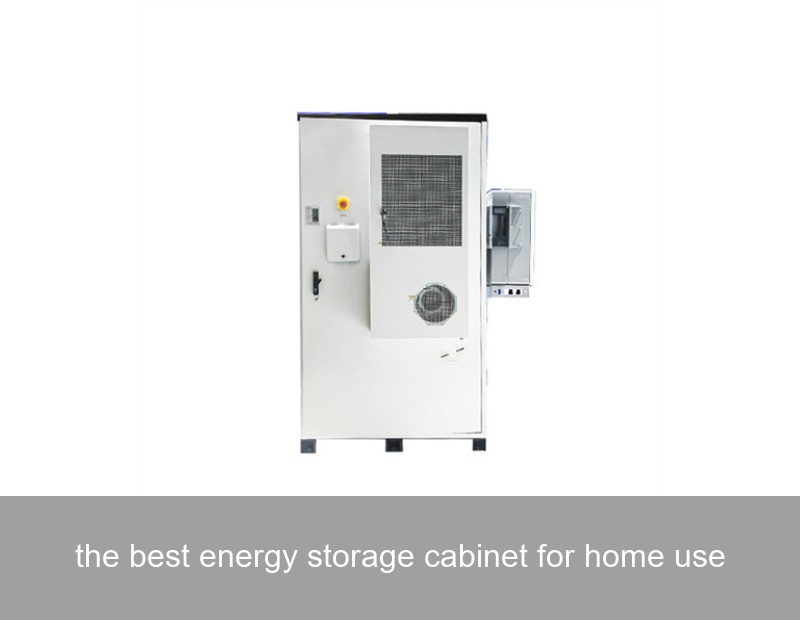
Have you ever watched your electricity bill climb with the summer heat or winter chill and wished for more control? You're not alone. Across Europe and the US, homeowners are increasingly looking for ways to harness solar power, ensure backup during outages, and ultimately achieve energy independence. The heart of this modern energy solution is finding the best energy storage cabinet for home use. But with so many options, what truly makes a home battery system "the best"? It's not just about raw capacity; it's about safety, intelligence, durability, and seamless integration with your life. Let's unpack what you really need to know.
Table of Contents
- The Rise of the Home Power Plant
- Key Features of the Best Home Energy Storage Cabinet
- Beyond the Battery: The Importance of System Intelligence
- Making the Right Choice for Your Home
The Rise of the Home Power Plant: More Than Just Backup
Gone are the days when a home battery was just a clunky backup for emergencies. Today's energy storage cabinet for home use is a sophisticated energy manager. The phenomenon is clear: residential energy storage is booming. In the US, the residential storage market saw installations grow by over 20% year-over-year in 2023, while in Germany, one in two new solar installations is now coupled with a battery system. This surge is driven by volatile energy prices, increased grid instability in some regions, and a genuine desire for sustainable living.
But here's the critical insight: not all systems are created equal. The difference lies in the integrated system—the battery cells, the thermal management, the battery management system (BMS), and the inverter compatibility—all housed and managed within that crucial cabinet.

Credit: Photo by Andreas Gücklhorn on Unsplash. A modern home energy setup integrating solar and storage.
Key Features of the Best Home Energy Storage Cabinet
So, what should you look for? Let's break it down into a practical checklist.
1. Safety and Chemistry: The Non-Negotiable Foundation
Safety is paramount. The best systems use stable, proven lithium-ion chemistries like Lithium Iron Phosphate (LFP). LFP batteries are renowned for their thermal and chemical stability, significantly reducing fire risk compared to other lithium-based chemistries. A top-tier energy storage cabinet will have a robust, self-contained design with integrated safety disconnects, fire retardant materials, and sophisticated monitoring to prevent thermal runaway.
2. Capacity and Power: Understanding Your Needs
Don't just buy the biggest battery. Think about usable capacity (kWh) and continuous power output (kW). Do you want to run just essentials (refrigerator, lights) for hours, or your entire home (including HVAC) for a shorter period? A system with modular capacity allows you to start small and expand later.
For example, Highjoule's ResiPower 10 cabinet is designed with this flexibility in mind. Its modular architecture lets homeowners start with a 10 kWh usable capacity and scale up to 30 kWh as their needs—and budget—evolve, all within the same sleek, unified enclosure.
3. Depth of Discharge (DoD) and Warranty
A battery's lifespan is measured in cycles and years. A high Depth of Discharge (DoD) means you can use more of your battery's stated capacity without harming it. Look for systems offering 90%+ DoD and a strong warranty that guarantees a certain capacity retention (e.g., 70%) after 10 years or 10,000 cycles. This is where quality engineering shines.
| Feature | Entry-Level System | High-Performance System (e.g., Highjoule ResiPower) | Why It Matters |
|---|---|---|---|
| Battery Chemistry | NMC or older LFP | Advanced LFP (Lithium Iron Phosphate) | Superior safety, longer lifespan, better thermal stability. |
| Usable Capacity | Fixed (e.g., 5 kWh) | Modular (10-30 kWh expandable) | Future-proofs your investment, adapts to changing needs. |
| Depth of Discharge (DoD) | ~80% | >95% | You get to use almost all the energy you pay for. |
| Integrated Intelligence | Basic monitoring | AI-driven energy management, grid services ready | Optimizes self-consumption, can provide value back to the grid. |
A Real-World Case: The Smith Family's Journey in California
Let's look at real data. The Smith family in Sacramento, California, installed a 8 kW solar array in 2022. Despite having panels, they were still exporting most of their energy during the day and buying it back at night under high Time-of-Use (TOU) rates. Their goal was to increase self-consumption and gain backup power for frequent Public Safety Power Shutoffs (PSPS).
In early 2023, they installed a Highjoule ResiPower 15 system (15 kWh usable capacity). The results after one year were compelling:
- Self-Consumption of Solar: Increased from 35% to 82%.
- Electricity Bill Savings: An additional $1,200 saved annually by avoiding peak grid purchases.
- Backup Performance: During a 14-hour grid outage, the system powered their essential loads (including refrigeration and medical equipment) seamlessly, switching over in under 20 milliseconds.
"The system isn't just a battery; it's our family's energy brain," says John Smith. "The app shows us exactly where our power is going, and we finally feel in control." This case highlights that the best energy storage cabinet for home use delivers tangible financial and resilience benefits.
Beyond the Battery: The Importance of System Intelligence
The cabinet is the body, but the software is the brain. A truly smart system does more than store and release energy. It learns your household patterns, forecasts weather and solar production, and automatically chooses the most economical times to charge (from solar or the grid) and discharge.
This is where Highjoule's EnergyOS platform comes into play. Integrated into every ResiPower cabinet, it turns your storage system into an active asset. In markets like Texas or parts of Europe where dynamic energy pricing exists, it can even be configured to participate in grid-balancing programs, creating a potential revenue stream for the homeowner. This level of intelligence is what separates a basic battery from a future-proof home energy solution.

Credit: Photo by Carlos Muza on Unsplash. Intelligent energy management software is key to maximizing value.
Making the Right Choice for Your Home
Choosing the best energy storage cabinet for home use is a significant decision. Here’s a simple action plan:
- Audit Your Energy Use: Review your last 12 months of utility bills. Note your average daily kWh consumption and peak demand.
- Define Your Goals: Is it bill savings, backup resilience, or full energy independence? Your goal dictates the system size.
- Research the Ecosystem: Ensure the cabinet is compatible with your existing or planned solar inverter. A seamless, vendor-supported integration is crucial.
- Prioritize Total Value: Look beyond upfront price. Consider warranty, expected lifespan, efficiency, and the capability of the software. A system like Highjoule's, designed for the rigorous demands of commercial applications and adapted for residential use, often brings superior reliability and long-term ROI.
Highjoule, with nearly two decades of experience in grid-scale and commercial storage, applies that same engineering rigor to its residential ResiPower line. It’s not just a battery; it’s a compact power plant, built with the safety, scalability, and intelligence that modern homeowners deserve.
Ready to Take Control?
The journey to energy independence starts with a single question: How will your home's energy needs change in the next decade, and what role do you want your battery system to play in that future? We invite you to explore this question further. What's the biggest hurdle you perceive in adopting home energy storage today?
 Inquiry
 Online Chat