


What is the Cost of an Inverter Battery Kit? A Complete Value Guide
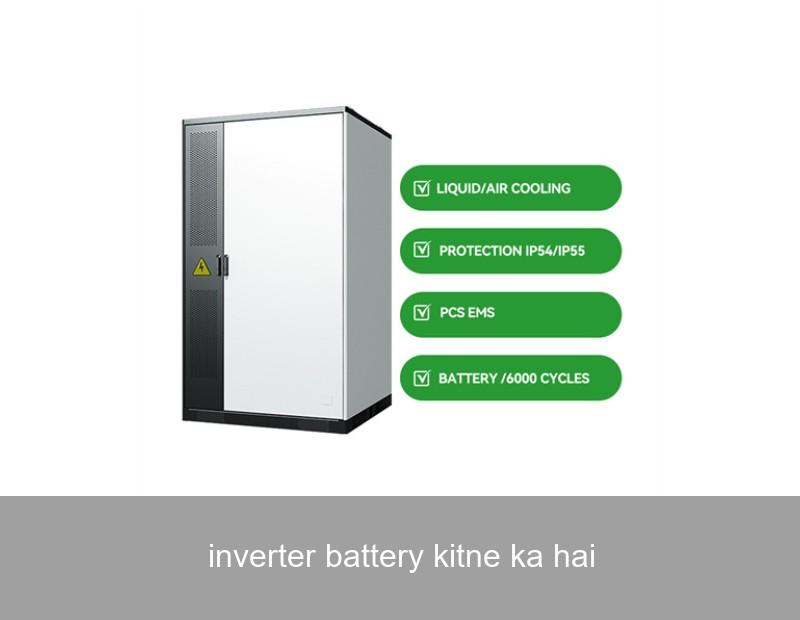
If you're looking into solar power or backup energy for your home or business, the question "inverter battery kitne ka hai?" – or "what is the cost of an inverter battery kit?" – is likely top of mind. It's a smart question, but the answer isn't a single number. The price of a complete, reliable inverter battery system depends on a symphony of factors: your energy needs, the battery's technology and lifespan, and the intelligence of the inverter that manages it all. In today's landscape, it's less about finding the cheapest option and more about understanding the long-term value of a system that provides security, savings, and sustainability. This guide will break down the true cost components and show you how to evaluate an investment that powers your life for years to come.
Table of Contents
- The Real Cost Breakdown: More Than Just a Price Tag
- Why Battery Technology Drives Price and Performance
- Case Study: A Real-World Look at Cost vs. Savings
- Highjoule's Approach: Smart Systems for Predictable Value
- How to Choose the Right System for Your Budget
The Real Cost Breakdown: More Than Just a Price Tag
When asking "inverter battery kit price," most people think of the upfront equipment cost. However, a holistic view reveals three critical cost layers:
- Upfront Capital Cost: This includes the battery modules, the hybrid or solar inverter, battery management system (BMS), wiring, and installation. Prices here vary dramatically based on capacity and technology.
- Operational & Lifetime Cost: This is where value truly separates from price. How efficient is the system? How many cycles will the battery last? A cheaper battery that needs replacement in 3 years is far more expensive than a premium one lasting 10+ years.
- Soft Costs & Value: Don't overlook permitting, design, maintenance, and the software that optimizes energy use. A smart system, like those from Highjoule, includes energy management software that maximizes self-consumption of solar power, directly reducing your electricity bills.
For example, a basic lead-acid battery kit for a home might have a low initial price but a cycle life of only 1,000-1,500 cycles. A modern lithium-ion phosphate (LFP) system, while a higher initial investment, offers 6,000+ cycles and near 100% depth of discharge, delivering a much lower cost per kilowatt-hour over its life.
Why Battery Technology Drives Price and Performance
The heart of your kit is the battery chemistry. Think of it as the engine. The choice here is the single biggest factor in answering "inverter battery kitne ka hai" in terms of long-term value.
| Technology | Typical Cycle Life | Approx. Cost per kWh (Equipment) | Best For |
|---|---|---|---|
| Lead-Acid (Flooded) | 1,000 - 1,500 | $100 - $150 | Low-use backup, budget-conscious upfront cost |
| AGM (Sealed Lead-Acid) | 1,200 - 1,800 | $150 - $250 | Maintenance-free backup, moderate cycling |
| Lithium Iron Phosphate (LFP) | 6,000+ | $400 - $800 | Daily solar cycling, long-term savings, safety |
As you can see, LFP batteries, while commanding a higher initial price, offer a vastly superior lifespan and performance. They are the standard for modern residential and commercial energy storage systems. Highjoule's Residential Energy Vault and Commercial PowerStack series exclusively use LFP chemistry, paired with our proprietary adaptive battery management systems. This ensures each cell operates within its optimal range, extending life and safeguarding your investment. The inverter, too, is crucial. A high-efficiency hybrid inverter (like those integrated into Highjoule kits) minimizes energy loss during conversion from DC (battery/solar) to AC (your appliances), ensuring you get the most out of every stored watt.
Case Study: A Real-World Look at Cost vs. Savings
Let's move from theory to practice with a real example from the European market. Consider a family home in Munich, Germany, with a 8 kW rooftop solar array and rising grid electricity costs (now over €0.40/kWh).
The Challenge: High grid dependence after sunset, leading to substantial electricity bills despite having solar panels.
The Solution: Installation of a 10 kWh integrated inverter-battery system. The family evaluated a lower-cost lead-carbon option against a premium LFP-based system (comparable to Highjoule's HomeSmart Kit).
- Option A (Lower Upfront Cost): €6,500 initial cost. Battery replacement needed at Year 5 (€3,500). Total energy cycled over 10 years: ~18 MWh. Effective cost per kWh stored: ~€0.55.
- Option B (Highjoule-type LFP System): €9,500 initial cost. No replacement needed within 10-year warranty. Total energy cycled: ~36 MWh (due to higher cycle life and depth of discharge). Effective cost per kWh stored: ~€0.26.
Image: A modern home battery installation, similar to integrated kits. Source: Unsplash

By choosing the higher-quality system, the Munich household not only achieved greater energy independence but also saw their effective storage cost drop by more than half. The premium system paid back its initial difference in under 4 years through bill savings alone. This case perfectly illustrates why "kitne ka hai" must be answered with a lifecycle cost analysis, not just an invoice amount. You can explore more on the economics of storage from the U.S. Department of Energy.
Highjoule's Approach: Smart Systems for Predictable Value
At Highjoule, we engineer systems that shift the question from "what is the price?" to "what is the long-term value?" Our kits are designed as integrated solutions, not just boxes of components. For the residential market, our HomeSmart Kit combines a high-efficiency hybrid inverter, LFP battery modules, and our cloud-based EnergyOS platform. This platform learns your consumption patterns, automatically optimizing when to store solar energy, power your home, or even sell back to the grid where permitted, maximizing your financial return.
For commercial and industrial clients, our PowerStack C&I Series offers modular, scalable storage. A business can start with a 30 kWh unit and expand to megawatt-scale as needs grow. This "pay-as-you-grow" model spreads capital expenditure over time, making the answer to "inverter battery kitne ka hai" much more manageable. Our systems are built with grid-support functions like peak shaving, which can dramatically reduce demand charges—a major portion of commercial utility bills. By providing a stable, predictable energy cost, we turn a capital investment into a strategic financial tool.
Image: A containerized battery energy storage system for commercial use. Source: Unsplash

How to Choose the Right System for Your Budget
So, how do you navigate this decision? Follow this practical ladder:
- Audit Your Energy: Look at your utility bill. Identify your daily kWh consumption and peak demand. A professional installer or tools from providers like Highjoule can help analyze this.
- Define Your Goals: Is it total blackout protection, bill reduction, or maximizing solar self-sufficiency? Your goal dictates system size and capability.
- Calculate Total Lifecycle Cost: Request quotes that include not just equipment but installation, software subscriptions (if any), and projected maintenance. Always ask for the projected cost per kWh over the system's warranty period.
- Prioritize Integration & Intelligence: Ensure the inverter, battery, and software are designed to work seamlessly. A disjointed system will underperform. Look for certifications and grid-compliance for your region (like UL 9540 in the US, CE in Europe).
For authoritative, unbiased information on system sizing and safety standards, homeowners can refer to resources like the National Renewable Energy Laboratory (NREL).
Ready to Discover Your System's True Value?
The journey to energy independence isn't about finding the lowest sticker price. It's about investing in a resilient, intelligent system that lowers your cost of energy for decades. What would a predictable, reduced energy bill do for your household budget or your business's operational resilience over the next ten years?
 Inquiry
 Online Chat