


Finding the Best Solar Generator for Home Use: A Guide to Reliable Energy Independence
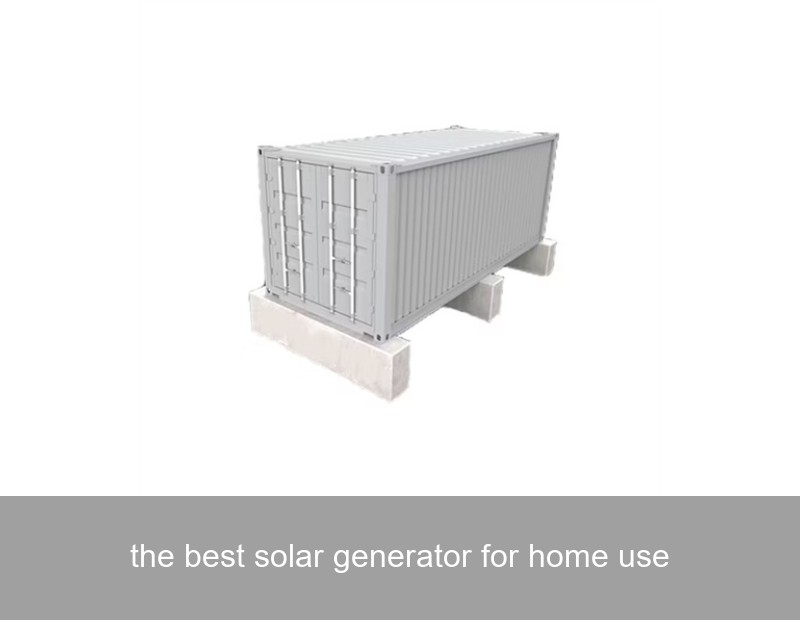
Have you ever watched the lights flicker during a storm and wondered, "What if the power stays off?" Or opened your monthly electricity bill with a sense of dread? You're not alone. Across homes in Europe and the US, the quest for energy resilience and cost control is driving a surge in interest for home solar power solutions. But with so many options, how do you choose the best solar generator for home use? It's not just about a box with a battery; it's about creating a seamless, intelligent, and sustainable power ecosystem for your sanctuary. Let's demystify the journey from fleeting backup to true energy independence.
Table of Contents
- The Modern Power Paradox: More Grid, More Problems
- Beyond the "Generator" Label: What Defines the Best?
- Data Dive: The Real Cost of Power Interruptions
- A Case Study in Resilience: The Johnson Family Home
- Highjoule's Approach: Intelligent Energy Ecosystems
- Key Components of a Superior Home Solar System
- Your Path to Power Independence: Questions to Consider
The Modern Power Paradox: More Grid, More Problems
Our homes are smarter and more electrified than ever, yet the grid delivering that power is facing unprecedented strain. From extreme weather events in California and Texas to grid stability challenges during peak demand in Europe, the assumption of constant, cheap power is eroding. A traditional gas generator is a noisy, polluting, and temporary fix. The true solution lies in harnessing the sun—a silent, abundant, and renewable resource. This shift isn't merely about having a backup; it's about proactively managing where your energy comes from, how it's stored, and how it powers your life, day in and day out.
Beyond the "Generator" Label: What Defines the Best?
The term "solar generator" is often used for portable power stations paired with a panel. For whole-home energy security, we need to think bigger. The best solar generator for home use is, in reality, an integrated solar-plus-storage system. It comprises high-efficiency solar panels, a sophisticated battery storage unit, smart inverters, and intelligent energy management software. The "best" system is defined by:
- Capacity & Power: Can it run your essentials (refrigerator, lights, modem) or your entire home (HVAC, EV charger)?
- Scalability: Can you start now and expand battery capacity later as needs grow?
- Intelligence: Does it learn your usage patterns, optimize for time-of-use rates, and allow remote monitoring?
- Safety & Longevity: Is the battery chemistry stable and durable, with a long warranty?
- Grid Services & ROI: Can it participate in utility programs (where available) to provide additional value?
Data Dive: The Real Cost of Power Interruptions
Let's talk numbers. According to the U.S. Energy Information Administration (EIA), the average U.S. customer experienced just over 7 hours of power interruptions in 2021, with major events driving the duration higher. In the EU, the push for decarbonization is reshaping grid dynamics. The financial impact isn't just spoiled food; it's lost work, potential property damage, and for some, critical health risks. A robust home solar storage system mitigates these risks not as a passive backup, but as an active daily energy manager, reducing your bill while building a buffer against outages.

Image Source: Unsplash - A modern home integrated with solar panels, representing energy independence.
A Case Study in Resilience: The Johnson Family Home, Colorado, USA
Consider the Johnson family in Boulder, Colorado. Facing frequent winter grid instability and rising summer cooling costs, they installed a 10 kW solar array with a 20 kWh integrated battery storage system in early 2022. Their goals were clear: reduce grid dependence, ensure backup for their home office and medical equipment, and cut electricity costs.
The Results (First 12 Months):
| Metric | Result | Impact |
|---|---|---|
| Grid Import Reduction | 82% | Dramatically lower utility bills |
| Outages Mitigated | 4 sustained outages (>4 hrs) | Seamless power for essentials |
| Bill Savings | $1,850 | Accelerating system payback |
| Excess Solar Stored | ~65% of daily production | Used at night, maximizing self-consumption |
"It's peace of mind that has a tangible return," Sarah Johnson noted. "The system automatically switched on during an ice storm, and we didn't miss a beat. Watching our energy app, we've become much more efficient in our usage." This real-world example illustrates the multi-faceted value of a properly sized and intelligently managed system—the hallmark of the best solar generator for home use.
Highjoule's Approach: Intelligent Energy Ecosystems
At Highjoule, with nearly two decades of experience since 2005, we view the home not as a passive consumer but as an active node in a smarter energy network. Our residential solutions, like the Highjoule HES Series, are designed to be the core of your home's energy ecosystem. We go beyond just hardware.
- Highjoule HES (Home Energy System): A modular battery system built with proven, safe lithium iron phosphate (LFP) chemistry. It's scalable from 10 kWh to 30+ kWh, allowing you to start your journey and expand as your needs evolve.
- Intelligent Energy Manager (IEM): The brain of the system. Our proprietary software optimizes energy flow in real-time—prioritizing solar self-consumption, scheduling storage based on weather forecasts and tariff rates, and providing you with intuitive monitoring via a smartphone app.
- Grid Integration & Service: Our systems are designed to be grid-friendly. In regions with supportive programs, they can enable participation in virtual power plants (VPPs) or demand response, potentially generating revenue or credits for you while supporting community grid stability.
For the Johnson family, a system like the HES Series provides not just storage, but control. It intelligently decides when to draw from the grid, when to store solar excess, and when to discharge, maximizing economic and resilience benefits every day.

Image Source: Unsplash - A sleek, modern battery storage unit installed in a home garage.
Key Components of a Superior Home Solar System
To make an informed choice, understand the pillars of a top-tier system:
1. The Battery: The Heart of Your Independence
Look for LFP batteries for their long cycle life (10,000+ cycles) and superior thermal stability. Depth of Discharge (DoD) matters—a 90%+ DoD means you can use almost all the stored energy without harming the battery.
2. The Inverter: The Skilled Interpreter
A hybrid inverter handles both solar conversion and battery management. Efficiency ratings above 97% are key. For existing solar homes, an AC-coupled battery like Highjoule's HES can be added without replacing your current solar inverter.
3. The Software: The Strategic Mind
This is where premium systems separate themselves. Can it integrate weather data? Can you set custom modes (e.g., "Storm Watch" that pre-charges the battery)? Can it receive over-the-air updates for new features?
4. Service & Warranty: The Long-Term Promise
A 10-year performance warranty is standard for quality systems. Ensure the provider has a track record and local support network for installation and maintenance. Highjoule partners with certified installers across Europe and North America to ensure expert setup and service.
Your Path to Power Independence: Questions to Consider
The journey to energy resilience is personal. Before you decide, ask yourself and potential providers these questions:
- What are my critical loads during an outage (e.g., sump pump, medical device, refrigeration), and what total power (kW) and capacity (kWh) do they require?
- Does my local utility offer net metering, time-of-use rates, or battery incentive programs? How can a system optimize for these?
- Is the system expandable? If I buy an EV in two years, can I easily add more battery modules?
- How transparent and user-friendly is the monitoring interface? Can I see real-time flows and historical data?
Choosing the best solar generator for home use is about investing in a platform for your future energy needs—one that saves money, provides security, and supports a sustainable lifestyle. It's a decision that powers more than just your appliances; it powers your peace of mind.
What's the first load you would secure in a blackout, and how would knowing it's always powered change your relationship with energy at home?
 Inquiry
 Online Chat