


Thermal Energy Storage (TES): The Unsung Hero of a Renewable Grid
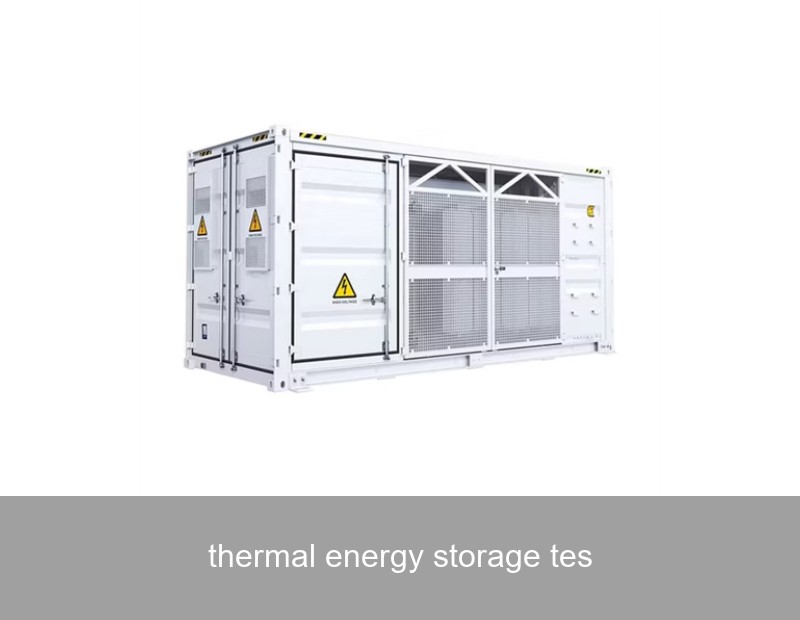
Let's talk about a challenge we all see coming. The sun sets, the wind calms, but our homes, factories, and cities need power around the clock. We're rapidly deploying solar and wind, but their intermittency is the puzzle we must solve. While batteries often steal the headlines, there's a powerful, mature, and highly efficient technology working behind the scenes: Thermal Energy Storage (TES). Simply put, TES captures thermal energy—heat or cold—for use at a later time. Think of it as a giant thermos for an entire district heating system or a massive ice bank cooling a skyscraper. For regions like Europe and the U.S., where decarbonizing heating (a massive part of energy use) is critical, TES isn't just an option; it's a necessity.
Why TES is a Rising Star in the Energy Transition
The numbers speak for themselves. According to the International Energy Agency (IEA), heating and cooling account for nearly half of global final energy consumption. Most of this is still met by fossil fuels. TES provides a key to unlocking greater integration of renewables into this sector. Here’s the compelling logic:
- Phenomenal Efficiency: Storing energy as heat or cold can be incredibly efficient, with round-trip efficiencies often exceeding 90% for well-insulated systems. You lose very little in the "storage" process.
- Massive Scale & Duration: Unlike electrochemical batteries which are optimal for shorter durations (hours), TES systems can be built to store energy for days, weeks, or even seasonally. We're talking about thousands of MWh in a single installation.
- Cost-Effectiveness: The storage media—like water, molten salts, or rocks—are often abundant and inexpensive. This makes the levelized cost of stored energy very attractive for long-duration applications.
- Grid Stability: By shifting the electrical load of heating and cooling systems to off-peak times, TES acts as a giant, flexible demand resource, helping to balance the grid and integrate more variable renewables.
How Does Thermal Energy Storage Work? A Look at the Main Technologies
Thermal energy storage isn't a one-size-fits-all solution. It's a versatile toolbox with different technologies suited for different tasks. Let's break down the three primary categories.
Sensible Heat Storage
This is the most common and commercially mature form of TES. It works by raising or lowering the temperature of a solid or liquid storage medium. The energy is stored in the form of a temperature change ("sensible" heat).
- Media: Hot water tanks (common in homes and districts), molten salts (the standard in concentrated solar power plants), gravel beds, and concrete.
- Best For: District heating/cooling, industrial process heat, large-scale solar thermal power.

Image Source: U.S. Department of Energy (public domain illustration)
Latent Heat Storage
This method is more sophisticated. It uses a Phase Change Material (PCM) that stores energy when it melts (solid to liquid) and releases it when it freezes (liquid to solid). The key advantage? It stores a large amount of energy in a small temperature range—the temperature stays nearly constant during charge/discharge.
- Media: Salt hydrates, paraffin waxes, bio-based esters.
- Best For: Applications needing precise temperature control, like building climate control, thermal management of batteries or electronics, and solar thermal systems for residential use.
Thermochemical Storage
The cutting edge of TES. This involves a reversible chemical reaction that absorbs energy when it goes one way and releases it when it goes back. It offers the highest energy density and enables virtually loss-free long-term storage.
- Media: Sorption processes (e.g., silica gel/water) or chemical reactions (e.g., metal oxides).
- Best For: Seasonal storage (summer heat for winter) and ultra-compact storage systems. This technology is largely in the R&D and pilot phase but holds immense promise.
| Technology | Storage Medium Example | Energy Density | Commercial Maturity | Typical Application |
|---|---|---|---|---|
| Sensible Heat | Water, Molten Salt | Low - Medium | High (Commercial) | District Heating, CSP |
| Latent Heat (PCM) | Salt Hydrates, Paraffin | Medium - High | Medium (Growing Market) | Building HVAC, Electronics Cooling |
| Thermochemical | Silica Gel, Metal Oxides | Very High | Low (R&D/Pilot) | Seasonal Storage, Compact Systems |
From Theory to Reality: A Real-World TES Case Study
Let's move beyond theory to a tangible success story. Consider the Värtan Ropsten district heating system in Stockholm, Sweden. Facing peak demand challenges and aiming to increase efficiency, the local utility, Stockholm Exergi, implemented a massive hot water-based TES tank.
- The Challenge: Manage sharp peaks in heat demand during cold winter days, utilize waste heat from data centers and other sources efficiently, and provide grid balancing services.
- The Solution: A 30,000 cubic meter steel thermal energy storage tank, standing 50 meters tall. It's essentially a giant thermos that stores hot water at up to 98°C.
- The Data & Impact:
- Storage Capacity: ~120 MWh of thermal energy.
- It can cover the heating demand for a large part of the city for several hours during peak times.
- By allowing the combined heat and power (CHP) plants to operate at a more stable and efficient base load, the system reduces fuel consumption and CO2 emissions. It also integrates excess heat from renewable and waste sources that would otherwise be vented.
This project, highlighted in reports by the International Renewable Energy Agency (IRENA), is a textbook example of how sensible heat TES is a pragmatic, powerful tool for urban decarbonization today.
Highjoule's Role in the Integrated Energy Storage Landscape
At Highjoule, we view the energy ecosystem holistically. While our core expertise lies in advanced battery energy storage systems (BESS) for commercial, industrial, residential, and microgrid applications, we recognize that thermal energy storage is a critical and complementary piece of the puzzle. A truly resilient and efficient energy system often leverages multiple storage technologies.
For instance, imagine a modern manufacturing plant. It needs electricity for its machinery (optimally served by our Highjoule BESS for load shifting and backup power) and high-temperature heat for its industrial processes. An on-site solar thermal array coupled with a molten salt TES system could efficiently meet that thermal demand. Our intelligent energy management systems are designed to orchestrate such hybrid solutions, ensuring the right type of energy is stored and dispatched at the right time for maximum economic and environmental benefit.
For residential and commercial buildings, the synergy is even clearer. Our Highjoule Home Energy Hub can intelligently manage a heat pump in conjunction with a water-based TES tank or PCM-enhanced building materials. By pre-heating or pre-cooling the thermal storage during off-peak, low-cost, or high-solar periods, we dramatically reduce a building's operational costs and carbon footprint while maintaining perfect comfort. We don't just provide storage hardware; we provide integrated, intelligent sustainable power solutions that understand and leverage the strengths of all storage vectors.
The Future of TES: What's Next?
The trajectory for thermal energy storage is incredibly promising. We're seeing exciting trends like the development of higher-temperature PCMs for industrial applications, the first commercial pilots of thermochemical systems for seasonal storage, and the digital integration of TES into virtual power plants (VPPs). As carbon pricing mechanisms strengthen and the drive to electrify everything meets grid constraints, the value of large-scale, long-duration, and highly efficient storage like TES will only soar.
So, here's a question to ponder: As your business or community plans its path to net-zero, have you considered where your thermal demands—be it for heating, cooling, or industrial processes—fit into the equation? Could capturing and time-shifting that thermal energy be the key to unlocking deeper renewable penetration and significant cost savings?
 Inquiry
 Online Chat