


Why a Three Phase Inverter for Solar Power is Essential for Modern Homes and Businesses
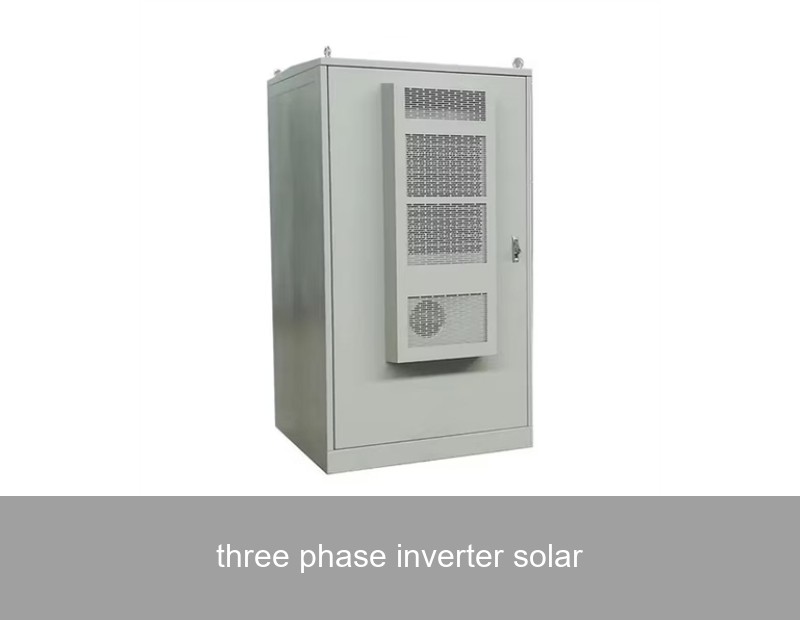
If you're considering a solar power system for a larger home, a farm, or a commercial property, you've likely encountered the term "three phase inverter." Unlike the common single-phase inverters found in many residential setups, a three phase inverter for solar is designed to handle higher power loads and integrate seamlessly with three-phase electrical grids, which are the standard for commercial and industrial power distribution across Europe and the United States. This technology isn't just for factories; it's becoming a critical component for energy-intensive homes, agricultural operations, and any site aiming for true energy independence and grid stability. In this article, we'll demystify three-phase solar technology and explore why it might be the smartest upgrade for your energy system.
Table of Contents
- What is a Three Phase Inverter?
- Three-Phase vs. Single-Phase: Key Differences
- Core Benefits of a Three Phase Solar Inverter
- Real-World Impact: A Case Study from Germany
- Choosing the Right Three Phase Inverter System
- How Highjoule Powers Advanced Three-Phase Solutions
What is a Three Phase Inverter?
Let's start with the basics. Your electrical grid delivers power using alternating current (AC), which oscillates in a wave-like pattern. A single-phase system uses one alternating wave. A three-phase system, as the name suggests, uses three separate waves, each offset by 120 degrees. This creates a much smoother, more consistent, and more powerful flow of electricity. A three phase inverter for solar is the intelligent bridge between your solar panels and this grid. Its primary job is to convert the direct current (DC) produced by your photovoltaic (PV) panels into high-quality, synchronized three-phase AC power that can either be used on-site or fed back into the public grid.

Image Source: Unsplash (Representative image of electrical concepts)
Three-Phase vs. Single-Phase: Key Differences
Choosing between single-phase and three-phase often depends on your property's existing electrical infrastructure and your energy needs. Here’s a simple comparison:
| Feature | Single-Phase Inverter | Three Phase Inverter |
|---|---|---|
| Power Supply | One alternating current wave | Three interlinked current waves |
| Typical Application | Smaller homes, lower power loads (<~7 kW) | Larger homes, farms, workshops, commercial buildings (>~5 kW) |
| Load Balancing | Can cause imbalance on three-phase grids | Distributes solar generation evenly across all three phases |
| Motor Performance | Can cause humming or reduced efficiency in heavy-duty motors | Provides smooth, efficient operation for pumps, compressors, and machinery |
| Grid Support | Limited capabilities | Advanced features like reactive power control for grid stability |
If your property is already connected to a three-phase grid—common for any building with high-power equipment—adding a single-phase solar system can actually create an imbalance. This can lead to inefficiencies and even incur penalties from some grid operators. A three-phase system generates cleanly across all phases, keeping everything in harmony.
Core Benefits of a Three Phase Solar Inverter
Upgrading to a three-phase solar solution isn't just about compatibility; it unlocks significant advantages.
- Higher Efficiency & Power Density: Three-phase systems transmit power more efficiently with less current per phase, reducing energy loss in cables. This means you can often use thinner, more cost-effective cabling for your solar installation.
- Superior Performance for Heavy Loads: Do you have an electric vehicle charger, a heat pump, or agricultural irrigation pumps? These devices run smoother, more efficiently, and with less strain on a balanced three-phase supply from your solar inverter.
- Future-Proofing & Grid Services: Modern three-phase inverters, like those developed by Highjoule, are packed with smart grid functions. They can provide voltage regulation and frequency support, turning your solar system into an asset that helps stabilize the local community grid—a feature increasingly valued by utilities.
- Optimized Self-Consumption: With higher and more consistent power output, a larger portion of the energy you generate can be used directly on-site, maximizing your savings on electricity bills. Pair it with a battery storage system, and your independence grows exponentially.
Real-World Impact: A Case Study from Germany
Let's look at concrete data. A medium-sized dairy farm in Bavaria, Germany, was facing high and unpredictable energy costs. The farm operated on a three-phase grid and had significant loads: milking machines, cooling tanks, and ventilation systems running almost continuously.
- Challenge: High grid consumption, especially during daytime operations, and grid imbalance from a proposed single-phase solar system.
- Solution: Installation of a 45 kWp solar array coupled with a robust three-phase string inverter system and a 40 kWh battery storage unit. The system was specifically designed to prioritize self-consumption and provide stable power for sensitive agricultural machinery.
- Results (12-month period):
- Grid Independence: Self-consumption rate of solar power increased to 78% (from a typical ~30-40% without storage).
- Cost Savings: Annual electricity bill reduced by approximately €8,500.
- Grid Relief: The three-phase inverter's balanced feed-in eliminated phase imbalance issues noted by the local grid operator (Netze BW).
- Reliability: The stable voltage output protected sensitive control electronics for the milking parlor, reducing maintenance calls.
This case mirrors the findings of the Fraunhofer Institute for Solar Energy Systems (ISE), whose research consistently highlights the grid-stabilizing and economic benefits of intelligently integrated, three-phase renewable energy systems in the European context.

Image Source: Unsplash (Representative image of agricultural solar installation)
Choosing the Right Three Phase Inverter System
Not all three-phase inverters are created equal. When evaluating your options, consider these critical factors:
- Power Rating & Scalability: Match the inverter's capacity to your PV array size and future expansion plans. Modular systems offer great flexibility.
- Battery Readiness & Hybrid Functionality: Can the inverter seamlessly integrate a battery storage system? A true hybrid three-phase inverter manages PV, battery, and grid power in one optimized unit, a cornerstone of Highjoule's product philosophy.
- Smart Management & Monitoring: Look for a system with intuitive, cloud-based monitoring that provides real-time data on production, consumption, and system health. This is key to maximizing ROI.
- Grid Compliance & Certifications: Ensure the inverter meets all local grid codes (like VDE-AR-N 4105 in Germany or UL 1741 SA in the U.S.), which are mandatory for permission to operate.
How Highjoule Powers Advanced Three-Phase Solutions
At Highjoule, we've been engineering robust energy solutions since 2005. We understand that a three phase inverter for solar is more than just a component; it's the intelligent heart of a modern energy system. Our H-Power Quantum Series of three-phase hybrid inverters is designed for demanding commercial, industrial, and large residential applications.
These inverters are built with the future in mind: they are inherently battery-ready, feature advanced grid-support functions, and are managed by our proprietary EnergyOS™ platform. EnergyOS™ uses AI-driven forecasting to optimize when to store solar energy, when to use it, and when to interact with the grid, all while ensuring perfect phase balance. For larger-scale projects like microgrids or community solar, our containerized BESS (Battery Energy Storage Systems) solutions integrate seamlessly with multiple three-phase inverters to provide megawatt-scale power and stability.
Our approach is to provide a complete, smart, efficient, and sustainable power solution—where the three-phase inverter acts as the crucial command center, turning unpredictable solar generation into a reliable, grid-friendly asset. You can learn more about the technical standards that guide our development from resources like the U.S. Department of Energy's Solar Energy Technologies Office.

Image Source: Unsplash (Representative image of professional electrical installation)
Your Energy Future
The transition to renewable energy is as much about quality and intelligence as it is about quantity. A three-phase solar system represents a mature, powerful, and grid-responsible step in that journey. It ensures that your investment in solar power delivers not only maximum savings but also maximum reliability and a positive impact on your local energy infrastructure.
Is your current electrical setup silently limiting the potential of your solar generation? What would balancing your power phases and adding smart control do for your operational costs and energy resilience?
 Inquiry
 Online Chat