


Thunder Sky Lithium Battery: A Deep Dive into a Pioneering Energy Storage Technology
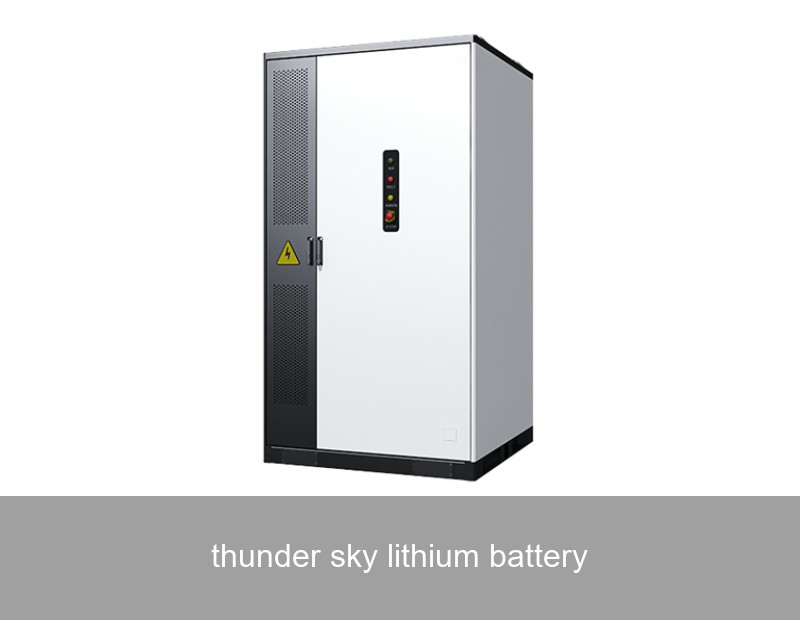
If you've been exploring the world of energy storage, whether for an off-grid cabin, a commercial solar installation, or an electric vehicle, you've likely stumbled upon the name "Thunder Sky lithium battery." It's a name that carries weight, evoking a sense of raw power and pioneering spirit. But what exactly is a Thunder Sky battery, and why does it still resonate in today's market flooded with lithium-ion options? More importantly, what should you consider when looking for a modern, reliable, and intelligent successor to these foundational technologies? Let's unpack the legacy, the data, and the future-forward solutions that build upon this important chapter in energy storage history.
Table of Contents
- The Thunder Sky Legacy: Pioneering the Lithium Path
- Lithium-Ion Evolution: From LFP to NMC and Beyond
- Real-World Performance: A Case Study from California
- Beyond the Cell: The Critical Role of the BMS and System Design
- Modern Solutions for Demanding Applications
- Choosing Your Storage Partner: Key Questions to Ask
The Thunder Sky Legacy: Pioneering the Lithium Path
Thunder Sky (now rebranded as Winston Battery) was one of the early trailblazers in commercial lithium-iron phosphate (LFP) battery technology. In the late 2000s and early 2010s, when lead-acid was still dominant, Thunder Sky offered a compelling alternative: large-format, cylindrical LFP cells known for their exceptional cycle life and inherent safety. Their chemistry, lithium iron phosphate, is thermally stable and less prone to thermal runaway compared to other lithium-ion variants. This made, and continues to make, LFP a preferred choice for stationary storage. The "Thunder Sky lithium battery" became a go-to for DIY enthusiasts and early adopters in renewable energy projects due to its accessibility and perceived robustness.
However, technology never stands still. While the foundational LFP chemistry remains excellent, the way we integrate, manage, and optimize these cells has undergone a revolution. Early systems often required extensive external battery management systems (BMS), careful balancing, and custom-built enclosures. Today's leading energy storage providers deliver not just advanced cells, but fully engineered, plug-and-play systems where intelligence, safety, and longevity are baked in from the start.
Lithium-Ion Evolution: From LFP to NMC and Beyond
The core strength of Thunder Sky was its use of LFP chemistry. Let's compare the main lithium-ion types used in storage today:
| Chemistry | Key Advantages | Typical Best Applications |
|---|---|---|
| LFP (Lithium Iron Phosphate) | Superior safety, long cycle life (3,000-6,000+ cycles), stable performance, cobalt-free. | Residential energy storage, commercial & industrial ESS, backup power. |
| NMC (Nickel Manganese Cobalt) | Higher energy density, excellent performance across a wide temperature range. | Electric vehicles, applications where space/weight is a critical constraint. |
For most stationary storage applications—powering homes, businesses, or microgrids—LFP has emerged as the industry's chemistry of choice. Its safety profile aligns perfectly with the need for worry-free installation in buildings, and its longevity ensures a strong return on investment. Companies like Highjoule have embraced this evolution. While we honor the pioneering work of brands like Thunder Sky, our Highjoule H-Series commercial storage systems utilize the latest generation of prismatic LFP cells. These are integrated with a proprietary, adaptive battery management system that maximizes cycle life, enables precise state-of-charge monitoring, and ensures every cell operates within its ideal window.

Image Source: Unsplash (Representative image of a modern energy storage system)
Real-World Performance: A Case Study from California
Let's move from theory to practice. The true test of any storage technology is in the field. Consider a recent project for a mid-sized winery in Sonoma County, California. The challenge: high demand charges from the grid, unreliable power during wildfire prevention shutdowns, and a desire to maximize their rooftop solar investment.
- Phenomenon: Spiking energy costs and operational vulnerability due to grid outages.
- Data: The site had a 250kW solar array but was exporting excess energy in the afternoon only to buy it back at a premium in the evening. Demand charges often constituted 40% of their monthly utility bill.
- Case Study: The winery installed a Highjoule H-500 integrated storage system (500kWh capacity, 250kW power). The system was configured for peak shaving and backup power. During the 2023 fire season, the grid was intentionally shut off for 36 hours. The Highjoule system seamlessly kicked in, maintaining critical cooling systems and security, preventing an estimated $85,000 in product and operational losses.
- Insight: The financials were compelling. By strategically discharging the battery during peak price periods, the winery reduced its demand charges by an average of 28%. Combined with solar self-consumption optimization, the project achieved a payback period of under 5 years. This case underscores that modern storage isn't just about the battery cells; it's about the software intelligence that decides when to charge, when to discharge, and how to respond to grid events in milliseconds.
Beyond the Cell: The Critical Role of the BMS and System Design
This is where the legacy of standalone batteries meets modern reality. A Thunder Sky lithium battery, like any individual cell, is a component, not a solution. The true magic—and reliability—lies in the system architecture. Think of it like the difference between a powerful engine and a complete, safety-tested, computer-managed car.
At Highjoule, we engineer our systems with a layered approach to safety and performance:
- Cell-Level: Automotive-grade LFP cells with built-in safety vents and robust mechanical design.
- Module-Level: Active balancing BMS boards continuously monitor voltage, temperature, and current for each cell group.
- System-Level: A master controller oversees the entire unit, managing thermal systems, grid interconnection, and fire suppression protocols. All this data is accessible via our Highjoule Energy Cloud platform, giving operators a real-time window into system health and performance.
This holistic design philosophy ensures that the end-user experiences simple, set-and-forget operation, not the complex maintenance and monitoring that early DIY battery banks required. For a deeper look at lithium-ion battery safety standards, the U.S. Department of Energy maintains an excellent resource on lithium-ion battery safety.
Modern Solutions for Demanding Applications
Building on the reliable foundation of LFP chemistry, companies like Highjoule now offer tailored solutions for every segment of the market. Whether you're a homeowner seeking energy independence, a factory manager needing to cap energy costs, or a developer building a resilient microgrid, the technology has matured.
Our product suite is designed to meet these diverse needs:
- For Residential & Small Commercial: The Highjoule Unity Wall Mount Series offers scalable storage from 10kWh to 30kWh, with integrated hybrid inverters for seamless solar coupling and backup power. It's the modern, all-in-one answer to the DIY battery bank of the past.
- For Commercial & Industrial (C&I): The H-Series containerized or skid-mounted systems provide from 100kWh to multi-MWh capacities. They feature advanced grid-support functions and are engineered for the highest duty cycles, directly addressing the peak shaving and backup needs highlighted in our winery case study.
- For Microgrids & Utilities: Our M-Series modular megawatt-scale solutions provide grid stability, renewable firming, and deferred infrastructure investment. These systems are the ultimate evolution, managing energy flows for entire communities.

Image Source: Unsplash (Representative image of an engineer monitoring an industrial energy system)
Choosing Your Storage Partner: Key Questions to Ask
So, if you're evaluating energy storage today, your focus should shift from "which cell brand" to "which system provider." The legacy of Thunder Sky lithium batteries teaches us the value of durable chemistry. The future, however, is defined by intelligent integration. When speaking with potential providers, consider asking:
- What is the expected cycle life (with associated warranty) at my specific daily depth of discharge?
- How does the BMS actively ensure cell balance and prevent premature aging?
- Can the system software be configured for my specific utility rate structure and backup needs?
- What is the total cost of ownership, including installation, maintenance, and expected degradation over 10+ years?
For instance, Highjoule systems come with a performance warranty that guarantees a certain residual capacity after 10 years, backed by robust cycle life testing data available to our clients. Independent testing by organizations like the National Renewable Energy Laboratory (NREL) also provides invaluable benchmarks for battery performance.
The journey from pioneering products like the Thunder Sky lithium battery to today's smart storage ecosystems has been remarkable. It’s a shift from components to solutions, from manual management to autonomous optimization. What specific energy challenge—be it rising costs, reliability concerns, or sustainability goals—is driving you to explore storage today, and how can a truly integrated system turn that challenge into an opportunity?
 Inquiry
 Online Chat