


Unlocking Resilience and Savings: The Strategic Power of the TigFox Energy Storage Cabinet
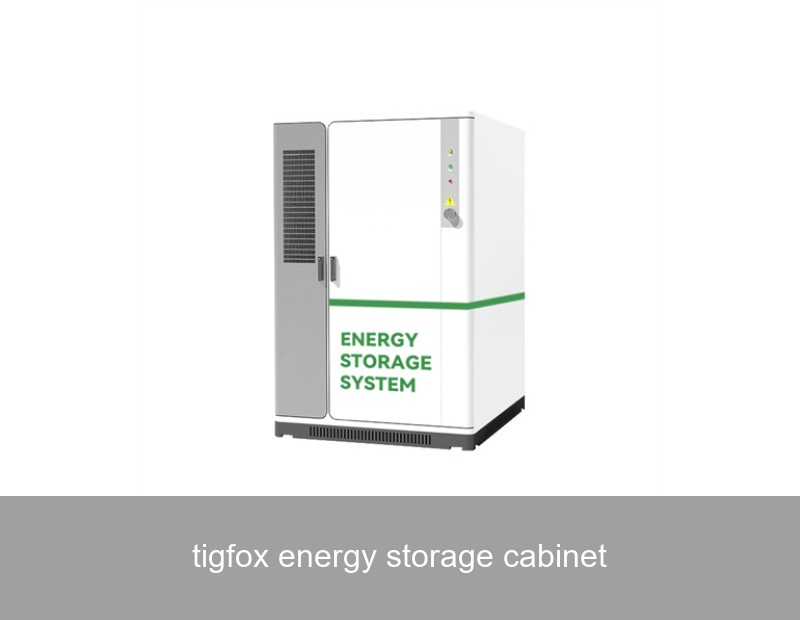
Let's be honest, if you're managing a commercial or industrial facility in Europe or the US, your relationship with the electricity grid is getting complicated. You're likely facing volatile energy prices, increasing pressure to meet sustainability goals, and growing concerns about grid reliability. In this landscape, a new class of asset is emerging as a strategic cornerstone: the commercial-scale energy storage cabinet. And when we talk about high-performance, intelligent solutions in this space, one name consistently rises to the top—the TigFox energy storage cabinet. But what exactly is it, and why is it becoming a non-negotiable for forward-thinking businesses? Think of it not just as a large battery, but as an intelligent energy asset, a silent guardian for your operations, and a savvy financial manager for your utility bills.
The Modern Grid Challenge: Why Energy Storage is No Longer Optional
The phenomenon is clear. Renewable energy sources like solar and wind are essential for decarbonization, but their intermittent nature creates a mismatch between supply and demand. This leads to two major issues for businesses: price instability and grid stress. During sunny or windy periods, energy can be cheap or even free, but during peak demand hours (like hot summer evenings when solar production drops), prices skyrocket. Furthermore, aging grid infrastructure is struggling under these new load patterns, leading to more frequent and costly power quality events or outages.
Let's look at the data. According to the U.S. Energy Information Administration, commercial electricity prices have shown significant volatility, with peak rates often being 200-300% higher than off-peak rates in many deregulated markets. In Europe, the 2022 energy crisis dramatically highlighted the risks of price exposure. A report by the International Energy Agency (IEA) underscored how energy storage is critical for enhancing grid flexibility and security. For a factory, data center, or supermarket, a single hour of outage can mean tens of thousands in lost revenue or spoiled goods.
This is the precise problem the TigFox energy storage cabinet is engineered to solve. It acts as a buffer, allowing businesses to capitalize on these market dynamics rather than be victimized by them.
Inside the TigFox: More Than Just a Battery Box
So, what makes a TigFox cabinet different from a simple rack of batteries? It's the seamless integration of hardware, software, and deep application knowledge. Let's break down its core components:
- High-Density, LFP Battery Modules: At its heart are Lithium Iron Phosphate (LFP) cells, chosen for their exceptional safety profile, long cycle life (typically over 6,000 cycles), and thermal stability. These modules are densely packed to maximize energy capacity within a compact footprint.
- Intelligent Power Conversion System (PCS): This is the brain of the operation. A bi-directional inverter efficiently converts DC battery power to AC power for your facility and vice-versa. The TigFox's PCS is renowned for its high efficiency (>98%), ensuring minimal energy is lost in the conversion process.
- Integrated Thermal Management: A patented, liquid-cooling system quietly and precisely maintains the optimal temperature for the battery cells. This is crucial for maximizing lifespan, performance, and safety, especially in harsh environments.
Image Source: Unsplash - Representative image of advanced thermal management in industrial equipment.
- Highjoule Energy Management System (EMS): This is the true differentiator. Our cloud-based AI software analyzes real-time electricity prices, weather forecasts, your load patterns, and grid signals. It autonomously decides when to charge (during low-cost periods or from your solar panels) and when to discharge (during peak price hours or a grid outage), optimizing for cost savings or resilience automatically.
In essence, the TigFox transforms static battery storage into a dynamic, revenue-generating, and risk-mitigating asset.
Key Specifications of a Standard TigFox 500 Series Cabinet
| Parameter | Specification |
|---|---|
| Usable Energy Capacity | Up to 500 kWh per cabinet |
| Continuous Power Output | 250 kW (AC) |
| Round-Trip Efficiency | > 96% (AC to AC) |
| Battery Chemistry | Lithium Iron Phosphate (LFP) |
| Expected Cycle Life | > 6,000 cycles (to 80% capacity) |
| Communication & Control | Grid-forming capable, MODBUS, CAN, Ethernet, Cloud EMS |
| Operating Temperature | -10°C to 50°C (with active thermal management) |
From Theory to Practice: A TigFox Case Study in California
Let's move from specifications to real-world impact. Consider a mid-sized food cold storage facility in California's Central Valley. Their challenges were twofold: crippling demand charges from the utility (fees based on their highest 15-minute power draw each month) and the ever-present threat of Public Safety Power Shutoffs (PSPS) during wildfire season, which could spoil millions of dollars worth of inventory.
In 2023, they deployed a Highjoule TigFox system consisting of four interconnected cabinets, providing a total of 2 MWh of storage and 1 MW of power. The system was integrated with their existing rooftop solar. Here's what happened:
- Financial Performance: The TigFox's EMS was programmed for peak shaving. It discharges battery power during the facility's short periods of highest electrical draw, effectively "flattening" their demand profile. The result? A 32% reduction in monthly demand charges, translating to annual savings of over $180,000. Furthermore, through solar self-consumption optimization, they increased the usage of their own solar generation from 55% to over 90%.
- Resilience Proven: During two separate PSPS events in the fall of 2023, the TigFox system seamlessly islanded the facility from the grid. Critical refrigeration loads were powered for over 8 hours until grid power was restored, preventing catastrophic loss.
This case, validated by California Public Utilities Commission incentive program data, perfectly illustrates the dual-value proposition: immediate ROI through bill management and invaluable insurance against outages.
Highjoule's Role: Engineering Confidence into Every TigFox Cabinet
Since 2005, Highjoule has been at the forefront of the energy transition. Our journey from specialized components to fully integrated, intelligent storage systems like the TigFox cabinet is driven by a single mission: to provide our commercial and industrial partners with unwavering energy confidence. We don't just sell hardware; we deliver a comprehensive energy solution.
Our service wraps around the TigFox product for its entire lifecycle:
- Pre-Sales Feasibility & Design: Our experts model your load profile, analyze local utility rates, and design a system for maximum financial and operational benefit.
- Seamless Integration: We ensure the TigFox works in harmony with your existing infrastructure—be it solar PV, generators, or complex building management systems.
- Long-Term Performance Assurance: With remote monitoring, predictive maintenance alerts, and performance guarantees, we act as an extension of your operations team, ensuring your TigFox cabinet delivers value for decades.
For a manufacturing plant in Germany looking to stabilize energy costs or a hospital in Texas prioritizing backup power, the TigFox is more than a product—it's a partnership with a global technology leader.
The Future Outlook for C&I Energy Storage
The trajectory is unmistakable. As grids evolve and markets for grid services (like frequency regulation) open up, the TigFox energy storage cabinet is poised to become an even more versatile asset. Future software updates could allow a single system to stack multiple value streams: saving on bills, providing emergency backup, and even selling services back to the grid to generate revenue, all managed autonomously by AI.
The question is no longer if energy storage will become a standard feature for commercial and industrial sites, but when and with which partner. In a world of increasing electrical uncertainty, can your business afford to leave both savings and resilience on the table?
What would a 25% reduction in your annual energy spend do for your operational budget, and what is the true cost of a one-hour power interruption to your core business?
 Inquiry
 Online Chat