


Which Inverter is Best for a Home? Your Guide to Smarter Solar Energy
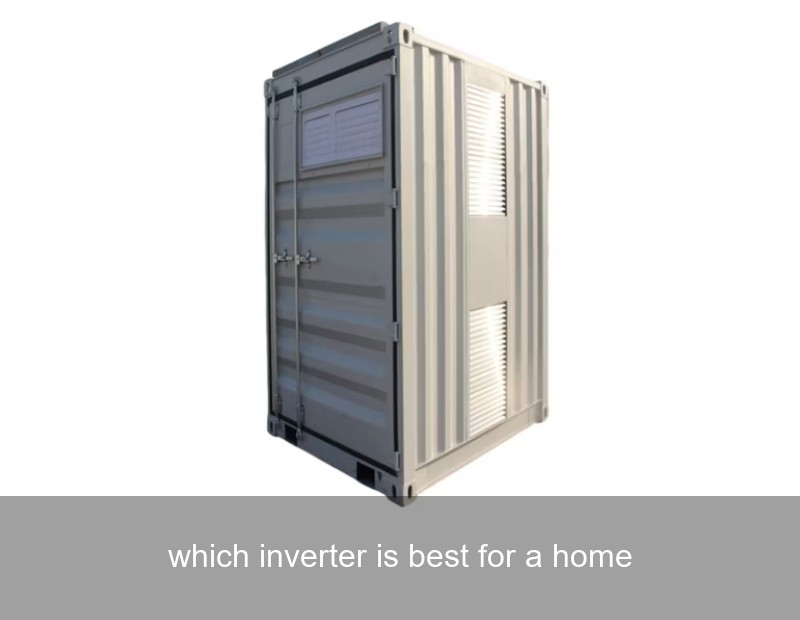
So, you've decided to harness the sun's power for your home. You're researching panels, calculating savings, and dreaming of lower electricity bills. But in the midst of all this, a crucial question arises: which inverter is best for a home solar setup? It's the unsung hero of your system, and choosing the right one can be the difference between good and great performance for decades. Let's demystify this critical component together.
The Inverter: The Heart of Your Home Solar System
Think of your solar panels as diligent workers producing raw materials (Direct Current, or DC electricity). Your home appliances, however, speak a different language (Alternating Current, or AC). The inverter is the master translator and manager. Its primary job is to convert DC to AC, but modern inverters do so much more. They maximize energy harvest, monitor system health, and often serve as the brain of your home's entire energy ecosystem. Choosing the best one isn't just about conversion; it's about optimization, resilience, and future-proofing your investment.

Source: Unsplash (Representative image of a modern inverter installation)
The Three Main Contenders: A Head-to-Head Comparison
To answer "which inverter is best for a home," we first need to understand the players. Each has its own philosophy on managing your solar power.
String Inverters: The Tried-and-True Workhorse
This is the traditional, cost-effective option. All your panels are wired in a series into one or two central inverters.
- Pros: Lower upfront cost per watt, simple design with fewer components, high efficiency under ideal, uniform conditions.
- Cons: The entire "string" of panels performs at the level of the weakest panel. Shade, dirt, or panel mismatch can significantly reduce overall output. Offers limited panel-level monitoring.
- Best for: Homes with large, unshaded roofs where all panels face the same direction.
Microinverters: The Independent Performers
Here, each solar panel gets its own small inverter attached directly to the back of the module.
- Pros: Panel-level maximum power point tracking (MPPT) means shade or debris on one panel doesn't affect its neighbors. Enhanced safety with no high-voltage DC running to the roof. Excellent, granular monitoring for each panel.
- Cons: Higher initial cost. Inverters are on the roof, which can make servicing slightly more complex (though warranties are typically 25 years).
- Best for: Complex roofs with multiple angles, partial shading from trees or chimneys, and homeowners who desire maximum production and detailed data.
DC Power Optimizer Systems: The Hybrid Approach
A blend of both worlds. A power optimizer is attached to each panel (like a microinverter), but it conditions the DC electricity before sending it to a central string inverter.
- Pros: Panel-level optimization to mitigate shading issues, combined with the cost and efficiency benefits of a central inverter. Offers panel-level monitoring and safe, rapid shutdown capabilities.
- Cons: Slightly more complex than a pure string system. Still relies on a single central inverter unit, which is a potential single point of failure.
- Best for: Homeowners seeking a balance between performance optimization and cost, especially in moderately shaded environments.
| Feature | String Inverter | Microinverters | DC Power Optimizers |
|---|---|---|---|
| Initial Cost | Lowest | Highest | Moderate |
| Shade Tolerance | Poor | Excellent | Very Good |
| Panel-Level Monitoring | No (System-level only) | Yes | Yes |
| System Expansion Ease | Difficult | Very Easy | Moderate | Typical Warranty | 8-12 years | 20-25 years | 20-25 years (optimizers) |
Key Factors to Answer "Which Inverter is Best for a Home?"
Your roof and lifestyle hold the answer. Ask yourself:
- Roof Geometry & Shading: Is your roof simple and sunny, or a puzzle of angles with afternoon shade from a majestic oak? Shading is the primary driver towards microinverters or optimizers.
- Future Plans: Planning to add more panels later? Microinverter systems are famously modular and easy to expand.
- Monitoring Desire: Do you want to see the performance of every individual panel on your phone, or is a whole-system total enough?
- The Battery Question: This is critical. If you're considering adding battery storage now or later, you need a hybrid inverter or a system designed to integrate with a separate battery inverter. This is where the game changes from just solar to a full home energy storage system.
Real-World Impact: A Case Study from California
Let's look at data. A 2022 analysis by the National Renewable Energy Laboratory (NREL) compared system performance. In one California home with a roof split between east and west-facing sections and minor chimney shading, the difference was clear:
- String Inverter System: Estimated annual production: 8,200 kWh. The west-facing array's afternoon output was dragged down by the lower-performing east-facing side in the morning due to string configuration.
- Module-Level Power Electronics (MLPE) System (Microinverters/Optimizers): Estimated annual production: 8,950 kWh. That's a 9% increase in energy harvest—just by choosing the right inverter technology for the roof's conditions. Over 25 years, that extra energy represents significant financial savings and greater energy self-sufficiency.
This case underscores that the "best" inverter isn't an abstract concept; it's the one that matches your home's unique fingerprint.
Beyond the Inverter: The Role of a Complete Energy Ecosystem
Today, the question "which inverter is best for a home" is evolving. With rising electricity prices and grid instability, homeowners are looking beyond solar to solar-plus-storage. The best inverter is increasingly one that seamlessly integrates with a high-performance battery. This combination allows you to store excess solar energy for use at night, during outages, or during peak rate periods, maximizing your independence and ROI.

Source: Unsplash (Representative image of a home energy storage setup)
The Highjoule Solution: Intelligent Energy Management
This is where Highjoule's expertise transforms the equation. We don't just see an inverter; we see the central nervous system of your home's energy. For homeowners in Europe and the US seeking true resilience and control, our HES (Home Energy System) Series provides the answer.
At its core is Highjoule's Intelligent Hybrid Inverter, designed from the ground up for solar-plus-storage. It combines the high-efficiency conversion of a state-of-the-art inverter with advanced grid management and battery communication. But we go further. Our system includes:
- Highjoule Lithium-Ion Battery Banks: Scalable storage with high cycle life and safety, managed by our proprietary battery management system (BMS).
- Highjoule Energy Management System (EMS): The true brain. This software platform learns your energy consumption patterns, integrates with time-of-use utility rates, and automatically decides the most economical flow of energy—whether to power your home, charge the battery, or export to the grid.
- Seamless Integration: Whether paired with premium solar panels using microinverters or optimizers, the Highjoule HES creates a cohesive, intelligent whole that is greater than the sum of its parts.
For example, during a grid outage, our system doesn't just provide backup power. It can island critical circuits, prioritize solar charging of the battery, and ensure your essential loads stay on for days, not just hours.
Your Next Step Towards Energy Independence
The journey to finding the best inverter for your home starts with looking at your roof, your energy bills, and your goals. But it culminates in a broader vision: a home that not only generates clean energy but manages it intelligently for maximum savings, comfort, and security.
What specific challenge does your home's energy profile present—is it shade, high peak rates, or a desire for unwavering backup power—and how could an intelligent system be designed to solve it?
 Inquiry
 Online Chat