


Navigating Sweden's Energy Future: What Makes a Top Hybrid BESS?
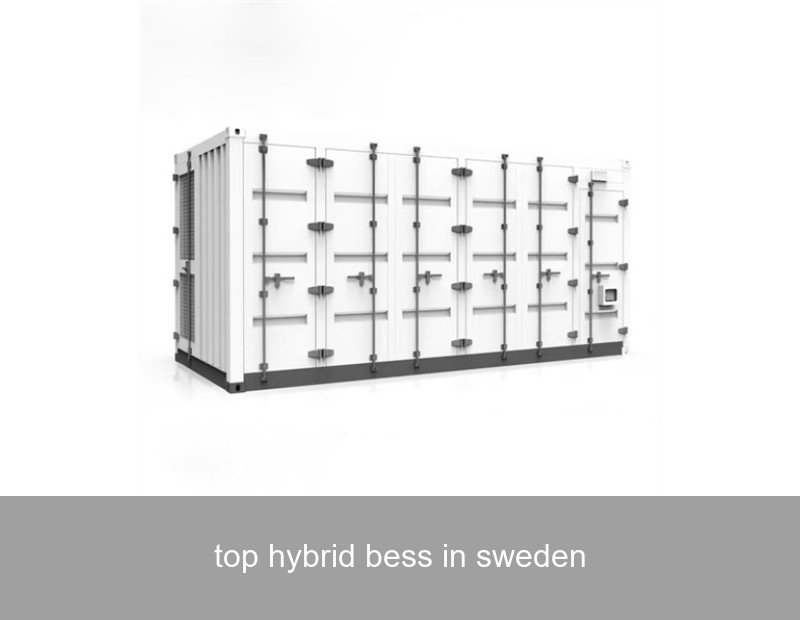
Sweden stands at a fascinating crossroads. With ambitious climate goals, a power grid increasingly fed by variable wind and solar, and a growing need for grid stability, the quest for intelligent energy solutions has never been more critical. For businesses, municipalities, and energy communities across the country, one technology is rising to the top of the conversation: the top hybrid Battery Energy Storage System (Hybrid BESS). But what truly defines a "top" system in the Swedish context? It's more than just batteries; it's about intelligent integration, resilience, and maximizing the return on every kilowatt-hour. Let's explore the landscape and discover how the right Hybrid BESS is becoming the cornerstone of a sustainable and profitable energy strategy in Sweden.
Table of Contents
The Swedish Energy Challenge: More Renewables, New Complexities
Sweden is a global leader in renewable energy, with nearly 50% of its electricity coming from renewables, primarily hydropower and wind. The push towards 100% renewable electricity generation is relentless. However, this success brings its own set of challenges. Wind power is inherently intermittent, and while hydropower is flexible, seasonal variations and environmental considerations limit its capacity for balancing. This creates volatility in the grid—periods of surplus energy and periods of potential shortage.
For an industrial facility, this volatility can mean higher energy costs during peak times and missed opportunities when prices are low or even negative. For a municipality with solar-powered public buildings, it means not being able to use that solar energy at night. The phenomenon is clear: a decarbonized grid needs a smart, responsive backbone to remain stable and efficient.

Image: A Swedish landscape showcasing the mix of wind and solar power. Source: Unsplash
What is a Hybrid BESS? Beyond Simple Storage
A Hybrid BESS is not just a battery bank. Think of it as the intelligent conductor of your energy orchestra. It seamlessly integrates multiple energy sources—like solar PV, wind, or even a backup generator—with a large-scale battery storage system, all managed by a single, sophisticated software platform. This "hybrid" controller makes real-time decisions: store solar energy, discharge to avoid peak grid fees, provide backup power, or even sell services to the national grid.
The data is compelling. According to analysis by BloombergNEF, co-locating storage with renewables can increase the value of a solar or wind project by 20-30% by enabling more controlled and market-optimized energy delivery. In Sweden, where electricity prices can fluctuate significantly, this ability to arbitrage—buying low, storing, and using or selling high—is a game-changer for economic viability.
Key Criteria for a Top Hybrid BESS in Sweden
So, what should you look for when evaluating a top hybrid BESS solution for a Swedish application? The following features are non-negotiable:
- Advanced Energy Management System (EMS): The brain of the system. It must handle Swedish grid codes, predict energy prices, manage local generation, and optimize for multiple value streams simultaneously (self-consumption, peak shaving, frequency regulation).
- Climate-Resilient Hardware: Swedish winters demand batteries and power electronics that operate reliably in sub-zero temperatures. Top systems feature integrated thermal management and are housed in robust, weatherproof enclosures.
- Scalability and Modularity: Your energy needs will evolve. A top-tier system allows you to start with a core configuration and easily expand battery capacity or inverter power as your requirements grow.
- Safety Certifications: Look for international standards (like UL 9540) and specific compliance with Nordic electrical safety norms. This is paramount for insurance and operational peace of mind.
- Proven Grid Services Capability: The system must be able to communicate with the Swedish TSO (Svenska kraftnät) to provide primary frequency regulation (FCR) or other ancillary services, turning your storage asset into a direct revenue generator.
A Real-World Case: Industrial Peak Shaving and Grid Support in Västerås
Let's ground this in reality. A medium-sized manufacturing plant in Västerås was facing steep "effektavgift" (power fee) charges from their grid operator, based on their highest 15-minute power draw each month. They also had a rooftop solar PV system that often produced more than they could use during midday.
By deploying a 500 kWh / 250 kW Hybrid BESS, integrated with their existing solar, they achieved:
| Metric | Result |
|---|---|
| Peak Power Draw from Grid | Reduced by 40% |
| Solar Self-Consumption | Increased from 55% to over 85% |
| Annual Energy Cost Savings | Approximately 450,000 SEK |
| Additional Revenue from FCR-D | ~ 60,000 SEK/year (pilot program) |
The system's intelligent EMS predicts production and consumption patterns, automatically discharging the battery during the plant's operational peaks and storing excess solar energy for use later. During weekends, when the plant is idle, the system bids its available capacity into the frequency regulation market. This multi-use approach transformed a cost center into a profitable, resilient energy asset.

Image: Modern industrial energy management control room. Source: Unsplash
Highjoule's Role in the Swedish Market
At Highjoule, we've been designing and deploying advanced energy storage solutions since 2005, long before the market recognized its full potential. Our experience across commercial, industrial, and utility-scale projects globally has been distilled into our flagship product for the Nordic region: the Highjoule HPS Series Hybrid Power Station.
This system is engineered from the ground up for climates and markets like Sweden's. It features a liquid-cooled battery cabinet that maintains optimal temperature from -30°C to +45°C, a modular design allowing capacity from 100 kWh to multi-MWh, and our proprietary JouleMind AI EMS. JouleMind doesn't just react; it learns your site's patterns and integrates with weather forecasts and Nordic electricity exchange (Nord Pool) price data to make predictive, profit-maximizing decisions.
Our services extend beyond hardware. We offer comprehensive feasibility studies and financial modeling to project your ROI, turnkey engineering, procurement, and construction (EPC) support, and long-term performance monitoring and maintenance agreements. We partner with you to ensure your Hybrid BESS delivers on its promise for decades.
The Future Outlook for Swedish Energy Storage
The trajectory is clear. As Sweden phases out fossil fuels and electrifies its transport and heating sectors, grid flexibility will be the currency of stability. Hybrid BESS, especially those capable of providing grid services, will move from a "nice-to-have" to a critical infrastructure component. We are likely to see more "virtual power plants" (VPPs)—networks of distributed storage systems like those in homes and businesses, aggregated to act as a single, large power plant supporting the national grid.
This raises a pivotal question for any energy-intensive business or forward-thinking community in Sweden: When you evaluate your energy strategy for the next decade, is your plan merely to consume power from an increasingly volatile grid, or is it to actively manage and optimize your own energy ecosystem, creating resilience and new revenue streams in the process?
The technology to choose the latter path is here, proven, and ready. What unique energy challenges could a top hybrid BESS solve for your operation?
 Inquiry
 Online Chat