


Madoqua Renewables Holding Limited and the Critical Role of Energy Storage
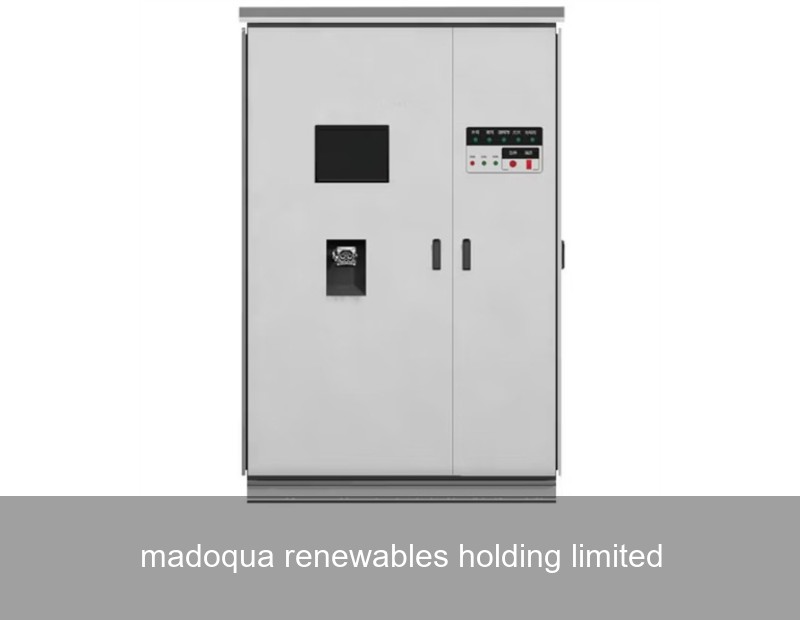
If you're following the European renewable energy landscape, you've likely come across the name Madoqua Renewables Holding Limited. This ambitious player is making significant strides in developing and operating utility-scale solar PV projects, primarily across Southern Europe. But like all forward-thinking renewable energy developers, Madoqua faces a fundamental challenge: the sun doesn't always shine when the grid needs power. This is where the story transitions from simply generating green electrons to intelligently managing them—a transition powered by advanced energy storage solutions.
What is Madoqua Renewables Holding Limited?
Madoqua Renewables Holding Limited is an independent power producer (IPP) focused on the development, construction, and operation of solar photovoltaic (PV) power plants. With a strong pipeline concentrated in markets like Portugal and Spain, Madoqua represents a new wave of specialized entities driving Europe's energy transition. Their business model isn't just about building solar farms; it's about delivering reliable, clean energy to the grid and offtakers, ensuring project bankability and long-term sustainability. This mission inherently requires moving beyond standalone generation.

Utility-scale solar farms, like those developed by Madoqua, form the foundation of the new energy mix. Source: Unsplash
The Challenge: Intermittency and Grid Stability
Let's talk about the elephant in the room. Solar and wind are variable. A cloud passes over, or the wind dies down, and generation drops. This intermittency creates a mismatch between supply and demand, posing two major problems:
- Grid Instability: Traditional grids were designed for consistent, dispatchable power (like coal or gas). Large influxes of variable renewable energy can cause frequency and voltage fluctuations.
- Economic Value Erosion: Solar often generates the most during midday when, in some markets, prices are lower due to high supply ("the duck curve" effect). The energy might be needed more—and be more valuable—in the evening when the sun is down.
According to a report by the International Energy Agency (IEA), achieving high shares of variable renewables requires a massive scale-up of flexible resources, with grid-scale storage being a cornerstone technology.
The Solution: Advanced Energy Storage Systems (ESS)
The answer to unlocking the full potential of solar portfolios, like those managed by Madoqua Renewables Holding Limited, is the integration of Battery Energy Storage Systems (BESS). Think of BESS as a high-tech "energy bank." It charges (stores energy) when generation is high and demand/low, and discharges (releases energy) when generation drops or demand peaks.
| Benefit | Impact for Renewable Developers |
|---|---|
| Energy Time-Shifting (Arbitrage) | Store cheap midday solar, sell during expensive evening peaks, boosting revenue. |
| Grid Services (Frequency Regulation) | Provide critical grid stability services for additional income streams. |
| Capacity Firming | Make a solar farm's output more predictable and reliable for grid operators. |
| Reduced Curtailment | Store energy that would otherwise be wasted when grid congestion occurs. |
Case Study: Portugal's Solar Ambitions & The Storage Imperative
Portugal is a prime example of a market where storage is becoming non-negotiable. The country aims for 80% of its electricity from renewables by 2030, with solar PV leading the charge. This creates a perfect real-world context for companies like Madoqua Renewables Holding Limited.
Consider a hypothetical but data-informed scenario based on actual Portuguese grid data: A 100 MW solar farm in the Alentejo region might see its generation curve peak sharply at 1 PM. However, the Portuguese grid's peak demand often occurs between 7-9 PM. Without storage, a significant portion of the solar farm's value is limited to lower-priced hours. By co-locating a 20 MW / 40 MWh BESS, the project can:
- Capture ~20% of its midday generation.
- Discharge it during the 2-hour evening peak, potentially increasing revenue per MWh by 50-70% based on historical price differentials (EPEX SPOT data).
- Provide fast-frequency response to the Portuguese grid operator (REN), a service that is highly compensated for its role in maintaining grid security.
This hybrid "solar-plus-storage" model is precisely the strategy being adopted by leading IPPs to enhance project economics and grid integration. The industry publication Energy-Storage.news frequently covers such projects emerging across Iberia and Europe.

A modern containerized BESS unit, similar to Highjoule's solutions, provides plug-and-play grid support. Source: Unsplash
How Highjoule's Technology Powers Projects Like Madoqua's
For a renewable energy holder to successfully implement this strategy, partnering with the right technology provider is critical. This is where Highjoule comes in. Since 2005, Highjoule has been at the forefront of designing and deploying intelligent storage solutions for commercial, industrial, and utility-scale applications.
For a developer managing a portfolio similar to Madoqua Renewables Holding Limited, Highjoule's value proposition is clear:
- High-Energy Density & Safe Battery Technology: Our systems utilize lithium iron phosphate (LFP) chemistry, known for its long cycle life, thermal stability, and safety—a paramount concern for large-scale, unattended installations.
- Advanced Energy Management System (EMS): The true brain of the operation. Highjoule's proprietary EMS doesn't just charge and discharge batteries. It uses sophisticated algorithms to forecast energy prices, solar generation, and grid needs, optimizing every kilowatt-hour for maximum revenue or cost savings. It can seamlessly switch between energy arbitrage and grid service modes.
- Grid-Forming Inverter Capability: A cutting-edge feature that allows our BESS to not just follow the grid but help stabilize it, acting as a foundational power source—a key capability for future grids with very high renewable penetration.
- Full EPC & Lifecycle Support: We provide end-to-end support, from initial feasibility studies and system design to construction, grid compliance, and long-term operations & maintenance, de-risking the project for our clients.
Imagine a Highjoule BESS integrated with a Madoqua solar plant. Our EMS would automatically decide the optimal strategy: store energy at 11 AM, provide frequency regulation at 3 PM, and discharge to meet the evening peak at 8 PM, all while ensuring battery health and warranty compliance.
The Future Outlook for Renewable Energy Holders
The trajectory is clear. Regulatory bodies in the EU and US markets are increasingly mandating or incentivizing storage paired with new renewable projects. The US Inflation Reduction Act (IRA) and the EU's Green Deal Industrial Plan create powerful investment tax credits and frameworks that make solar-plus-storage projects more financially attractive than ever.
For independent power producers and holders, the question is no longer *if* to add storage, but *when, how, and with whom*. The competitive advantage will go to those who can most efficiently and intelligently manage their renewable assets, transforming them from simple generators into versatile, grid-supportive power stations.

The future grid is a hybrid, flexible system integrating diverse generation and storage. Source: Unsplash
An Open Question for the Industry
As the cost of battery storage continues to fall and market structures evolve, how will renewable energy developers and holders like Madoqua Renewables Holding Limited prioritize their storage deployment strategies? Will the focus be primarily on maximizing merchant revenue through arbitrage, securing long-term grid service contracts, or a hybrid approach tailored to each specific market's signals? The most successful players will be those who can dynamically answer this question—with the right technology partner by their side.
 Inquiry
 Online Chat